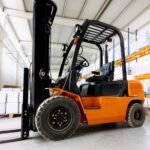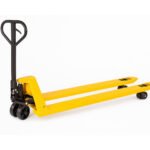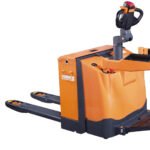
The pump truck (also known as a hand pallet truck) is the most common tool in any warehouse. While it looks simple, improper use can lead to back injuries, damaged goods, or toe fractures. This guide breaks down the professional way to operate a pump truck, ensuring maximum safety and efficiency.
Step 1: Pre-Operation Safety Check
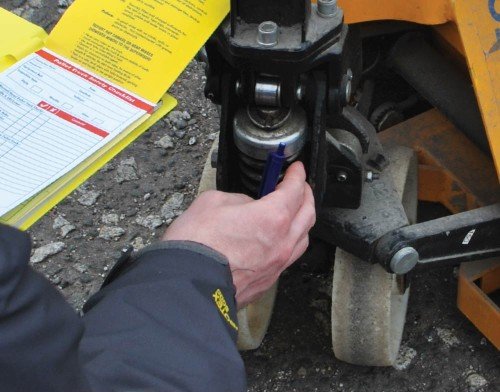
hand pallet truck Pre-Operation Safety Check
Before touching a load, spend 10 seconds performing a 'Circle Check.'
-
Check the Wheels: Ensure there are no flat spots or debris (like shrink wrap) tangled in the rollers.
-
Look for Leaks: Check under the hydraulic pump for any signs of oil. A leaking pump can fail mid-lift.
-
Test the Handle: Squeeze the lever to ensure it moves freely between the three positions.
Step 2: Position the Forks Correctly
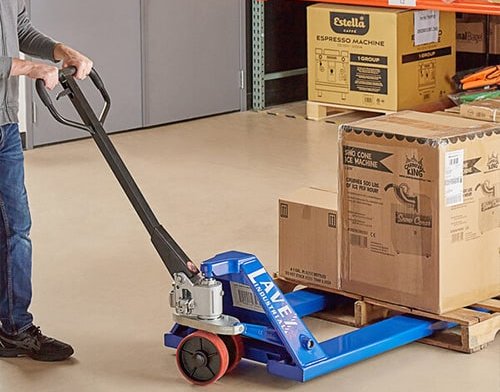
hand pallet truck Position the Forks Correctly
Approach the pallet squarely.
-
Widening the Entry: Ensure the forks are centered. If you enter at an angle, you risk hitting the pallet stringers (the wooden supports), which can tip the load.
-
Full Insertion: Push the forks all the way under the pallet until the back of the forks touches the load. Never 'tip-load' (lifting with only the ends of the forks), as this can bend the fork frame.
Step 3: Mastering the 3-Position Control Lever
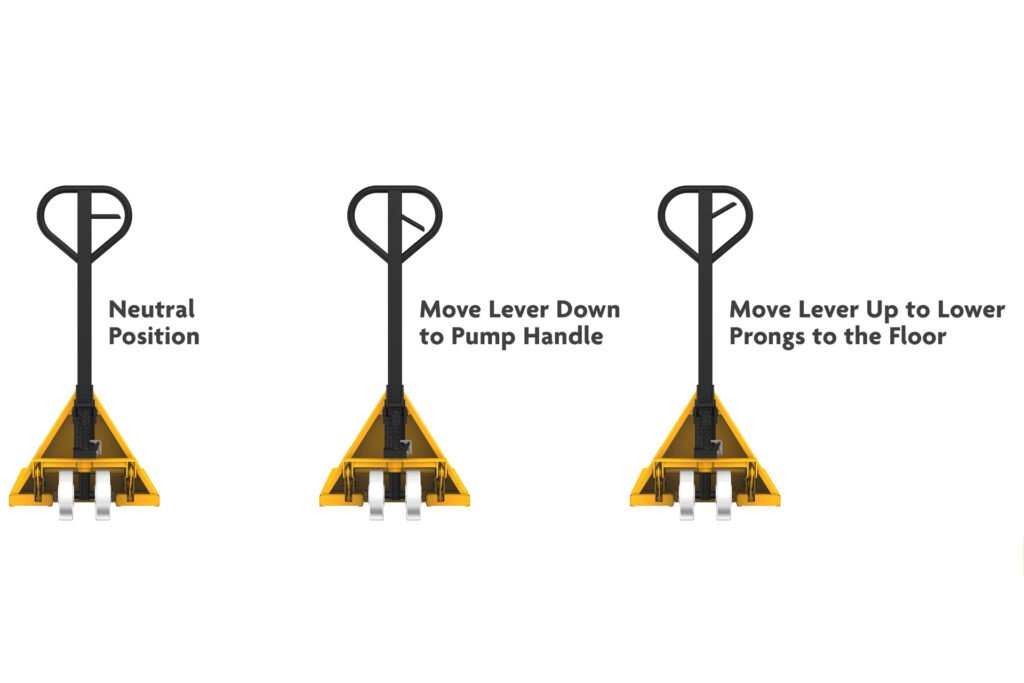
Hand pallet truck 3-position lever diagram
The small lever on the handle is the 'brain' of the pump truck. You must understand its three settings:
-
Lower Position (Down): Squeeze the lever up to lower the forks to the ground.
-
Neutral Position (Middle): This disengages the pump. Use this while pulling the load so the handle doesn't 'pump' up and down as you move.
-
Drive Position (Up): Push the lever down to the bottom. Now, when you pump the handle, the forks will rise.
Step 4: Pumping to the Safe Lift Height

hand pallet truck Pumping to the Safe Lift Height
-
Push the lever to the Drive (Up) position.
-
Use long, steady strokes to pump the handle.
-
How high? You only need to lift the pallet about 1-2 inches (3-5 cm) off the floor. Lifting too high makes the load unstable; lifting too low causes the pallet to 'drag' on uneven floors.
Step 5: Moving the Load Safely
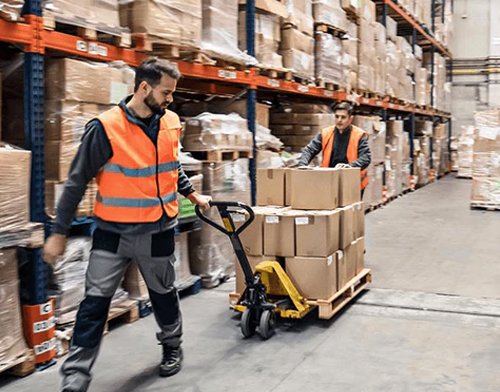
hand pallet truck Moving the Load Safely
-
Switch the lever to the Neutral (Middle) position.
-
Push or Pull? On flat ground, pulling is generally easier for steering. However, if you are in a tight space or going down a slight incline, pushing gives you better visibility and control.
-
The Golden Rule: Always keep your feet clear of the pallet and never travel with the load behind you where you can't see obstructions.
Step 6: Releasing and Removing the Truck
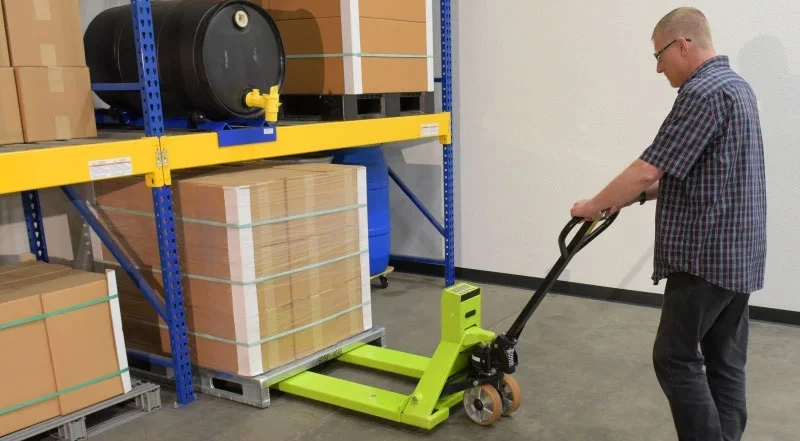
hand pallet truck Releasing and Removing the Truck
-
When you reach your destination, slowly squeeze the lever to the Lower (Down) position.
-
Pro Tip: Don't just 'snap' the lever. Squeeze it gradually to let the load settle gently. This prevents 'clunking' which can damage fragile goods.
-
Once the forks are flat on the floor, pull the truck out from under the pallet.
Safety FAQ for Pump Truck Operators
Q: Why is my pump truck handle 'springing' back up?
A: This usually happens if the lever is not in the Neutral position while moving. Always click the lever into the middle notch once you've finished pumping.
Q: Can I use a pump truck on a ramp?
A: Only if the incline is very slight. Always keep the load uphill from the operator. If the load is in front of you going up, you have control; if it's behind you going down, it could run over you.
Q: What is the weight limit?
A: Most standard trucks handle 2500kg (5500 lbs). Check the capacity plate on the handle. If the pump feels extremely heavy or the frame 'flexes,' stop immediately—you are overloading the hydraulic seals.