
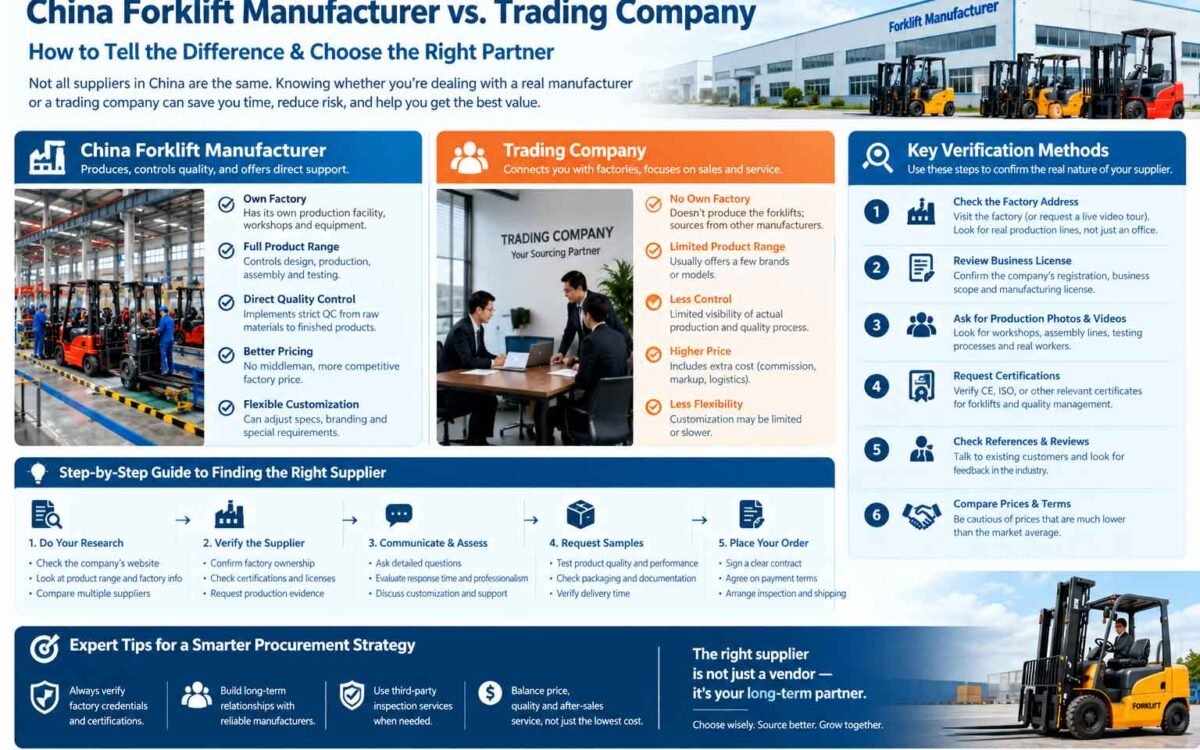
China Forklift Manufacturer vs Trading Company: How to Tell the Difference
Learn how to distinguish between a China forklift manufacturer and a trading company with this comprehensive guide. Discover key verification methods, sourcing tips, and expert insights to optimize your procurement strategy.
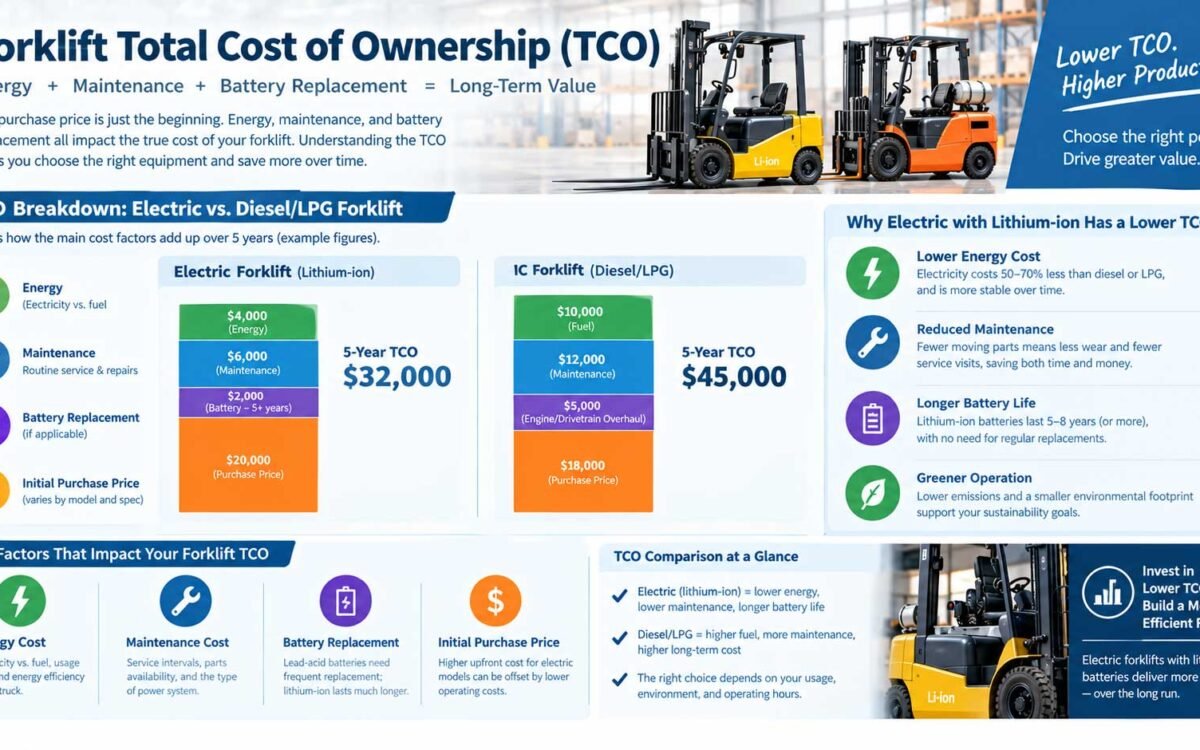
Forklift Total Cost of Ownership: Energy, Maintenance, Battery Replacement
Discover how energy, maintenance, and battery replacement impact the forklift total cost of ownership. Learn why electric forklifts with lithium-ion batteries offer lower TCO compared to internal combustion models.
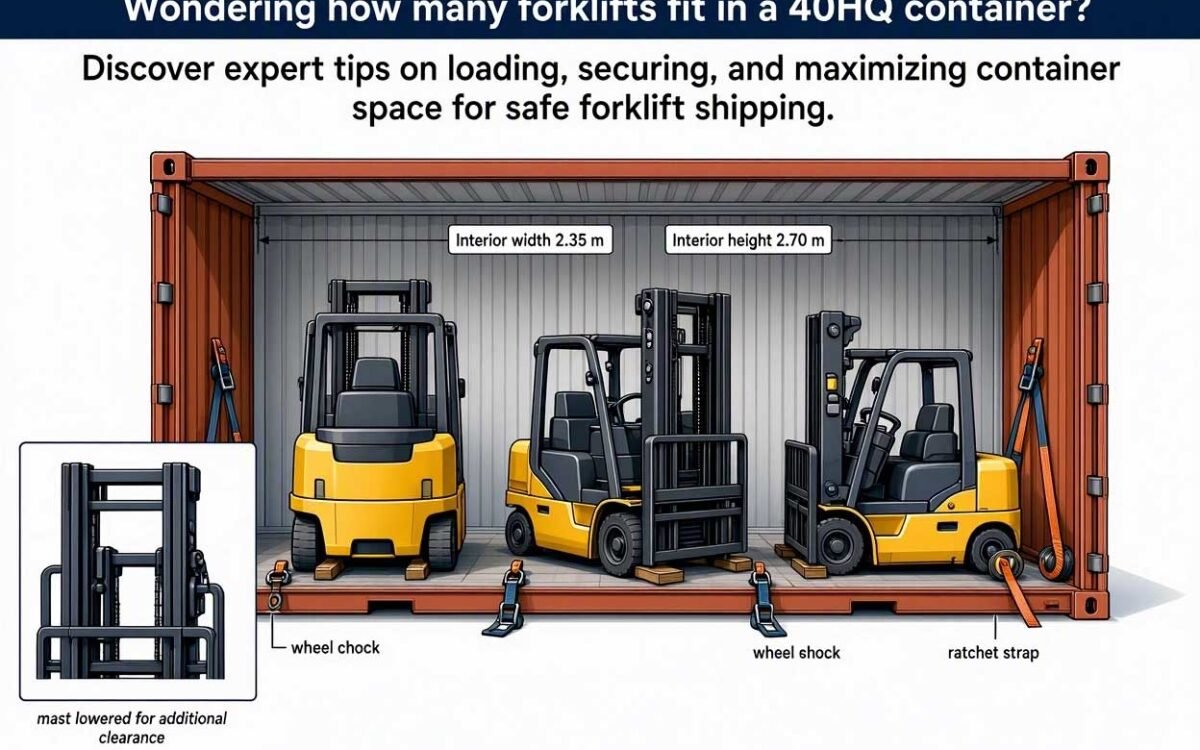
How Many Forklifts Fit in a 40HQ Container? Loading and Securing Guide
Wondering how many forklifts fit in a 40HQ container? Discover expert tips on loading, securing, and maximizing container space for safe forklift shipping.
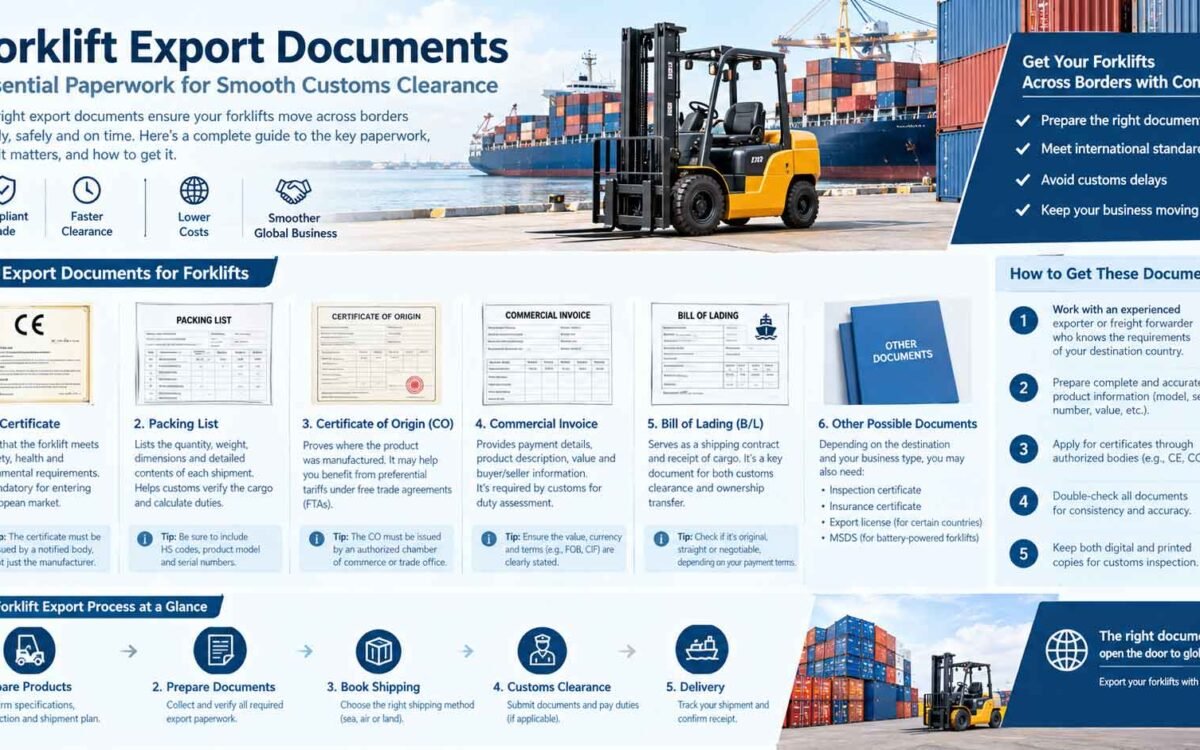
Export Documents for Forklifts: CE, Packing List, Certificate of Origin
When importing or exporting forklifts, having the correct export documents is crucial to ensure smooth customs clearance and compliance with international trade regulations. Whether you're a machinery dealer, construction contractor, or equipment rental operator, understanding the essential paperwork—such as the CE certificate, packing list, and certificate of origin—can save you from costly delays and legal hurdles. This article provides a comprehensive guide to the export documents for forklif ...
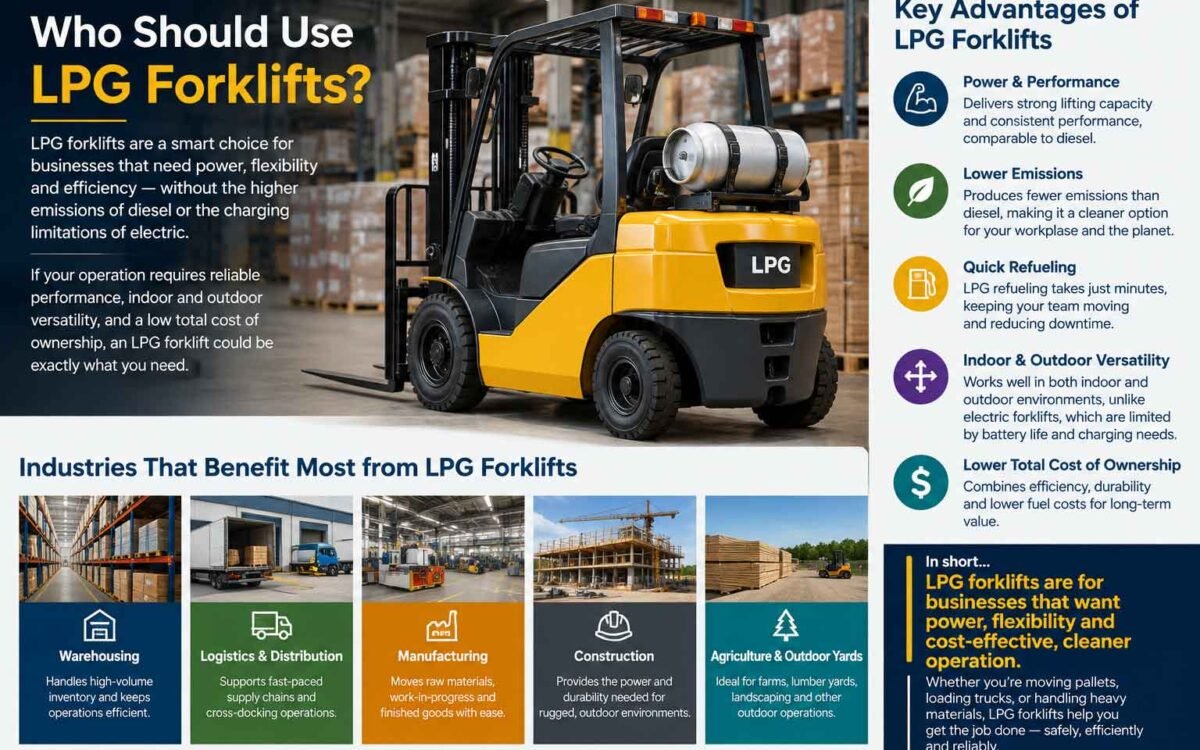
LPG Forklifts: Who Should Use Them?
In the fast-paced world of warehousing, logistics, manufacturing, and construction, efficient material handling is crucial. Among the many forklift fuel options available, LPG forklifts stand out as a versatile and powerful choice. Striking a balance between the raw strength of diesel and the environmental benefits of electric forklifts, LPG forklifts offer unique advantages that make them suitable for a wide range of industries and applications. But who exactly should use LPG forklifts, and why ...
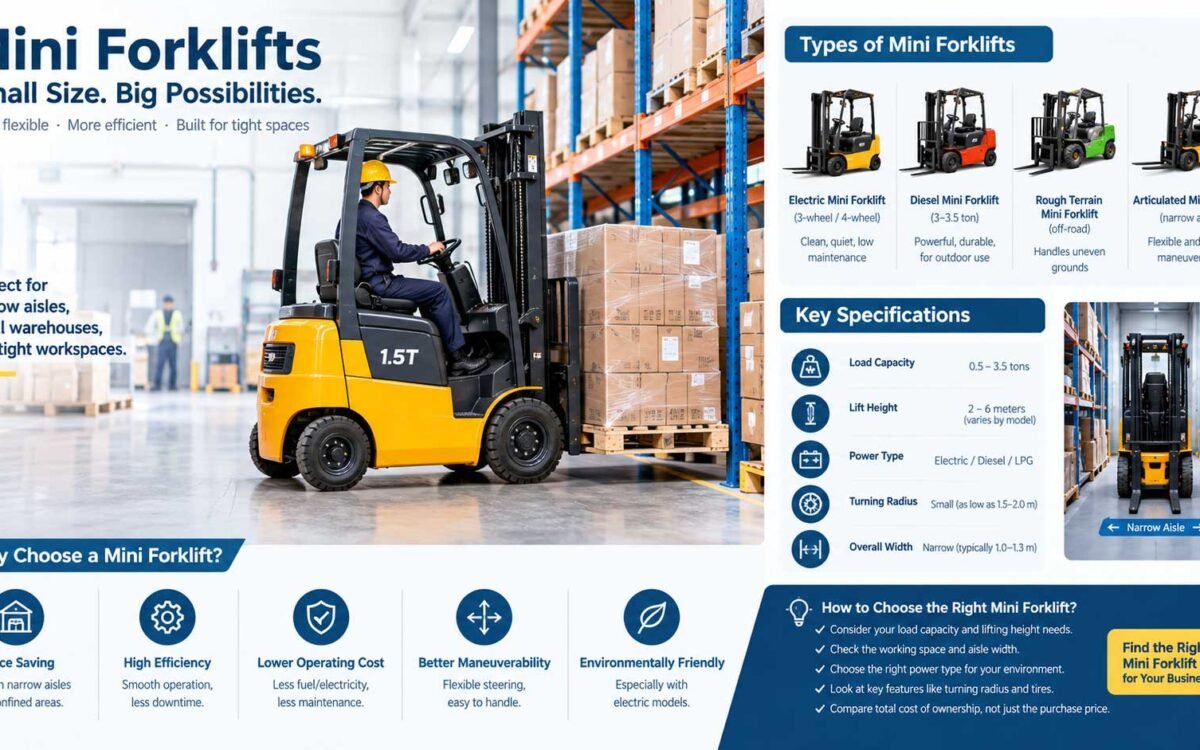
Mini Forklift: The Ultimate Guide to Compact Material Handling Solutions
Discover everything you need to know about mini forklifts — their types, advantages, key specifications, and why they outperform standard forklifts in space-constrained environments. Learn how to choose the right mini forklift for your operation.
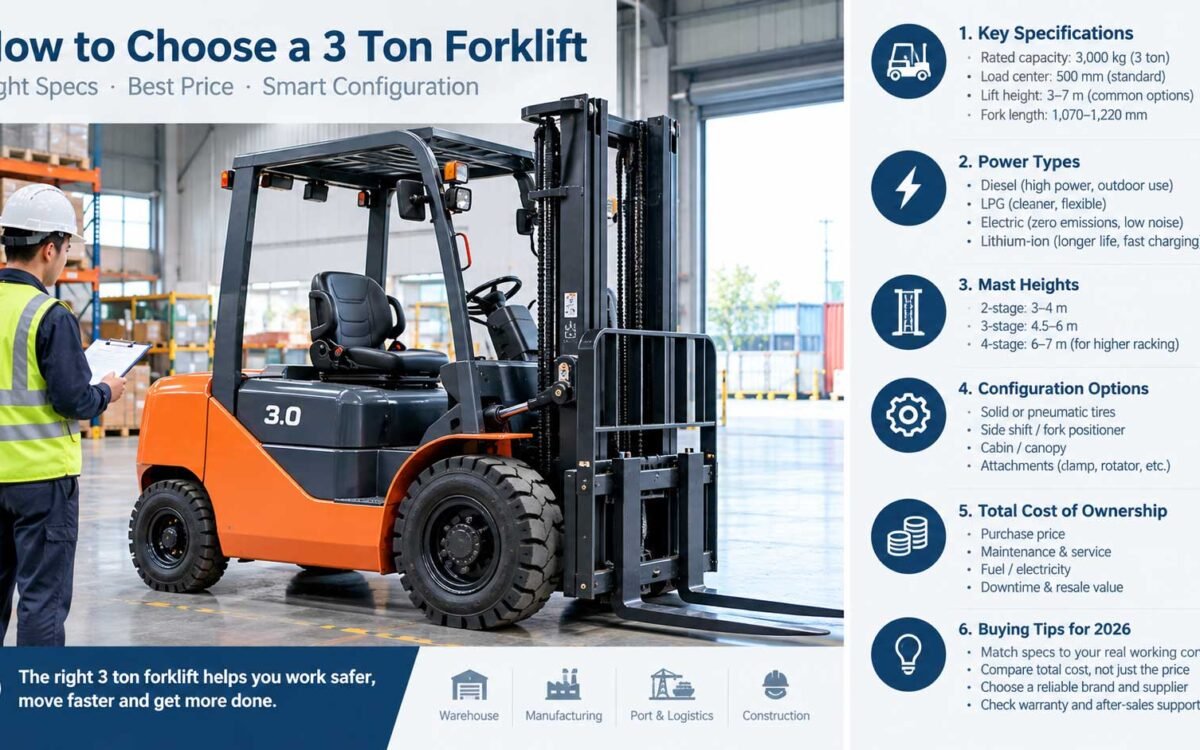
How to Choose a 3 Ton Forklift: Specs, Price & Configuration
Discover how to choose a 3 ton forklift with the right specs, price, and configuration. Learn about power types, mast heights, total cost of ownership, and expert buying tips for 2026.
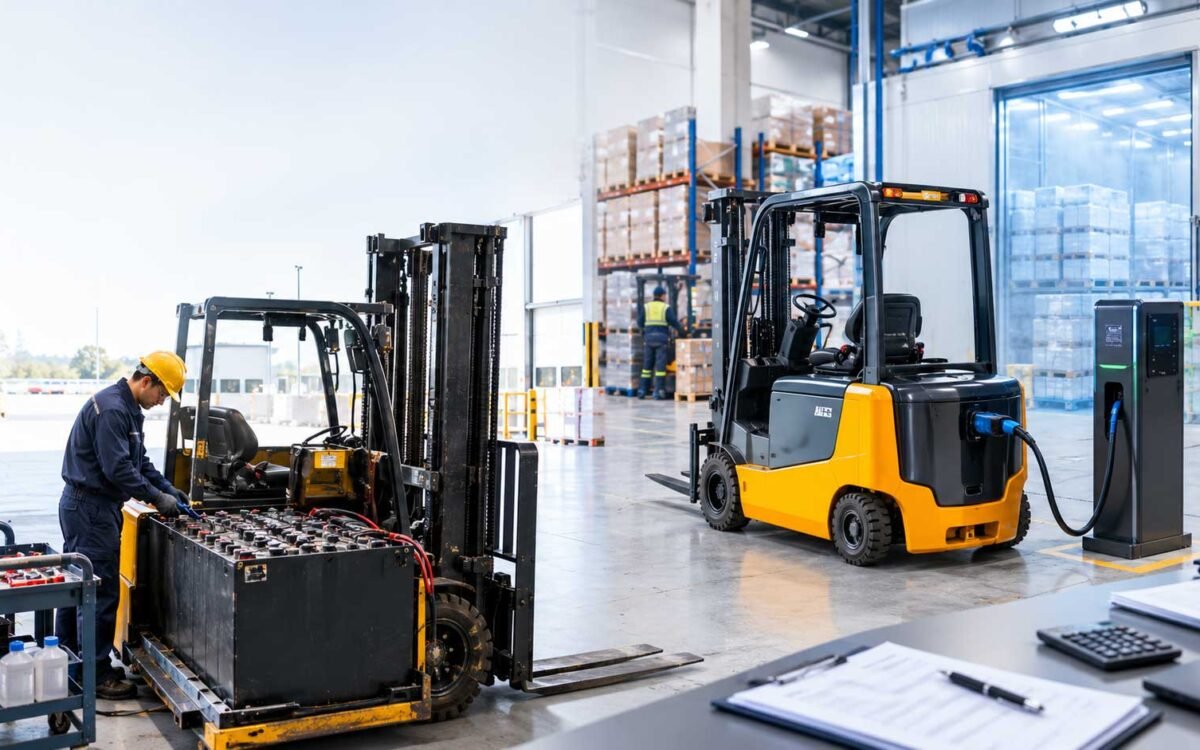
Lithium vs Lead-Acid Forklift: Cost, Lifespan & Charging Compared
A practical comparison of lithium and lead-acid forklift batteries covering upfront cost, lifespan, charging time, maintenance, and safety, with an illustrative total-cost example and guidance on when each technology makes more sense, from single-shift budget operations to multi-shift and cold storage use.
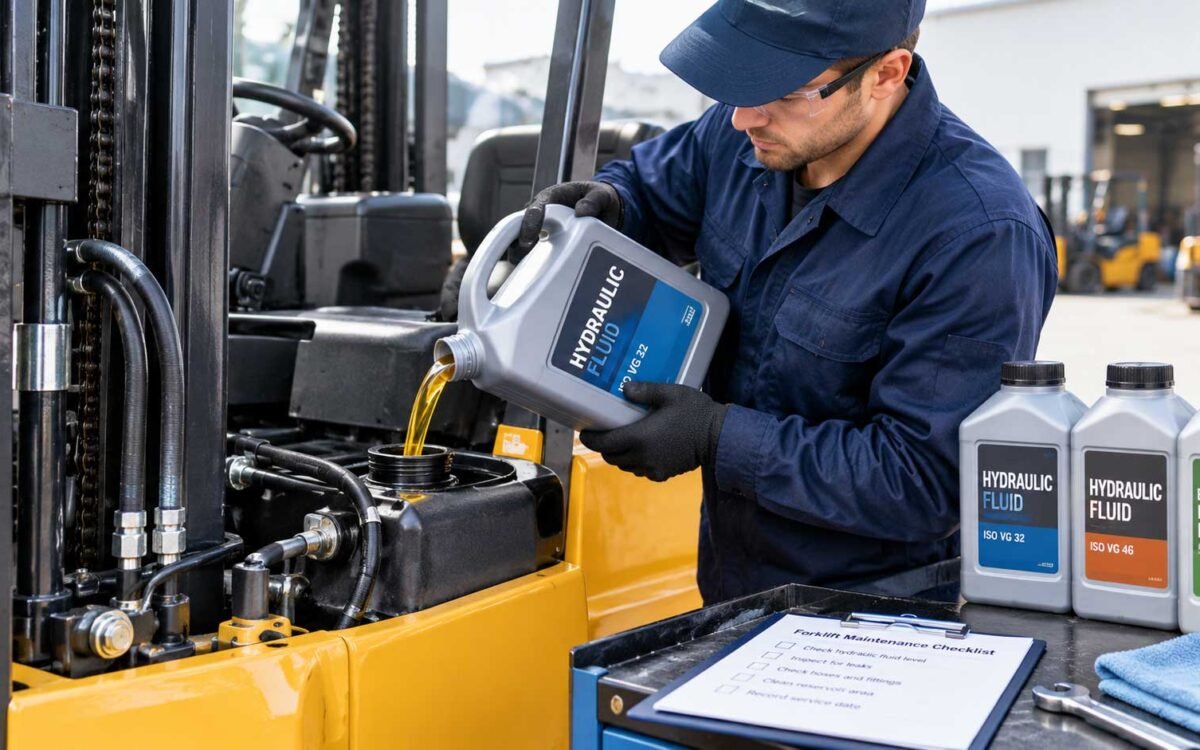
What Type of Hydraulic Fluid for Forklift: The Ultimate Guide for Optimal Performance
Choosing the right hydraulic fluid for your forklift is essential for smooth operation and longevity. Discover expert tips, recommended types, and maintenance advice in this comprehensive guide.
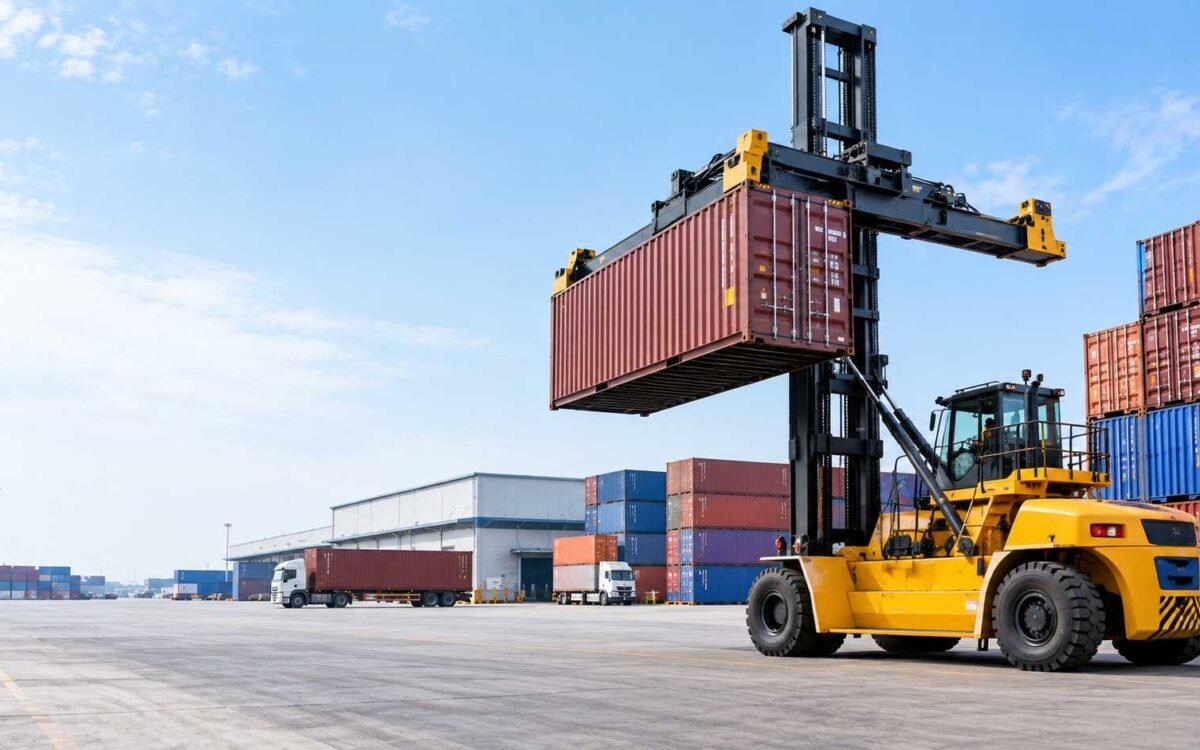
The Ultimate Guide to Container Forklifts: Power, Precision, and Performance for Efficient Container Handling
Discover everything you need to know about container forklifts, including types, key features, applications, and how to choose the right model for your port, warehouse, or industrial needs.
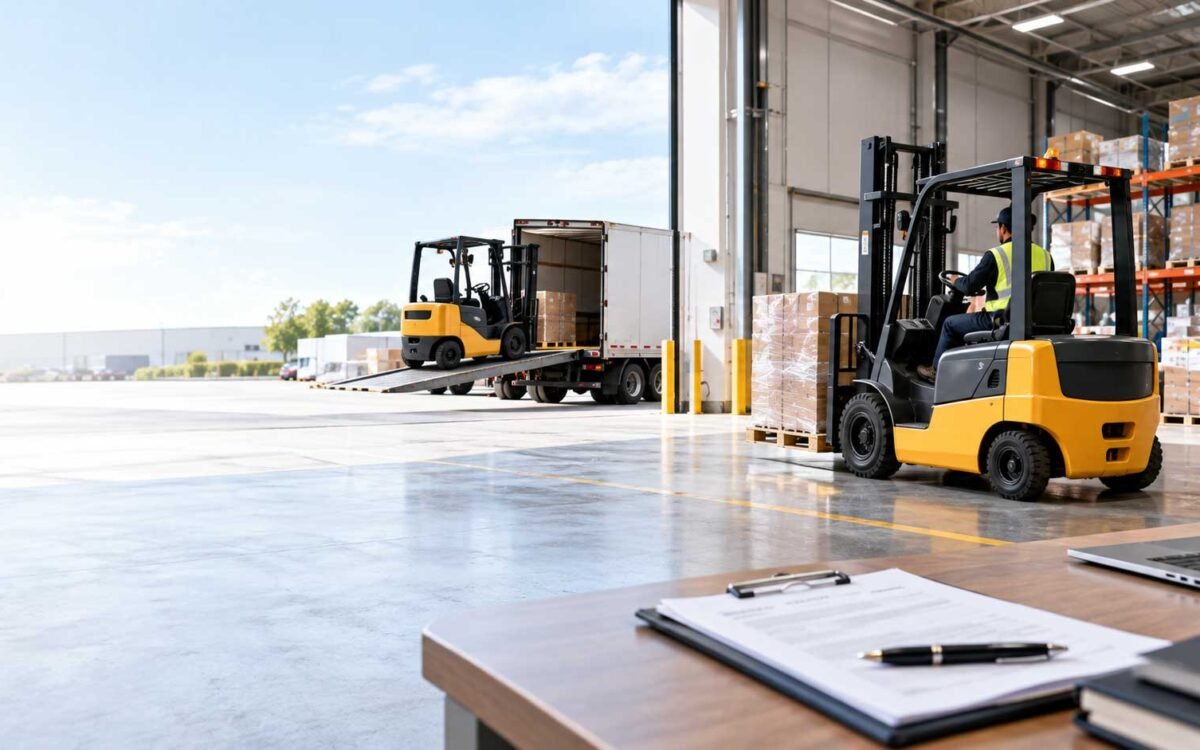
Forklift Rental vs Buy: Which Option Makes More Sense for Your Business?
Forklift rental vs buy: Discover the true cost comparison, benefits, and use cases to decide which option suits your business best. Learn when to rent, lease, or buy forklifts for optimal ROI.
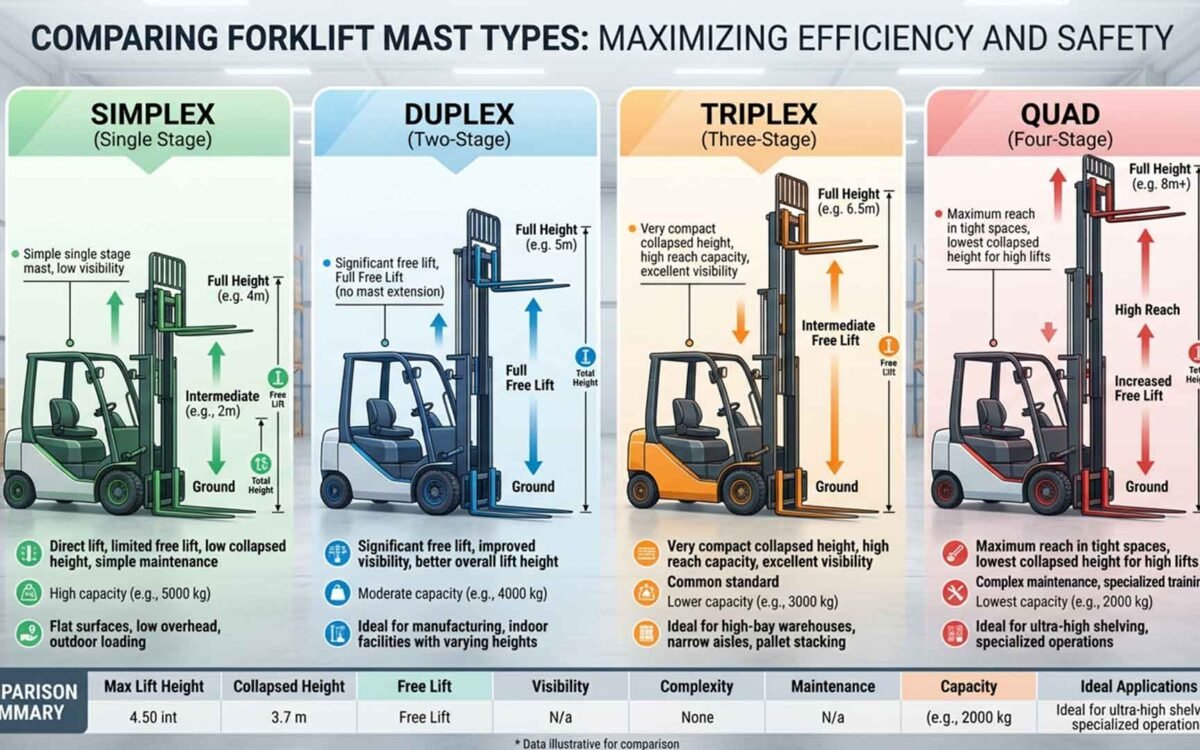
Forklift Mast Types: The Comprehensive 2026 Guide for Optimal Selection
Discover the essential forklift mast types and how to choose the right one for your warehouse needs in 2026. Learn about simplex, duplex, triplex, and quad masts, their features, and selection tips for maximum efficiency and safety.
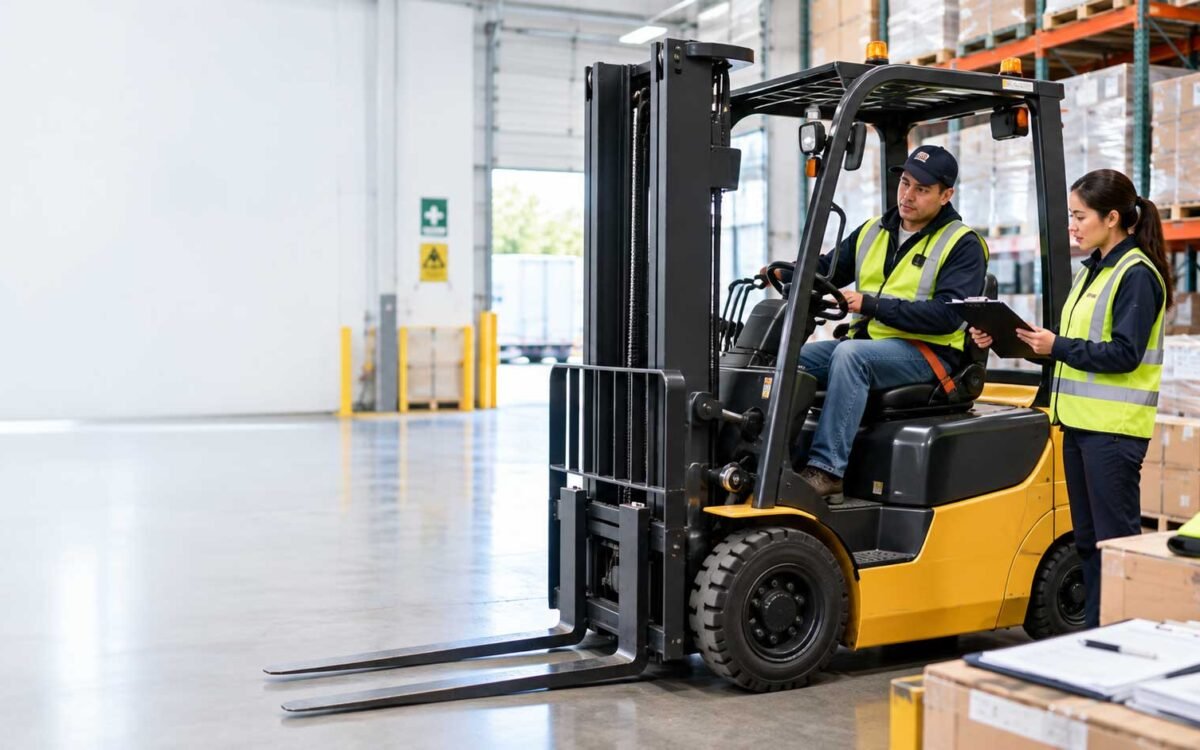
OSHA Forklift Requirements: The Complete Employer Compliance Guide (2026)
This guide breaks down OSHA 29 CFR 1910.178 forklift regulations, employer certification duties, 3-year evaluations vs event-based refresher training, pre-shift inspection and attachment plate requirements. It includes 2026 OSHA penalties, frequent compliance mistakes and a self-checklist for audit readiness.
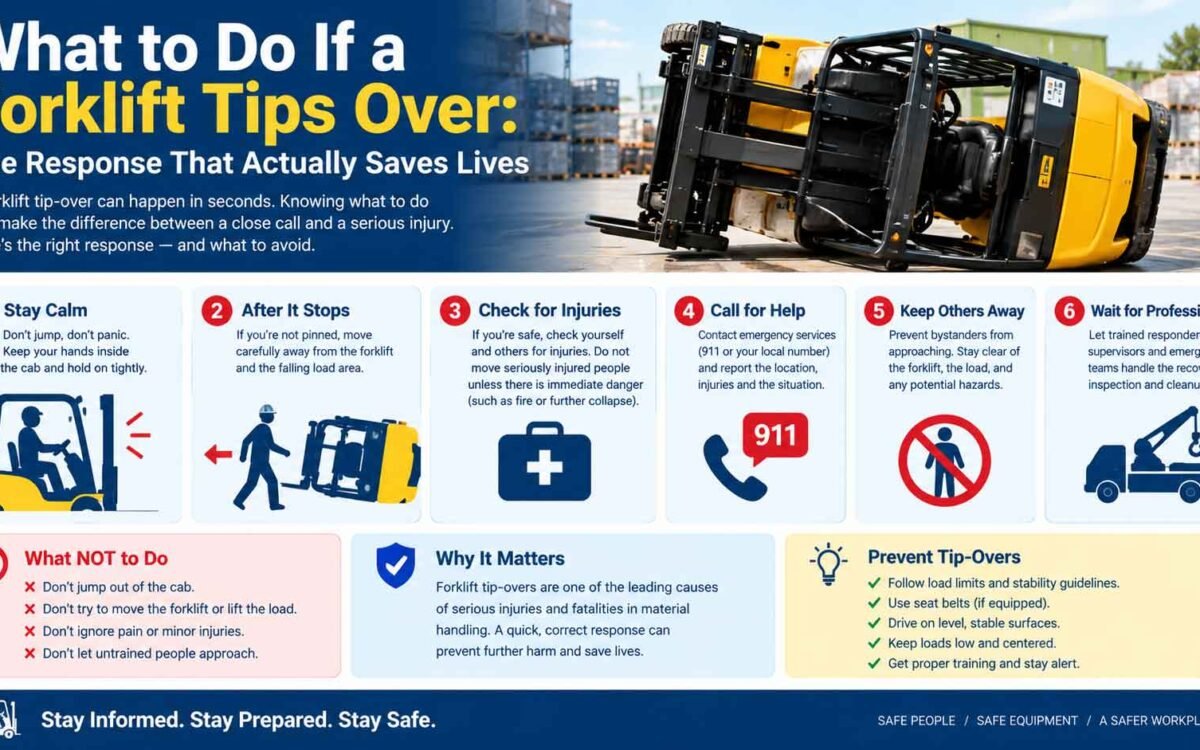
What to Do If a Forklift Tips Over: The Response That Actually Saves Lives
This is a safety-critical topic — if you're building training materials or dealing with a recent incident, it's worth confirming the specific guidance in your forklift's operator manual and your local OSHA or workplace safety requirements, since procedures can vary by equipment type and jurisdiction.
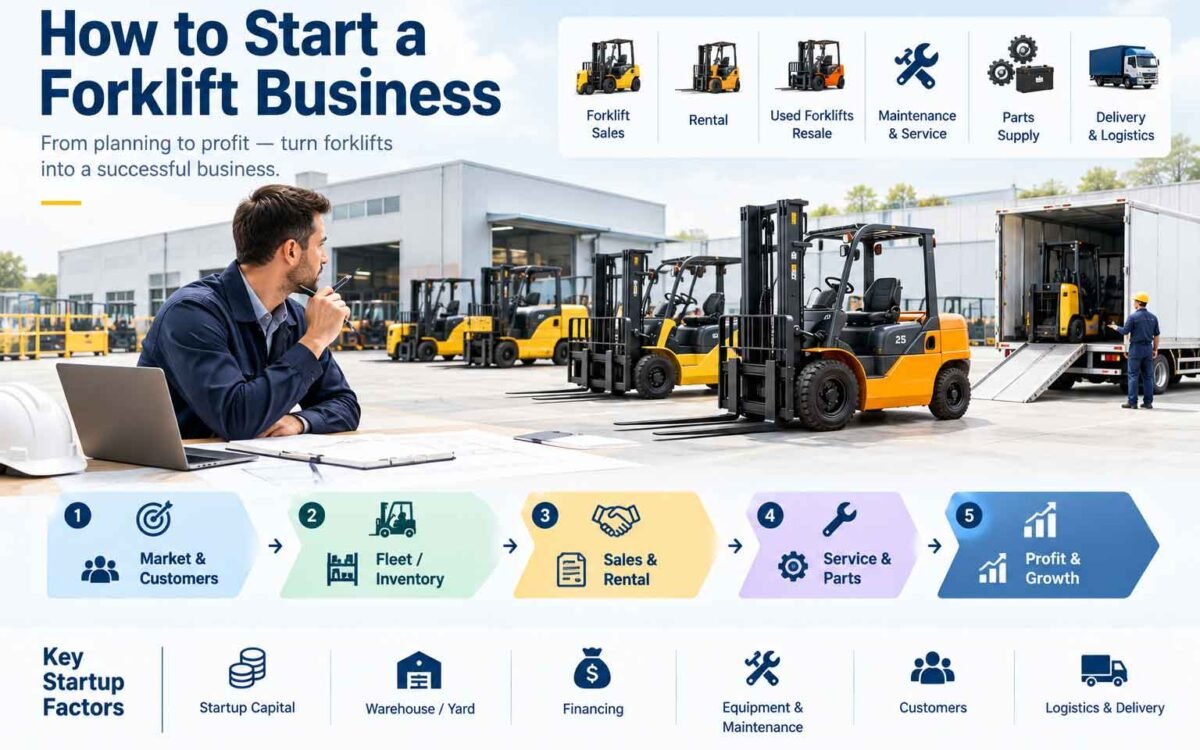
How to Start a Forklift Business: A Practical Guide to the Different Paths and What Each One Actually Costs
A practical breakdown of the four main forklift business models — rental/leasing, sales/dealership, repair and maintenance, and operator training — covering realistic startup costs, requirements, and revenue models for each, plus guidance on which path fits different capital and skill levels.
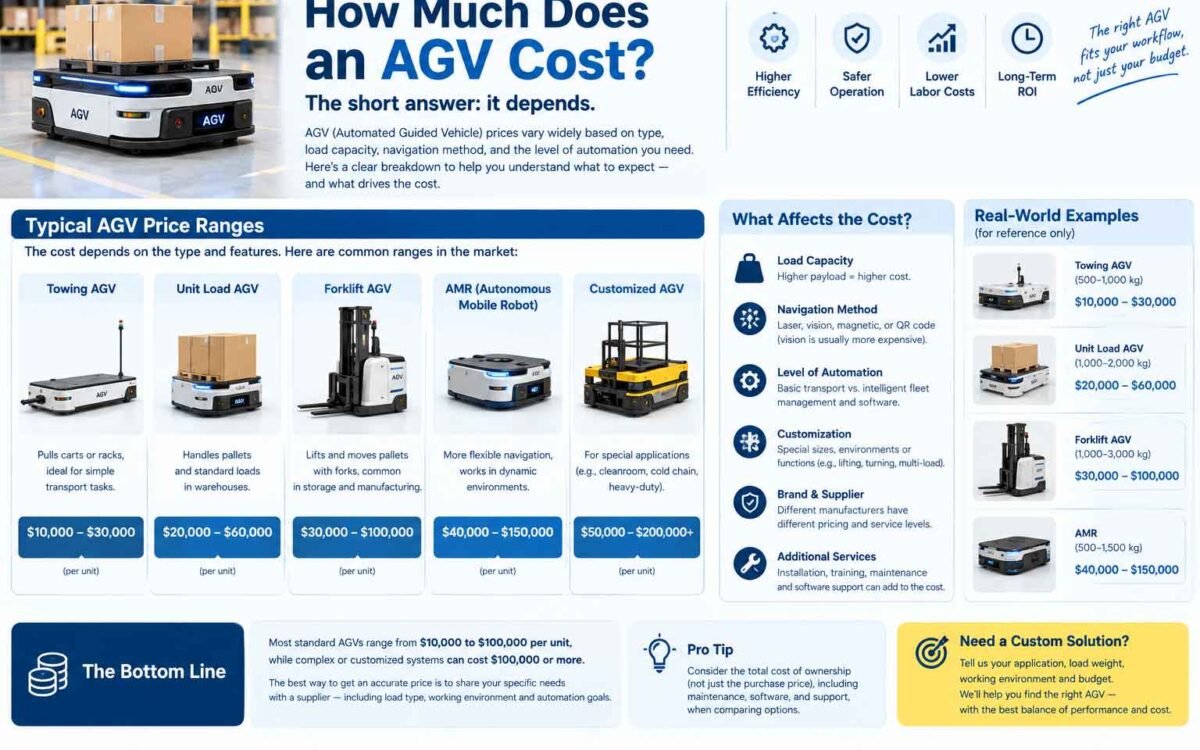
How Much Does an AGV Cost? A Realistic Breakdown for Buyers
A realistic cost breakdown for AGVs Automated Guided Vehicles, covering unit price ranges by type and navigation technology, the hidden costs most buyers miss software licensing, infrastructure, integration, training, and questions to ask vendors to get an accurate total project quote instead of just a hardware price.
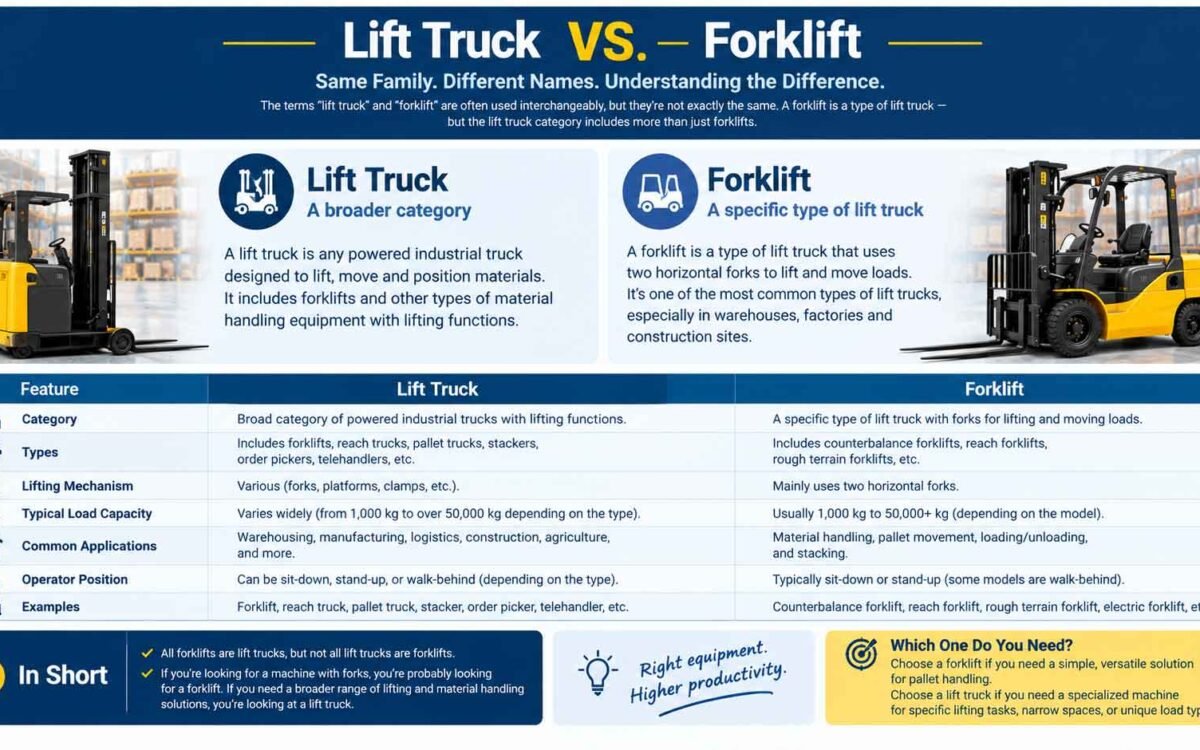
Lift Truck vs Forklift: Is There Actually a Difference?
A clear explanation of the difference between "lift truck" and "forklift," showing that forklift is technically one type of lift truck alongside reach trucks, order pickers, and pallet jacks, when the distinction actually matters for compliance and purchasing, and why the terms are used interchangeably in everyday conversation.
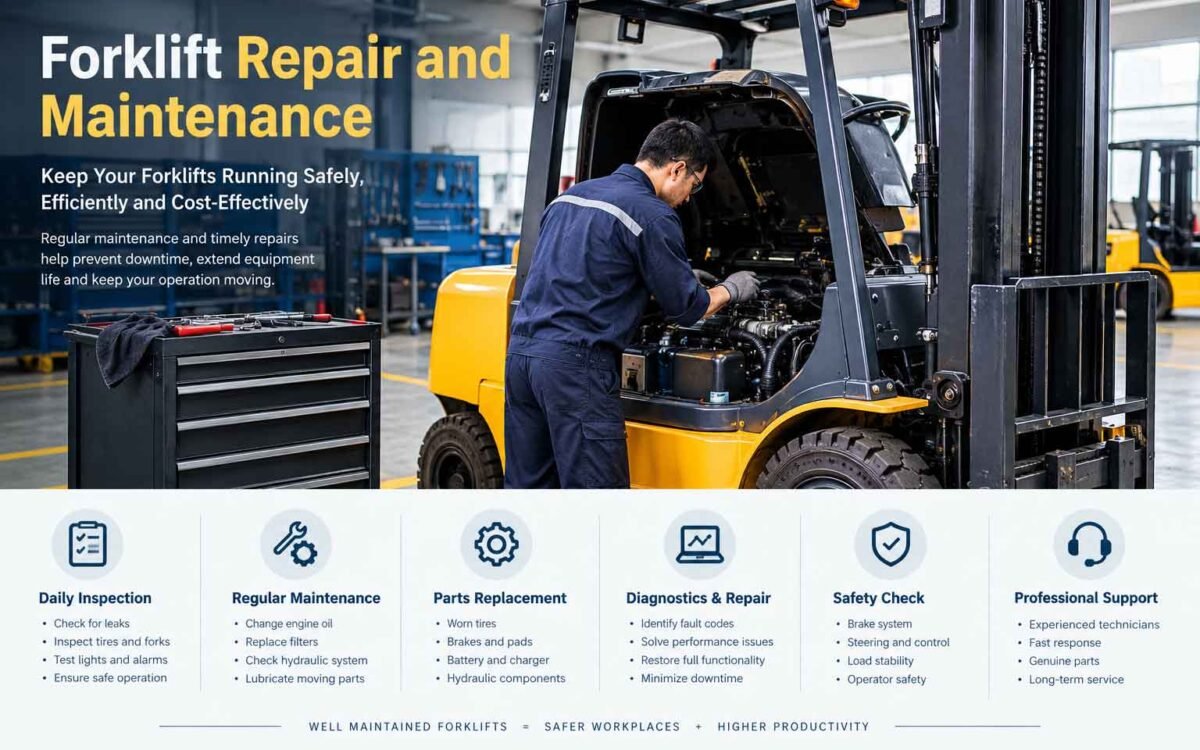
Forklift Repair and Maintenance: What Fleet Owners Actually Need to Know
A practical forklift maintenance and repair guide covering a daily-to-annual maintenance schedule, the most common repairs and their causes (hydraulics, batteries, tires, brakes, mast chains), when to fix issues in-house versus call a technician, and how to estimate real repair costs and downtime.
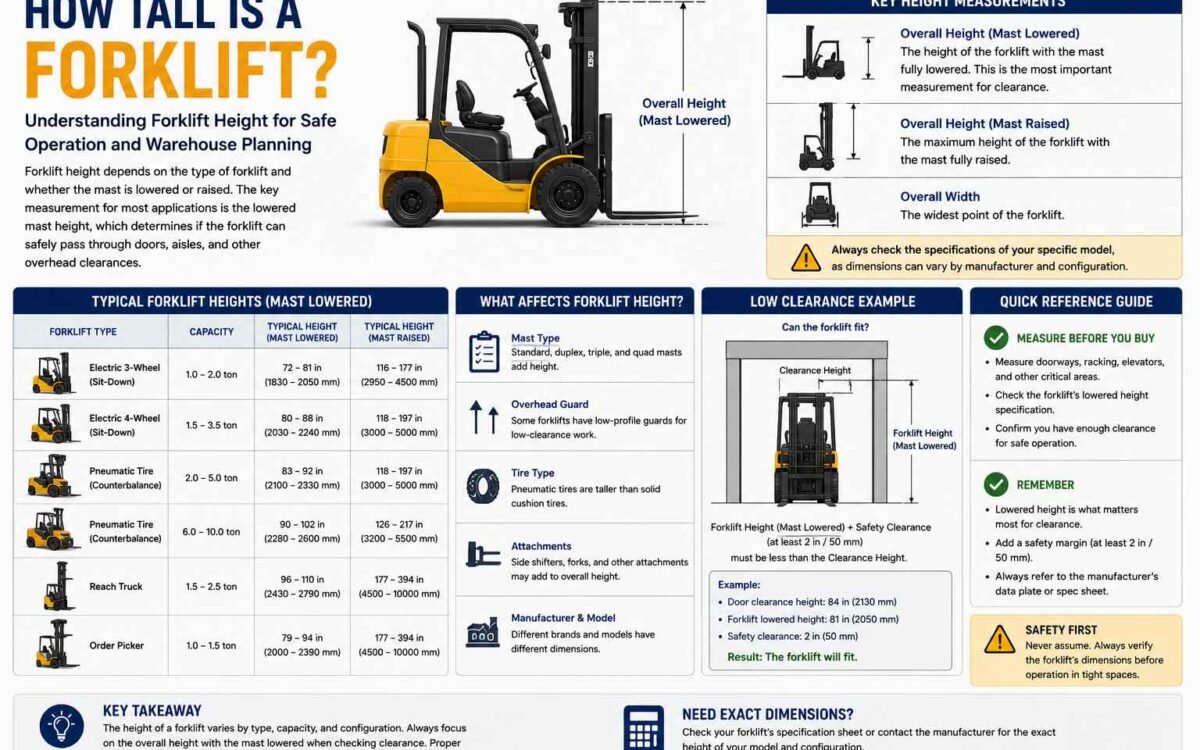
How Tall Is a Forklift? Why the Answer Depends on Which Measurement You Actually Need
A practical guide breaking down the three different forklift height measurements — lowered height, overhead guard height, and maximum extended mast height — with typical ranges by forklift type and a simple method to check the right clearance for doorways, ceilings, and trailers.
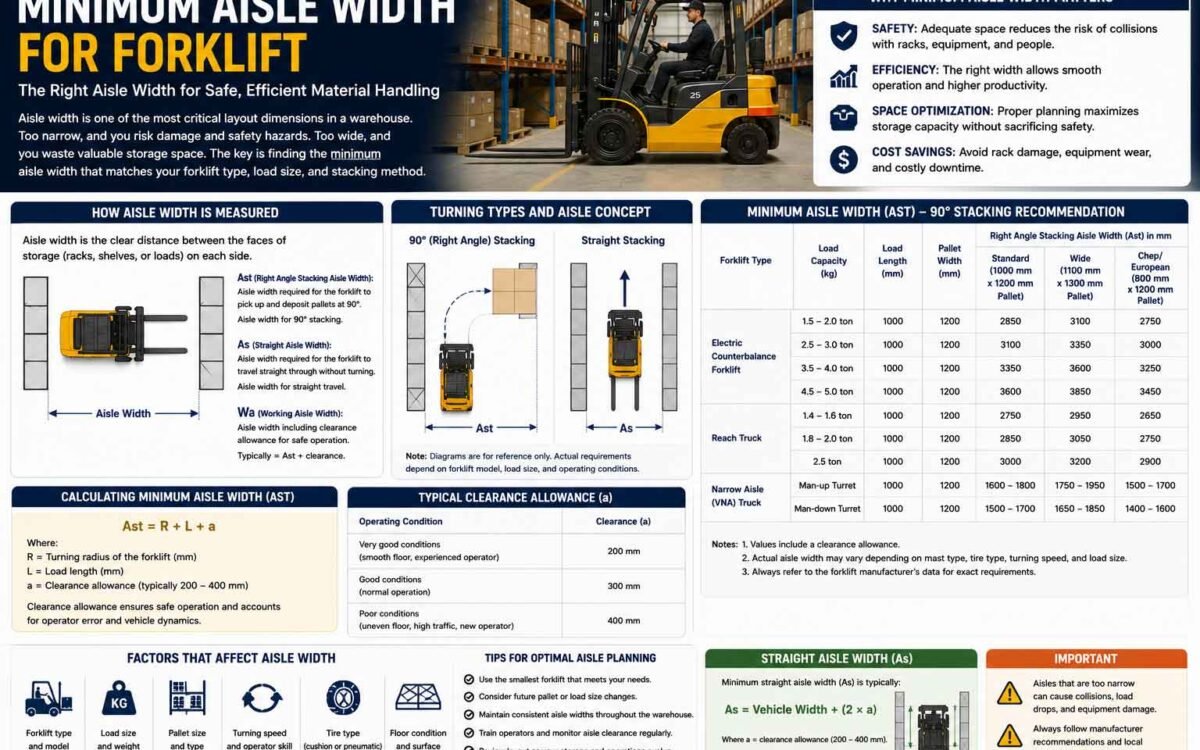
Minimum Aisle Width for Forklift: How to Calculate the Number That Actually Matters
A practical guide to calculating minimum forklift aisle width, breaking down the difference between right-angle stacking, working, and turning aisle widths, typical ranges by forklift type, and a formula to calculate the exact aisle width your facility actually needs.
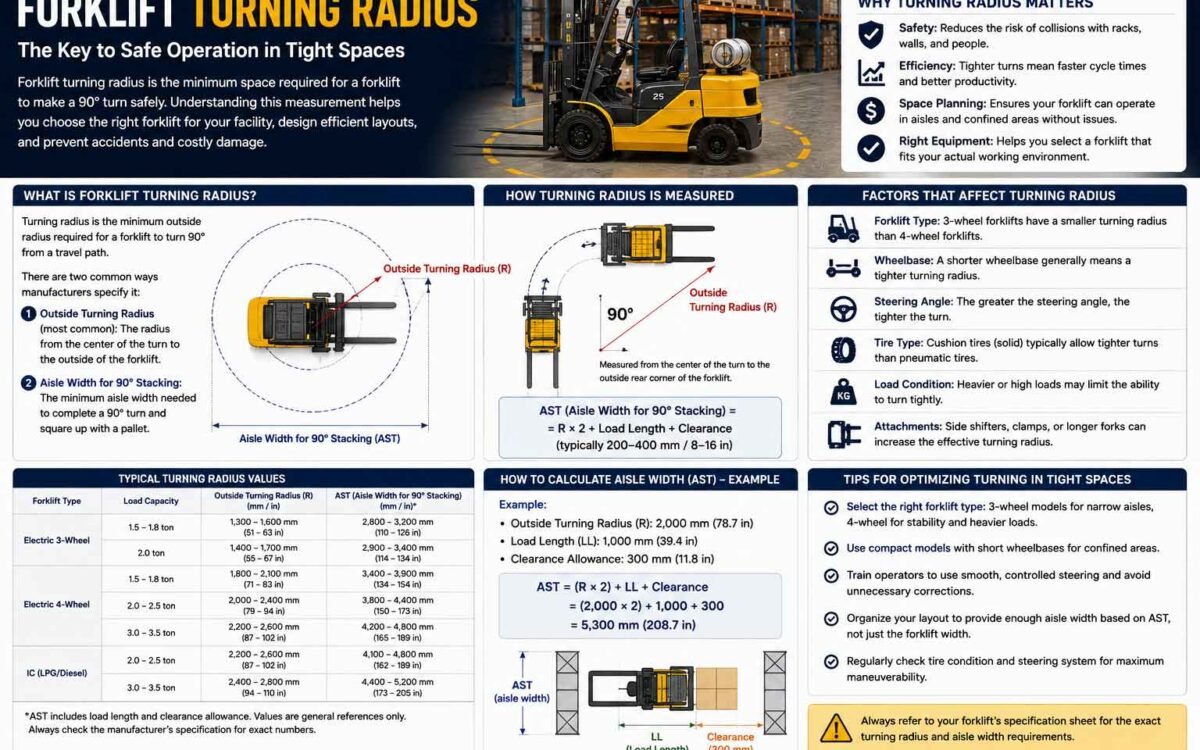
Forklift Turning Radius: Why It's the Spec That Decides If Your Forklift Actually Fits
A practical guide to forklift turning radius, explaining what actually determines it wheelbase, steering design, forklift class, typical radius ranges by forklift type, how to calculate the real aisle width you need, and common mistakes buyers make when matching a forklift to their facility layout.
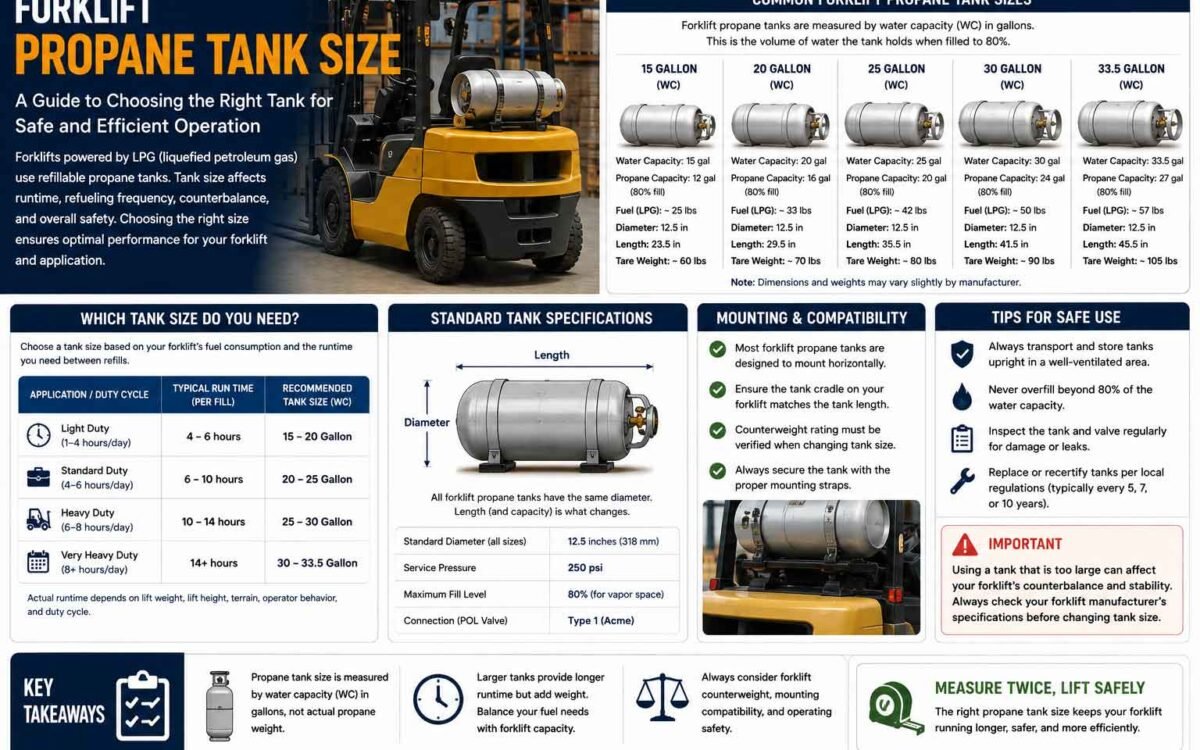
Forklift Propane Tank Size: A Complete Guide for Fleet Owners and Operators
A practical guide to forklift propane tank sizes (20lb to 60lb), explaining how tank capacity affects shift run time, swap frequency, and labor efficiency — plus a simple formula to estimate run time and key questions to help fleet owners choose the right size for their operation.
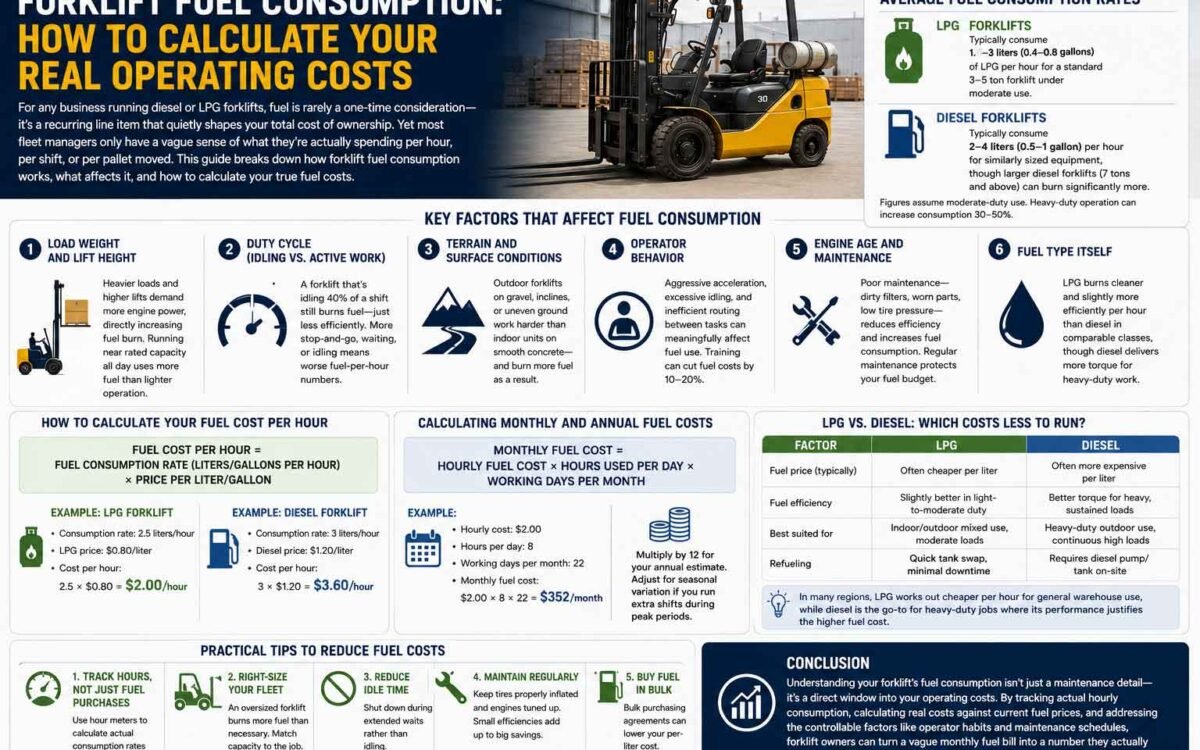
Forklift Fuel Consumption: How to Calculate Your Real Operating Costs
A practical breakdown of forklift fuel consumption for diesel and LPG owners — covering average burn rates, the key factors that drive costs up or down, step-by-step formulas to calculate hourly and monthly fuel expenses, and a comparison of LPG vs. diesel to help fleet owners understand exactly what they're spending.
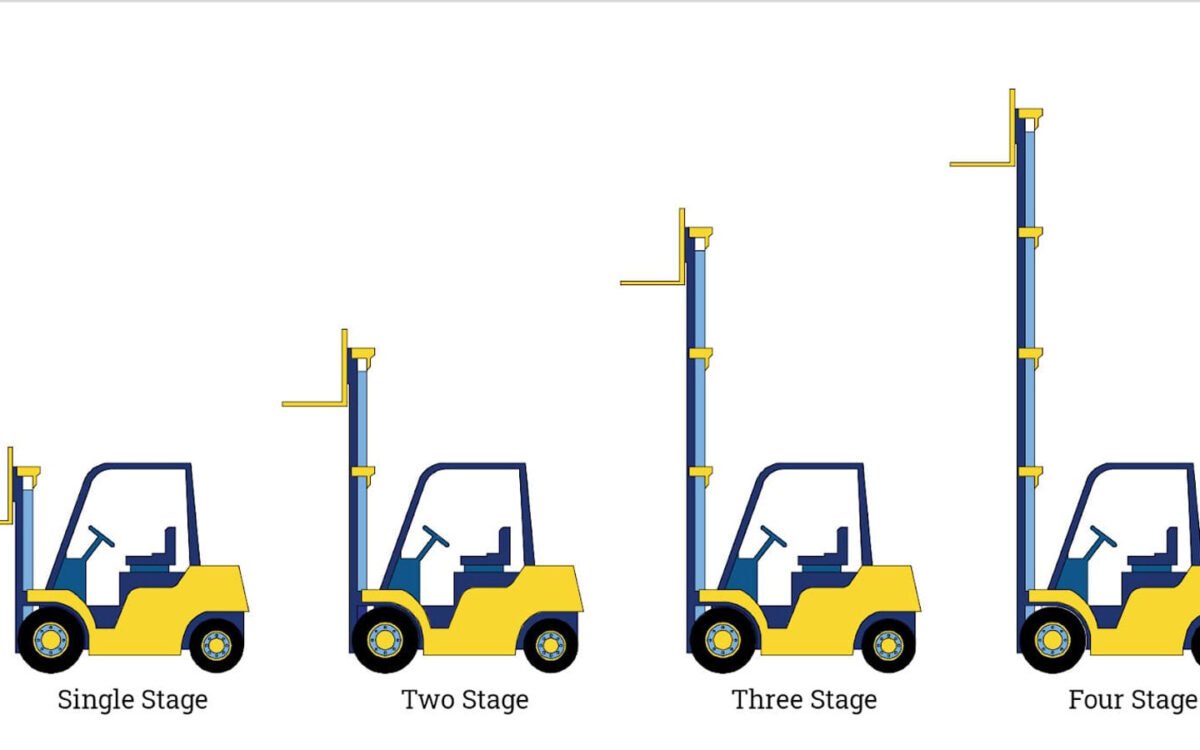
How to Choose a Forklift Mast: 7 Factors Buyers Should Check Before Ordering
Choosing the right forklift mast requires more than looking at maximum lift height. This guide explains how to match mast type, lift height, free lift, clearance, and load capacity to your actual warehouse and material-handling needs.
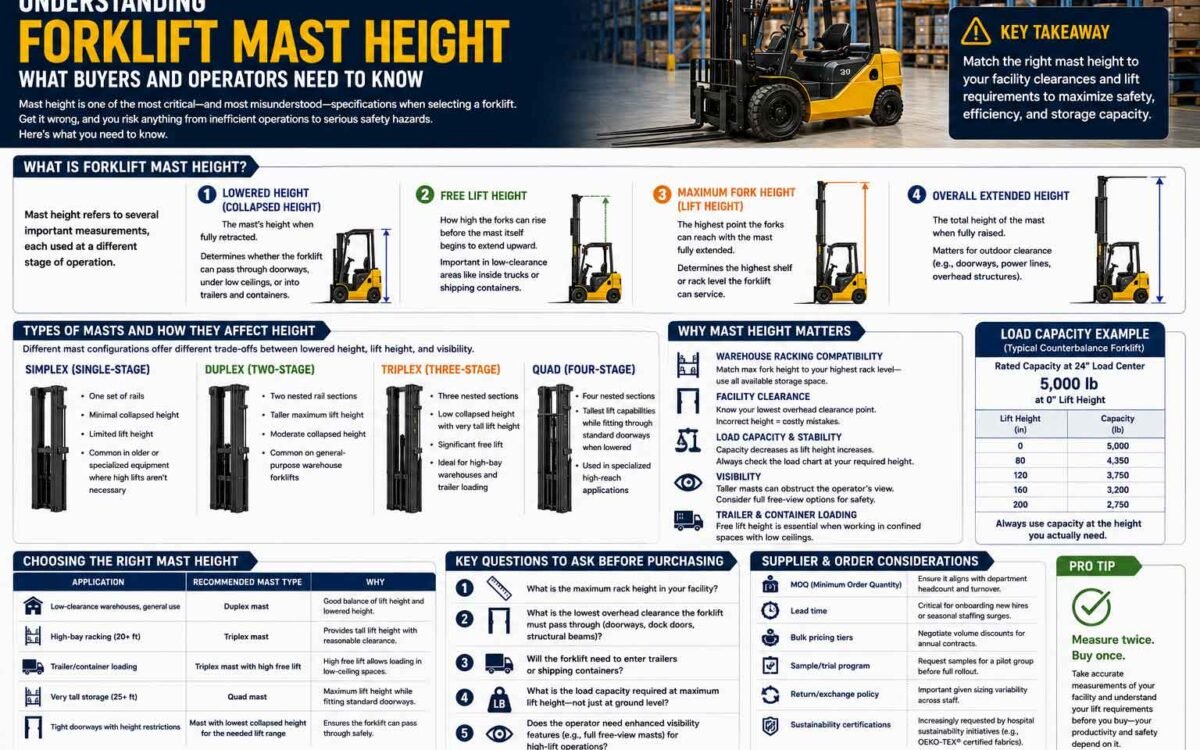
Understanding Forklift Mast Height: What Buyers and Operators Need to Know
Mast height is not a single spec to glance at — it's a combination of lowered height, free lift, and maximum lift height that must align precisely with your facility's racking, doorways, and load requirements. Taking accurate measurements of your space and understanding load capacity at your required lift height will help you avoid costly mismatches and keep operations both efficient and safe.
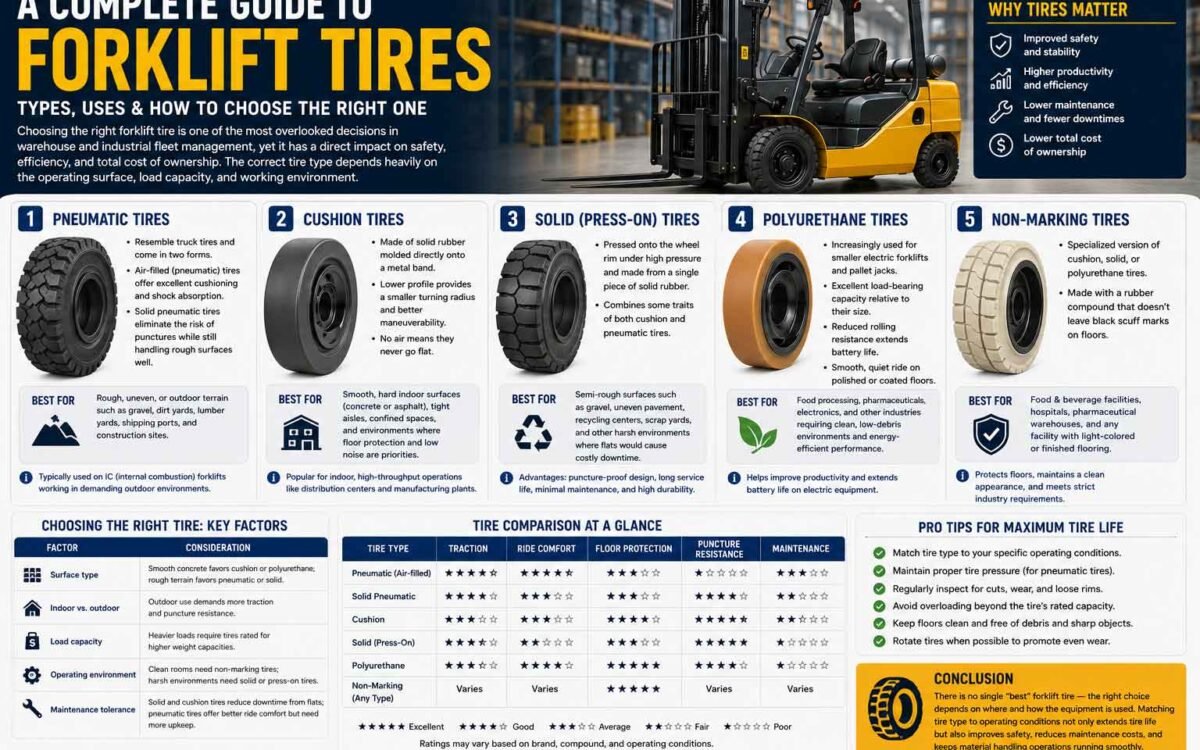
Forklift Tire Types: A Complete Guide
Choosing the right forklift tire is one of the most overlooked decisions in warehouse and industrial fleet management, yet it has a direct impact on safety, efficiency, and total cost of ownership. The correct tire type depends heavily on the operating surface, load capacity, and working environment. Below is an overview of the main forklift tire categories and how to choose between them.
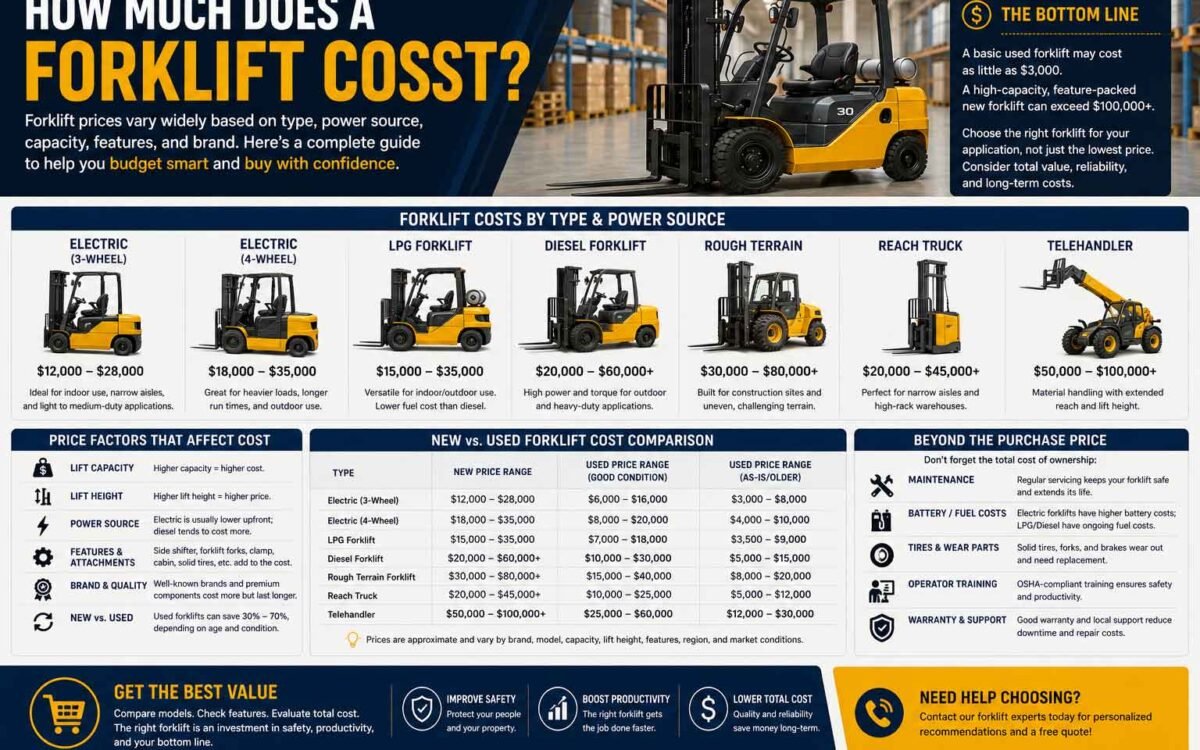
How Much Does a Forklift Cost? (2026 Complete Price Guide by Type and Capacity)
A new forklift costs anywhere from $1,500 for a manual pallet jack to $150,000+ for a 16-ton container handler. The price is driven by three things: type, capacity, and power source. Here's the full price map — every type, every tonnage, with the numbers buyers actually pay.
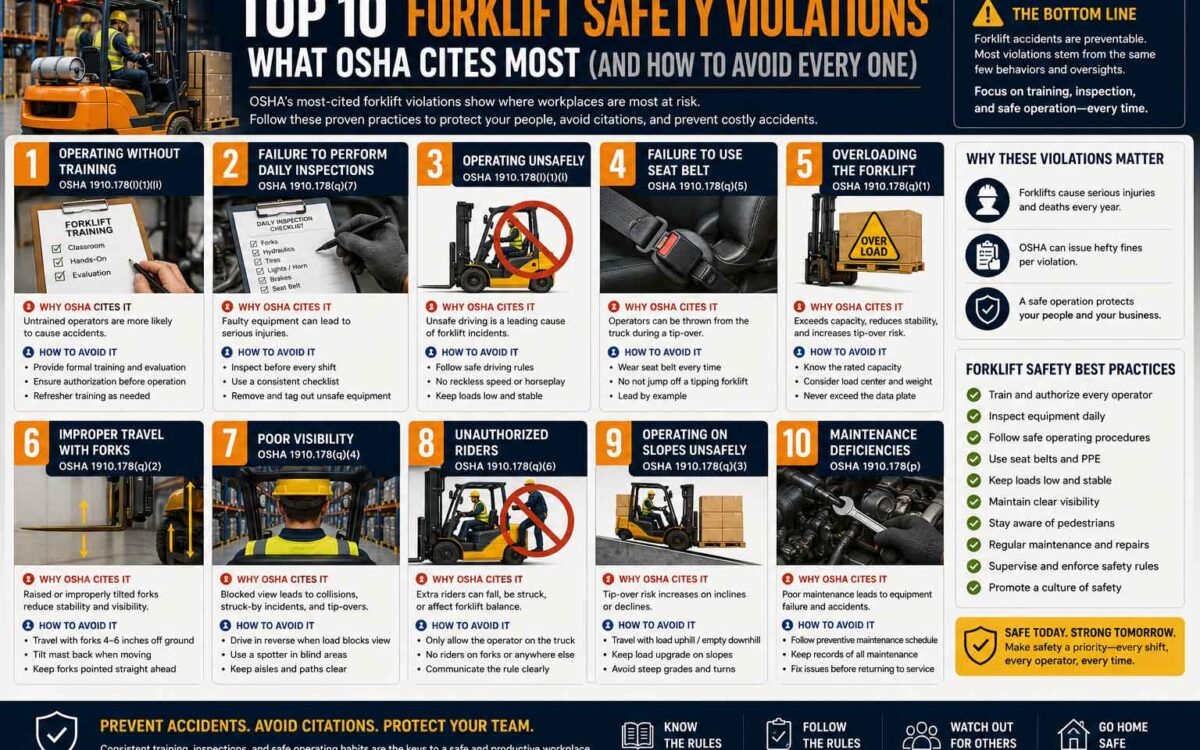
Top 10 Forklift Safety Violations — What OSHA Cites Most (And How to Avoid Every One)
OSHA issued over 5,000 forklift-related citations in a typical year — and 80% of them fall into just 10 categories. You don't need to guess what inspectors look for. Here are the ten most-cited violations, the fine for each, and exactly how to fix them before the inspector walks your floor.
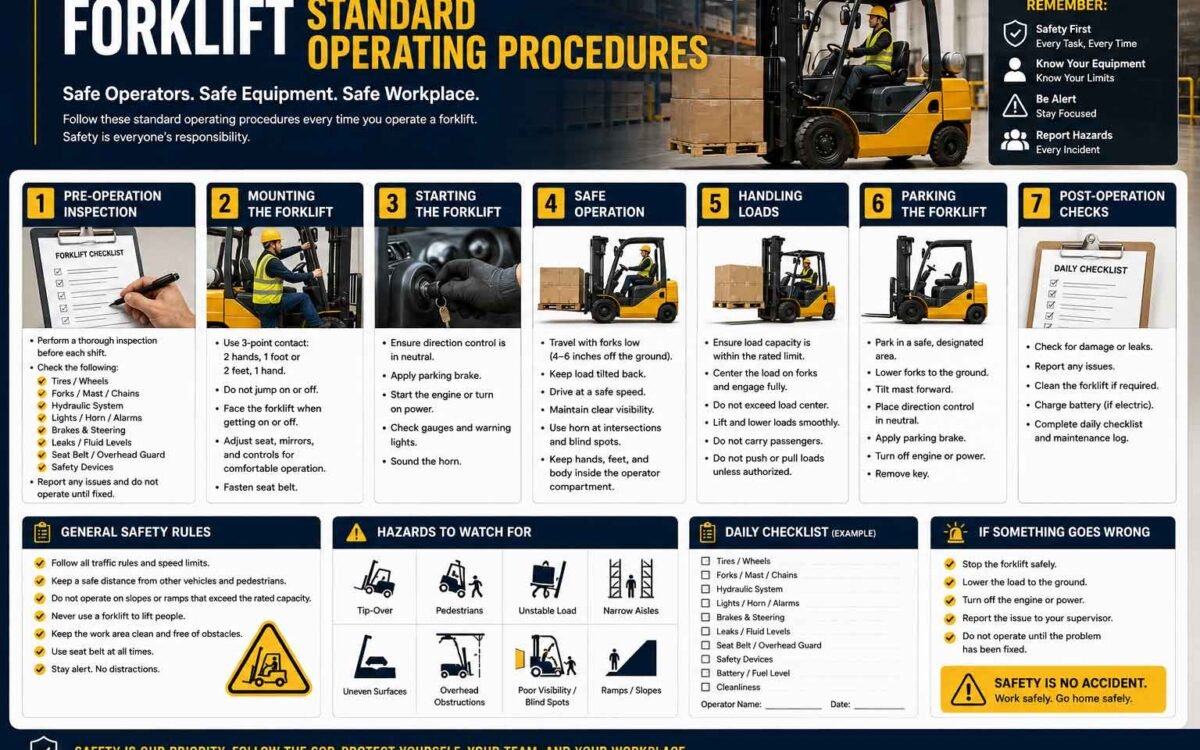
Forklift Standard Operating Procedures — The Complete SOP Template (Print and Use)
OSHA requires every forklift operator to be trained and certified — but it doesn't give you the procedures. Most warehouses run forklifts without a written SOP, which means every operator drives by their own rules. Here's a complete, ready-to-adapt forklift SOP: pre-start checks, operation rules, loading procedures, parking, and emergencies. Print it, adapt it to your facility, and post it.
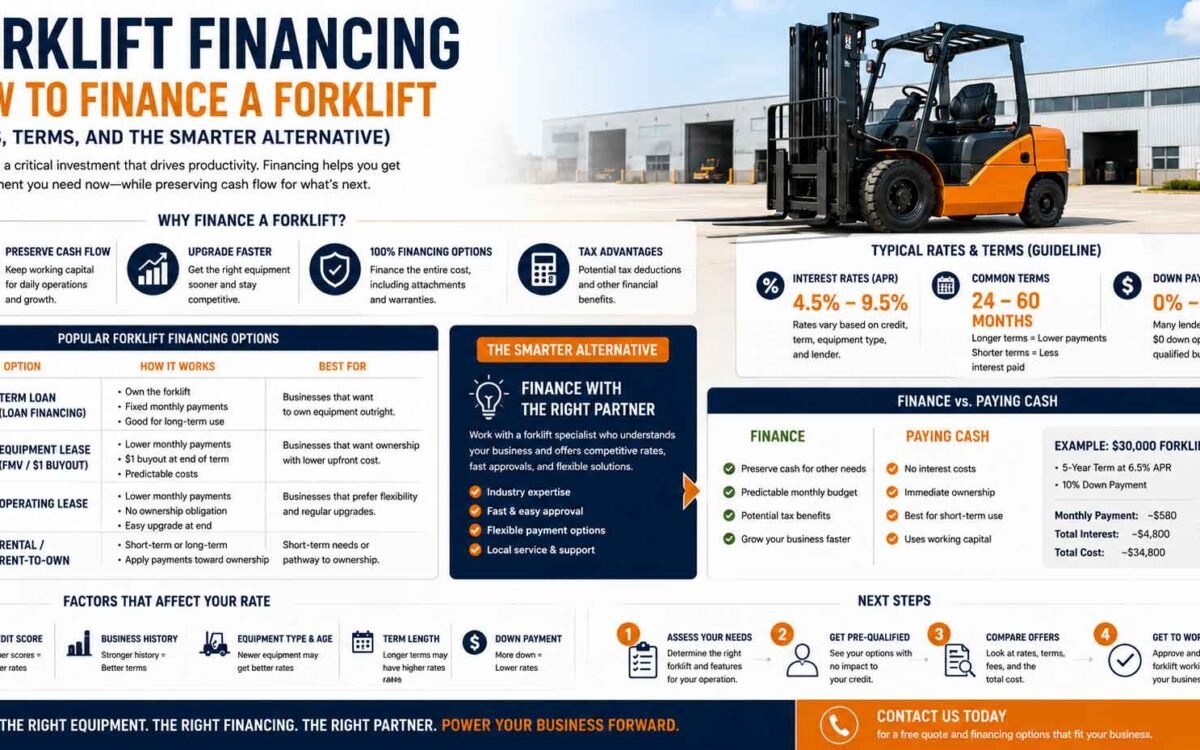
Forklift Financing — How to Finance a Forklift (Rates, Terms, and the Smarter Alternative)
A new forklift costs $5,000–$50,000 — too much to pay cash for many small businesses, and too little to justify a complex loan. The good news: forklift financing is one of the easiest equipment loans to get. The bad news: most buyers pay 2–3× more in interest than they need to, because they never compare the financing cost against the purchase price difference.