Forklifts are among the more dangerous pieces of equipment in warehouses, factories, and construction sites. This page collects the most widely cited US figures, explains why they differ, and summarizes what the data says about causes and prevention.
Quick Answer
- Fatalities: BLS recorded 67 workers killed in incidents involving forklifts, order pickers, or platform trucks in 2023, out of 5,283 fatal work injuries across all US industries. Recent years have generally fallen between the 60s and the mid-80s.
- Serious injuries: OSHA's long-cited estimate is about 34,900 serious forklift-related injuries per year, plus about 61,800 non-serious injuries. This is an older estimate and is still widely quoted.
- Preventability: OSHA has reported that inadequate training is a factor in roughly a quarter of forklift accidents, and that proper training could prevent up to about 70% of them.
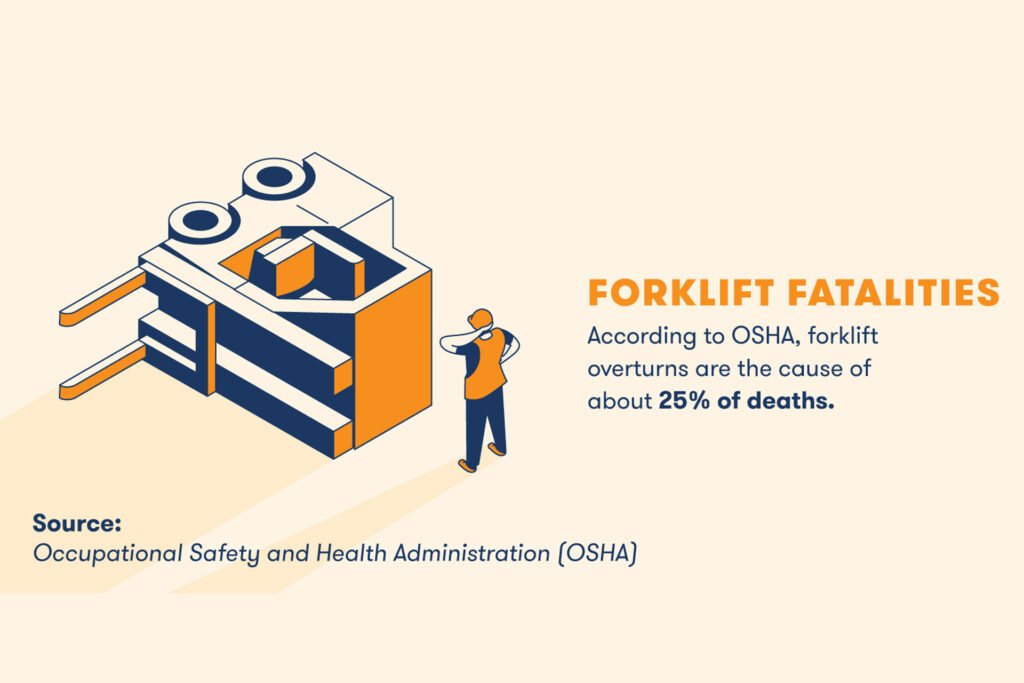
Forklift Fatality Statistics
Key Figures and Where They Come From
| Figure | Number | Source and note |
|---|---|---|
| Forklift-related deaths, 2023 | 67 | BLS Census of Fatal Occupational Injuries (CFOI), as reported by industry safety groups; covers forklifts, order pickers, and platform trucks |
| All US work-related deaths, 2023 | 5,283 | BLS CFOI; forklifts account for roughly 1.3% |
| Forklift deaths, long-cited OSHA estimate | About 85 per year | Older OSHA estimate; still widely quoted |
| Serious injuries, OSHA estimate | About 34,900 per year | Older OSHA estimate |
| Non-serious injuries, OSHA estimate | About 61,800 per year | Older OSHA estimate |
| Accidents linked to inadequate training | About 25% | OSHA study |
| Accidents preventable with proper training | Up to about 70% | OSHA |
Why the Numbers Differ
You will see '85,' 'about 100,' and '67' quoted for forklift deaths per year. They are not contradictory:
- OSHA's estimate is a long-standing figure that has been repeated for many years, and it combines a fatality estimate with injury estimates.
- BLS CFOI is a census of fatal work injuries counted year by year, so it moves with each year's data and uses the BLS event and source classification, which changed for 2023 data onward.
- Other organizations, such as the National Safety Council, also publish counts, and scope and method differ.
When you cite a number, cite the year and the source, and prefer the most recent census count over an old rounded figure.
Forklift Fatalities: Leading Causes
Tip-overs and pedestrians struck by forklifts are consistently the two largest categories of fatal forklift incidents. Others include falls from the truck or from elevated forks, being crushed between the truck and another object, and being struck by falling loads.
Reported shares vary by source, period, and how events are classified. For example, NIOSH's analysis of 1980–1994 fatalities found overturns at roughly 22% and being struck by a forklift at roughly 20% of deaths, while more recent compilations report a higher share for overturns and, citing BLS data, pedestrians struck as the leading event in some years. Check the original publication before quoting a percentage.
The most common contributing factors in incident reports are:
- Driving at unsafe speeds
- Turning with an elevated load
- Operating on uneven surfaces or ramps
- Poor visibility and unsegregated pedestrian traffic
- Inadequate or lapsed operator training
- Skipped pre-shift inspections
Forklift Injuries
Nonfatal injuries are far more numerous than deaths. Common injury types include:
- Crushing injuries, often to the feet, legs, and torso
- Fractures
- Head injuries
- Back and muscle strain
Nonfatal injuries from forklifts have been reported to be more common among younger workers, while fatal injuries skew older. For current counts by industry and injury type, see the BLS Survey of Occupational Injuries and Illnesses.
How Many Accidents Are Preventable?
OSHA has reported that inadequate training contributes to roughly a quarter of forklift accidents and that proper training could prevent up to about 70% of them. Beyond training, the usual contributing factors are workplace layout, pedestrian control, equipment condition, and enforcement of basic rules.
That is the useful takeaway from the data: most of the risk sits in things an employer controls.
What Reduces Forklift Accidents
- Training and evaluation. Operators must be trained, evaluated at least every three years, and retrained when triggered by unsafe operation, an accident or near-miss, a change of truck type, or a change in conditions. See our OSHA forklift requirements guide.
- Rules that are enforced. Speed limits, seat belts, no elevated travel, and pedestrian right of way. See Forklift Safety Rules and our printable SOP template.
- Daily inspection and maintenance. See our maintenance checklist.
- Layout and pedestrian separation. Marked walkways, mirrors, and controlled intersections.
- Correct capacity and load handling. Overloading and misjudged load centers are a recurring cause of tip-overs. See our guide to load center.
- Equipment features that address specific risks. Operator restraint and presence sensing for tip-overs, speed limiting and warning devices for pedestrian collisions, and cameras and mirrors for visibility. None of these replaces trained, evaluated operators.
Frequently Asked Questions
How many forklift deaths happen per year in the US? BLS recorded 67 in 2023. OSHA's older estimate is about 85 per year. Recent annual counts have generally been in the range of the 60s to the mid-80s.
How many forklift injuries happen each year? OSHA's long-cited estimate is about 34,900 serious and 61,800 non-serious injuries per year. For current nonfatal counts, see BLS injury and illness data.
What is the most common cause of fatal forklift accidents? Tip-overs and pedestrians struck by forklifts are the two largest categories, and sources differ on which ranks first in a given year.
Are forklift accidents preventable? Largely. OSHA has reported that proper training could prevent up to about 70% of forklift accidents.
Where Maoxiang Fits
We build electric forklifts and other material handling equipment, and the safety features available depend on the model and configuration. Tell us about your site, aisle layout, and pedestrian traffic, and we'll tell you what's standard on the trucks we'd recommend and what can be added, including visibility aids and speed-control options. Equipment is one part of the picture. Trained operators and enforced rules remain the foundation.