mini forklift
What Is a Mini Forklift?
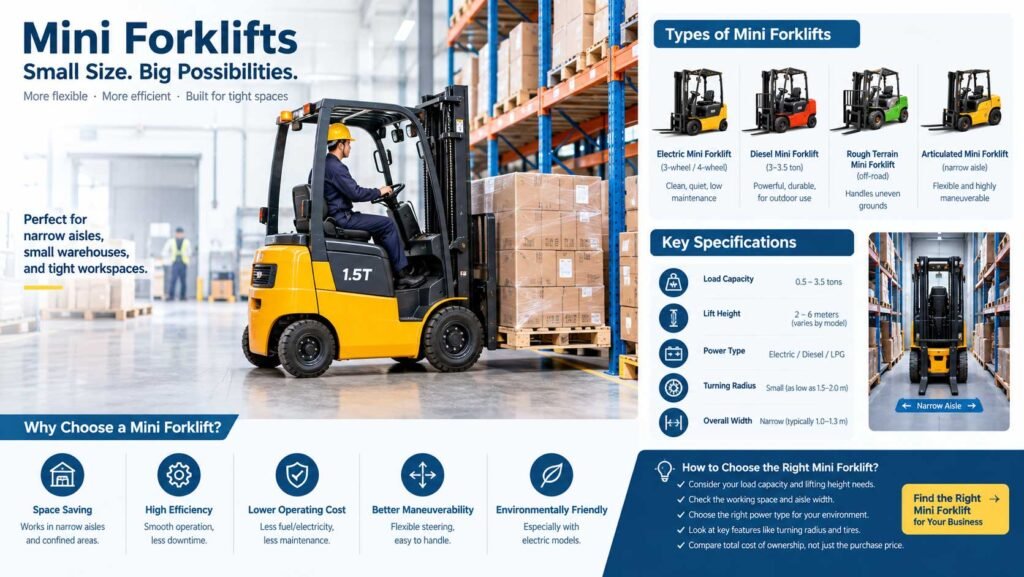
- Turning radius: Less than 1.5 meters
- Width: Between 700 mm and 1,200 mm
- Load capacity: Ranging from 500 kg to 1,500 kg
Compact vs. Standard Forklifts: Key Differences
| Metric | Mini Forklift | Standard Forklift |
|---|---|---|
| Aisle Width Required | 1.6 – 2.5 meters | 3.5 – 4.5 meters |
| Load Capacity | 500 – 1,500 kg | 1,500 – 5,000+ kg |
| Operating Cost | Lower | Higher |
| Width / Footprint | 700 – 1,200 mm | 1,400 mm+ |
| Operator Training | Easier | More Complex |
When Does a Mini Forklift Outperform a Standard Model?
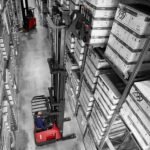
Narrow-Aisle Warehouses
Facilities with aisle widths under 2.5 meters benefit from mini forklifts’ tight turning radius, reducing safety risks and eliminating throughput bottlenecks.
Multi-Level Facilities and Mezzanines
Mini forklifts can operate on elevated platforms with weight and headroom restrictions without costly structural modifications.
Cold Storage and Clean Rooms
Electric mini forklifts produce zero exhaust, generate less heat, and require minimal turning space, making them ideal for temperature-controlled environments.
Mixed-Use Facilities
In spaces combining storage and production, mini forklifts integrate safely alongside pedestrian traffic and production equipment.
Last-Meter Logistics
Hospitals, airports, and campuses benefit from mini forklifts for internal goods movement without the licensing and footprint concerns of larger forklifts.
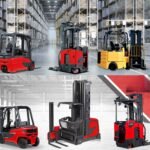
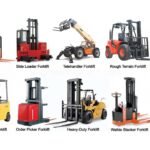
Types of Mini Forklifts to Consider
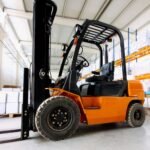
- Compact Counterbalance Forklifts: Versatile for general pallet handling in moderately tight spaces.
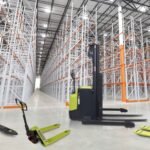
- Narrow Aisle Reach Trucks: Designed for high-rack stacking in extremely narrow aisles.
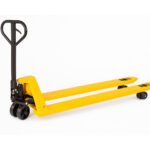
- Walkie Stackers and Pallet Stackers: Cost-effective, operator-walked machines for light to medium lift applications.
- Autonomous Mini Forklifts (AMF): AI-powered vehicles capable of 24/7 unmanned operation with laser SLAM navigation and warehouse management system (WMS) integration.
- Telescopic Mini Forklifts: Built for rough terrain with a compact footprint, ideal for outdoor and construction sites.
Key Specifications to Evaluate Before Buying
- Turning Radius: Measure your narrowest aisle and ensure the forklift’s turning radius fits safely.
- Lift Height and Capacity: Confirm the rated capacity at your maximum lift height meets your load requirements.
- Battery and Charging: Lithium-ion batteries allow opportunity charging, essential for multi-shift operations.
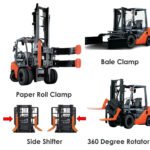
- Fork and Attachment Compatibility: Ensure forks fit your pallet sizes and any non-standard loads.
- Safety Features: Look for overhead guards, stability systems, and obstacle detection, especially in autonomous models.
- Environmental Rating: Confirm IP ratings and operating temperature ranges suit cold storage, dusty, or outdoor environments.
Autonomous Mini Forklifts: The Next Evolution
- 24/7 operation without human intervention
- Integration with WMS and elevator control
- Dynamic remapping of warehouse environments
- Enhanced safety with sensor-based obstacle detection
Mini Forklift Buying Checklist
- Measure narrowest aisle and verify turning radius compatibility
- Document maximum load weight and rack height requirements
- Assess power infrastructure and charging capabilities
- Evaluate environmental conditions (temperature, humidity, dust)
- Confirm pallet compatibility and storage system format
- Review vendor service network and parts availability
- Understand operator training and licensing needs
- For autonomous models, check WMS integration and obstacle avoidance certification
- Calculate total cost of ownership over five years
- Request a facility-specific demo or simulation