What Are LPG Forklifts?
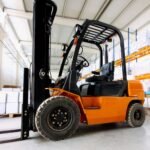
LPG forklifts are industrial trucks powered by liquefied petroleum gas, commonly propane. Unlike diesel forklifts that rely on heavier fuels or electric forklifts that require long charging times, LPG forklifts use pressurized gas cylinders mounted on the rear, fueling an internal combustion engine. This setup delivers strong lifting power with cleaner emissions and quieter operation.
How LPG Forklifts Work
The LPG cylinder stores gas in liquid form under pressure. When the forklift operates, the liquid gas vaporizes and mixes with air inside the engine, igniting to produce power. This power drives the hydraulic system that controls lifting, lowering, and tilting functions. The quick cylinder swap capability means minimal downtime, making LPG forklifts highly efficient for continuous operations.
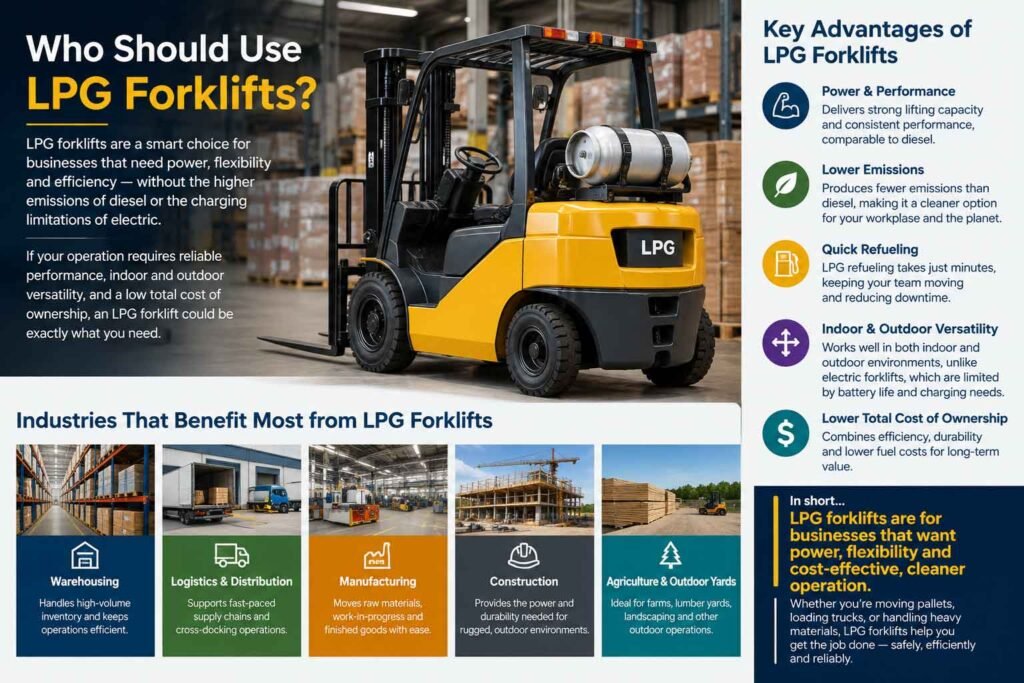
LPG Forklift
Key Features and Advantages of LPG Forklifts
1. Fast Refueling and High Productivity
One of the standout benefits of LPG forklifts is their rapid refueling. Swapping an empty gas cylinder for a full one typically takes just a few minutes, compared to hours required for electric forklift battery charging. This quick turnaround significantly reduces downtime, especially in multi-shift or 24/7 operations.
2. Indoor and Outdoor Versatility
LPG forklifts produce fewer emissions than diesel and are quieter, enabling safe and efficient use in both indoor and outdoor environments—provided that indoor spaces have adequate ventilation. This versatility makes them ideal for businesses requiring a single machine to operate seamlessly across warehouse floors and outdoor loading docks.
3. Cleaner Emissions Compared to Diesel
LPG combustion produces lower levels of carbon monoxide, nitrogen oxides, and particulate matter than diesel engines. This results in improved air quality and compliance with workplace exposure limits, making LPG forklifts a safer option for semi-enclosed or well-ventilated indoor areas.
4. Consistent Power Output
Unlike electric forklifts, whose power may diminish as batteries drain, LPG forklifts maintain consistent power throughout the entire fuel cycle. This reliability is critical for high-volume logistics operations where performance consistency is non-negotiable.
5. Cost-Effective Operation
LPG forklifts generally have a lower upfront cost than electric or diesel models and offer manageable maintenance expenses. While they require routine engine servicing, the cleaner fuel combustion can extend engine life and reduce maintenance frequency compared to diesel forklifts.
Who Should Use LPG Forklifts?
LPG forklifts are not a one-size-fits-all solution, but their characteristics make them particularly well-suited for specific industries and operational needs.
1. Warehousing and Distribution Centers
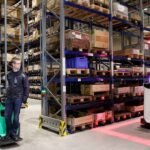
Warehouses demand forklifts that can swiftly move pallets between storage racks and loading docks. LPG forklifts excel here due to their ability to operate indoors with fewer emissions and outdoors with reliable power. Their fast refueling keeps busy distribution centers running smoothly without costly downtime.
2. Manufacturing Facilities
Manufacturing plants often require forklifts to transport raw materials and finished goods across indoor production floors and outdoor storage yards. LPG forklifts provide the flexibility and consistent power needed to handle this mixed-use environment efficiently.
3. Retail and Wholesale Logistics
Retail distribution centers benefit from LPG forklifts’ versatility and quick refueling, supporting high throughput during peak seasons without sacrificing indoor air quality or operator comfort.
4. Construction and Building Materials
While diesel forklifts dominate heavy-duty outdoor applications, LPG forklifts are gaining traction for lighter outdoor tasks and indoor storage areas due to their quieter operation and lower emissions.
5. Food Processing and Pharmaceutical Industries
These industries prioritize clean air and hygiene. LPG forklifts, with their lower emissions and quieter engines, can be a practical alternative to diesel in well-ventilated spaces, maintaining operational efficiency without compromising safety.
LPG Forklifts vs. Diesel and Electric: A Balanced Perspective
Understanding how LPG forklifts compare to diesel and electric alternatives can clarify who should use them.
| Feature | LPG Forklifts | Diesel Forklifts | Electric Forklifts |
|---|---|---|---|
| Fuel Type | Liquefied Petroleum Gas (Propane) | Diesel | Battery-powered (Lead-acid/Li-ion) |
| Emissions | Lower than diesel, moderate | High emissions, particulate matter | Zero emissions at point of use |
| Indoor Use | Suitable with ventilation | Generally not recommended | Ideal for indoor use |
| Refueling Time | Minutes (cylinder swap) | Minutes (fuel tank refill) | Hours (battery charging) |
| Noise Level | Moderate | High | Low |
| Maintenance | Moderate (engine servicing) | High (complex emissions systems) | Low (fewer moving parts) |
| Power Output | Strong, consistent | Highest torque and power | Good, but may reduce near battery depletion |
| Operational Flexibility | Indoor and outdoor | Mostly outdoor | Mostly indoor |
Safety and Maintenance Tips for LPG Forklifts
- Proper Cylinder Handling: LPG cylinders contain pressurized flammable gas. Operators must inspect cylinders for leaks, dents, or damage before use and ensure secure mounting.
- Ventilation: Indoor use requires adequate ventilation to prevent accumulation of carbon monoxide and other gases.
- Regular Maintenance: Routine checks of engine oil, spark plugs, fuel regulators, and hydraulic systems extend forklift life and ensure safety.
- Operator Training: Proper training on LPG forklift operation and emergency procedures is essential to minimize accidents.
Current Trends and Future Outlook
Despite the rapid growth of electric forklifts driven by sustainability goals, LPG forklifts maintain a strong market presence. According to recent industry research, the global LPG forklift market was valued at approximately $4.8 billion in 2025 and is projected to reach $7.6 billion by 2034. Innovations such as cleaner-burning engines, electronic fuel injection, and telematics integration continue to enhance their efficiency and environmental performance.
Conclusion: Is an LPG Forklift Right for Your Business?
LPG forklifts offer a compelling combination of power, versatility, and operational efficiency. They are an excellent choice for businesses that need:
- Reliable performance in both indoor and outdoor environments
- Fast refueling to minimize downtime
- Lower emissions than diesel forklifts with manageable maintenance costs
- Consistent power output for high-volume operations
If your operation spans warehousing, manufacturing, retail, or light construction and you require a forklift that bridges the gap between diesel muscle and electric cleanliness, an LPG forklift could be your ideal partner.