Renting a forklift sounds simple. You call a company, they quote you a number, you sign and get the equipment. But the final bill is often noticeably higher than that first number — because forklift rental pricing has more moving parts than most people expect.
This guide gives you the real numbers, explains what actually drives the price up or down, walks you through the fees most renters don't see coming, and helps you figure out whether renting is even the right call for your situation.
The Short Answer: What Does Forklift Rental Actually Cost?
For a standard 5,000 lb warehouse forklift — the most common rental unit — current market rates in the US run roughly:
- By the day: $150–$350
- By the week: $500–$800
- By the month: $1,500–$2,500
These figures are US rates. Other markets differ.
Those numbers cover a basic, standard electric or LPG counterbalance unit in decent condition. Larger capacity, specialized types, or premium configurations push the price higher. Smaller equipment or longer commitments bring it down.
But here's the thing: those figures are just the starting point. What you actually pay depends on five variables — and missing any one of them will blow your budget.
how much does it cost to rent a forklift
The 5 Things That Actually Determine Your Rental Price
1. Forklift Type and Capacity
This is the biggest price driver. A compact electric warehouse forklift and a rough terrain diesel unit might both be called 'forklifts,' but they rent at completely different prices.
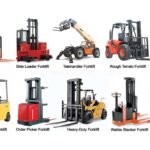
Here's a realistic breakdown by type for 2026:
| Forklift Type | Daily | Weekly | Monthly |
|---|---|---|---|
| Small electric (3,000 lb, cushion tire) | $150–$200 | $450–$600 | $1,200–$1,800 |
| Standard counterbalance (5,000 lb) | $200–$350 | $550–$850 | $1,500–$2,500 |
| LPG / propane forklift (5,000–8,000 lb) | $200–$400 | $550–$900 | $1,400–$2,200 |
| High-capacity (10,000–15,000 lb) | $350–$600 | $900–$1,500 | $2,500–$4,000 |
| Reach truck | $250–$450 | $700–$1,200 | $2,000–$3,500 |
| Rough terrain / telehandler | $300–$600 | $900–$1,500 | $2,500–$5,000+ |
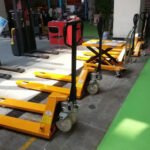
| Pallet jack (powered) | $50–$150 | $150–$400 | $500–$1,200 |
The rule is straightforward: bigger capacity costs more. But more importantly, renting more capacity than you actually need is one of the most common ways businesses overspend on rentals. Before you call a supplier, know your heaviest actual load — not your theoretical maximum. A 5,000 lb forklift handles 4,500 lb loads just fine and costs meaningfully less than a 10,000 lb unit.
2. Rental Duration — and the Discount Structure
Rental pricing is structured to reward commitment. The longer you rent, the lower your effective daily rate.
A forklift that costs $300 per day might run $750–$900 for a full week. That is roughly the price of 2.5–3 single days for up to a full week of use, which is why weekly and monthly terms cut the effective daily rate so sharply. Monthly rates drop the daily equivalent even further, sometimes to under $100 per day for standard units.
The practical implication: if you need equipment for five days, a weekly rental will almost always cost less than five separate daily rentals. If your project runs three weeks, it's worth asking whether a monthly rate is available — most suppliers will negotiate.
One important detail most renters miss: rental companies define their time periods in operating hours, not calendar days. A 'day' is typically 8 hours, a 'week' is 40 hours, and a 'month' is 160 hours. If you run two shifts on a daily rental, you've used two days' worth of hours — and you'll pay for it.
3. Your Location
Geography moves forklift rental prices by 20–40% depending on local market conditions. Urban areas with multiple competing suppliers tend to have more competitive rates than rural locations where you might be dealing with a single provider within a reasonable delivery range. Coastal cities and high-cost-of-living markets run consistently higher than mid-sized inland cities.
For context: the same standard 5,000 lb electric forklift might rent for $250/day in a competitive Midwest market and $350/day in a major coastal city. Same equipment, same duration, meaningfully different price.
4. Fuel Type
Electric and LPG forklifts are the most commonly rented and generally carry similar base rates for equivalent capacities. Diesel units often rent slightly higher due to higher operating costs on the supplier's side. The fuel cost itself, however, is usually your responsibility — which creates a meaningful difference in total cost depending on how intensively you use the equipment.
For LPG rentals, you're typically responsible for refueling. The supplier provides the equipment; you arrange your own propane supply if you exhaust the tank. For electric rentals, the battery and charger are generally included in the rate — but confirm this upfront, because not all rental agreements are structured the same way.
5. Seasonal Demand
Rental prices are not fixed throughout the year. Construction season (spring through fall) drives up demand and prices for outdoor equipment. The pre-holiday rush (October through December) does the same for warehouse equipment as retailers and distributors surge capacity. Agricultural regions see price spikes during harvest.
If your project timing is flexible, shifting it by four to six weeks can sometimes save 15–25% on rental rates during high-demand periods. If your timing isn't flexible, book early — availability gets tight during peak seasons, and last-minute bookings attract premium pricing on top of already elevated rates.
The Hidden Costs: What the Quoted Price Often Doesn't Include
An illustrative one-month rental: base rate $2,000; delivery and pickup $300 total; damage waiver at 12% of the rate, $240. That is $2,540 before any attachments, overtime, or cleaning, or about 27% above the headline rate. Your numbers will differ, but the pattern is typical.
This is the section most rental guides skim over. These are the charges that consistently catch renters off guard.
Delivery and pickup fees
Getting the forklift from the rental yard to your site costs money — typically roughly $75–$250 each way for typical distances, and more for long hauls. That's potentially $1,000 in transport costs on top of your base rental rate for a month-long rental. Some suppliers waive delivery fees for monthly rentals or for nearby locations; most don't. Always ask upfront whether delivery is included and get the number in writing.
Overtime charges
If your operation runs beyond the hours your rental agreement defines — remember, a 'day' is 8 hours — you'll pay overtime. Rates vary from a few dollars per hour for small electric units to $30+ per hour for large diesel equipment. For operations planning to run multiple shifts on daily or weekly rental agreements, overtime charges can add up to hundreds of dollars per week without anyone noticing until the invoice arrives.
Fuel costs
For LPG and diesel rentals, fuel is your responsibility. This isn't a small line item. An LPG forklift running a full 8-hour shift can go through a significant amount of propane. Budget fuel separately from the rental rate and account for it in your total cost calculation.
Insurance and damage waivers
Most rental companies require proof of liability insurance before releasing the equipment. If your existing business insurance covers rented equipment adequately — many do, but many don't — you're fine. If it doesn't, the rental company will offer a damage waiver, typically priced at 10–15% of the rental rate. On a $1,500–$2,500 monthly rental, that works out to roughly $150–$375 per month on top of the base rate.
Damage beyond normal wear and tear is your financial responsibility regardless. Bent forks, torn seats, excessively worn tires, damage from misuse — these don't fall under routine maintenance coverage. Inspect the equipment thoroughly when it arrives and document any pre-existing damage with photos before you touch it.
Attachments
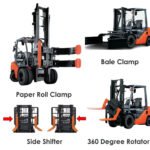
Need a carton clamp, a paper roll clamp, a slip sheet attachment, or a side shifter beyond the standard configuration? Each attachment carries its own additional daily or weekly rate. Specialty attachments can add $50–$200+ per day to your rental cost depending on the type. If you need one, confirm the availability and pricing before you book.
Cleaning fees
Most rental contracts specify the condition you must return the equipment in. Returning a forklift caked in mud, concrete, or other industrial debris can trigger cleaning charges. It sounds minor until you get a $200 cleaning bill on a two-day rental. Take 20 minutes to clean the equipment before return — it's worth it.
Renting With an Operator vs. Renting the Equipment Only
If none of your staff have been trained and certified to operate a forklift by their employer under OSHA's standard (there is no government-issued forklift license), you have two options: arrange certification training before the rental, or rent the forklift with an operator included.
Renting with an operator typically adds roughly $55–$110 per hour to the equipment rate, which for a 40-hour week is about $2,250–$4,500 for the operator alone. Rates vary by market, and some marketplace data puts the underlying operator labor cost at roughly $25–$45 per hour before the rental company's markup, so always ask for a quoted operator rate. The obvious advantages: you don't need to worry about certification, insurance coverage is typically handled through the rental company, and professional operators reduce the risk of equipment damage and workplace accidents.
The right choice depends on your situation. For a single-day job where certifying staff makes no sense, renting with an operator is usually the most cost-effective path. For a month-long rental where the operator cost would exceed several thousand dollars, it's worth having your own operators trained and certified — the upfront training cost ($150–$300 per person) pays back quickly against weeks of operator fees.
Rent vs. Buy: A Practical Decision Framework
The question underneath the rental cost question is usually: should I be renting at all, or should I buy?
Renting makes clear financial sense when:
- You need a forklift for a defined project lasting weeks or a few months
- Your forklift needs are seasonal — you're busy for three months and slow for nine
- You need a type of forklift you don't regularly use (a rough terrain unit for one construction project, for example)
- You're expanding operations and want to test equipment types before committing to a fleet purchase
- Capital preservation matters more than long-term cost optimization right now
Buying makes more sense when:
- You run forklifts consistently, five or more days per week, year-round
- You've been renting the same equipment for more than six to eight months — at that point, monthly rental costs typically exceed the cost of ownership
- Downtime from waiting for a rental company to service or replace equipment is genuinely costly to your operation
A simple break-even test: months to break even ≈ purchase price ÷ (monthly rental cost − monthly ownership running cost). For example, a $30,000 electric truck against a $2,000 monthly rental, with roughly $700 per month in energy, maintenance, and insurance, breaks even in about 23 months before counting resale value, and sooner once resale is included. If you rent the same truck most months of the year, it's time to run this comparison with your own numbers.
If you're approaching that six-month threshold, it may be worth comparing your total rental cost against a new unit. We build electric counterbalance forklifts (0.6–5 tons). Send us your typical monthly rental cost, how many months a year you rent, and your load and shift pattern, and we'll estimate when buying would break even.
7 Ways to Pay Less on Your Forklift Rental
1. Know your actual load before you call. Don't estimate high 'just to be safe.' A correctly sized forklift for your real loads costs less and operates more efficiently than an oversized unit you don't need.
2. Commit to the longest period you're confident you'll need. Booking a week when you need five days, or a month when you need three weeks, saves money compared to extending a shorter rental. Daily extensions at the end of a rental period are expensive.
3. Add 10% to your project timeline estimate. Rental extensions booked at the last minute are almost always more expensive than the original rate. Buffer your timeline upfront.
4. Get at least three quotes and compare apples to apples. Ask every supplier for a total delivered price including delivery fees, insurance or damage waiver, and fuel terms — not just the base rental rate. The lowest headline rate rarely ends up being the lowest total cost.
5. Ask about off-peak timing. If your project schedule has flexibility, ask when the supplier's slow periods are. Some will offer meaningful discounts during low-demand periods in exchange for booking certainty.
6. Inspect the equipment on arrival and photograph everything. Walk around the forklift with the delivery driver. Note every scratch, dent, and worn component. Take photos with timestamps. This protects you from being charged for pre-existing damage when the equipment is returned.
7. Return clean, on time, and fully fueled (or charged). Three avoidable charges — cleaning fees, late return penalties, and fuel surcharges — add real money to the final bill for no benefit. All three are entirely preventable.
Quick Reference: Forklift Rental Checklist Before You Book
Before signing a rental agreement, confirm answers to these questions:
- Is the quoted price all-in (truck + delivery + any required attachments)?
- What are the delivery and pickup fees?
- How many operating hours does a 'day' or 'week' cover, and what are the overtime charges?
- Who is responsible for fuel costs?
- What insurance coverage is required, and does my existing policy cover it?
- What constitutes damage beyond normal wear, and what's the process for documenting the equipment's condition at delivery?
- What happens if the equipment breaks down during my rental period — replacement timeline?
- What are the terms if I need to extend or return early?
Getting clear answers to these questions before signing takes about 15 minutes and will prevent the most common rental billing surprises.
The Bottom Line
Renting a forklift costs somewhere between $150 and $600 per day depending on the type, capacity, and location — but the total cost you actually pay is determined more by the terms of the agreement than the headline rate. Delivery fees, overtime charges, insurance, and fuel costs can add well over 10% to the quoted price once everything is included for renters who don't read the fine print.
The single most effective thing you can do before renting is to ask for a complete all-in quote — base rate, delivery both ways, insurance or damage waiver, fuel terms — and compare that number across at least three suppliers. Everything else flows from having accurate total cost information upfront.