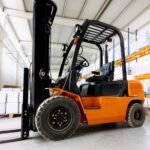
When we look at a modern, high-tech forklift today, we see a masterpiece of engineering. But a century ago, the forklift wasn't a product—it was a solution to a desperate problem.
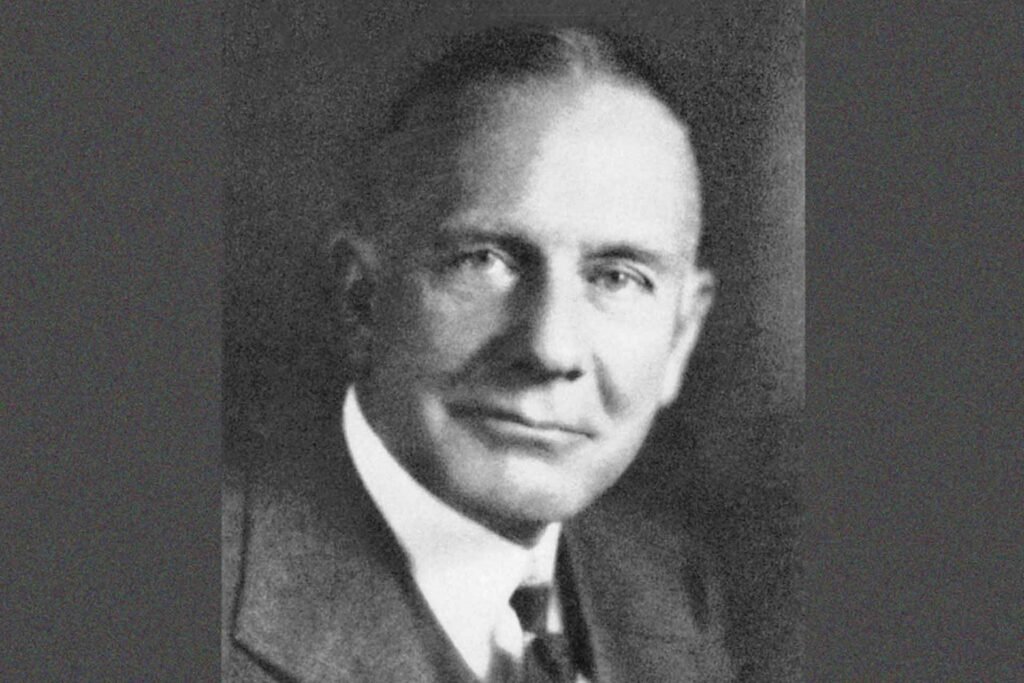
If you ask Google, 'Who invented the forklift?' you’ll get a name instantly: Eugene Clark. But the real story is much richer, involving a cast of accidental geniuses and fierce rivals whose innovations are still found in every machine exported by Hebei Maoxiang Technology today.
who invented the forklift truck
1. The Accidental Pioneer: Eugene Clark (1917)
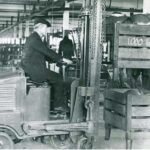
In 1917, Eugene Clark didn't set out to change global logistics. He just wanted to move heavy axles and materials around his own transmission plant in Buchanan, Michigan.
His team built the 'Tructractor'—essentially a three-wheeled flatbed truck with a box. It didn't even have forks! However, visitors to the factory saw this strange little machine and immediately asked, 'Can you build one for us?'
The Reader's Takeaway: The forklift was born out of a user’s need, not a salesman’s pitch. This 'problem-solving' DNA is what separates a good forklift from a mediocre one.
2. The Man Who Added the 'Forks': The Yale & Towne Connection
While Clark moved things horizontally, the industry still needed to go vertical. Around 1923, the engineers at Yale & Towne (now a global name in lifting) introduced a massive innovation: the electric-powered lift with a tall mast and—crucially—the first set of lifting forks.
This was the moment the 'Tructractor' truly became a 'Forklift.' By adding a vertical mast, they allowed businesses to 'stack' instead of just 'spread,' effectively doubling warehouse capacity overnight.
3. A Story of Rivalry: Clark, Yale, and Towmotor
The history of the forklift is a story of three giants:
- Clark: Focused on the chassis and the engine.
- Yale: Revolutionized the electric power and the vertical mast.
- Towmotor: In 1933, they introduced the 'Smallest Forklift in the World,' which could fit into tight spaces—a direct ancestor to the Narrow Aisle Forklifts we use today.
4. Why Does This History Matter to a Buyer in 2026?
You might wonder: 'Why do I care who invented this a hundred years ago?'
As a sourcing manager, understanding the origin helps you appreciate the quality. The same principles established by Clark and Yale—Stability, Vertical Reach, and Manueverability—remain the pillars of the industry.
When you choose a machine from Hebei Maoxiang Technology Co., Ltd., you are benefiting from a century of trial and error. We haven't just copied the past; we've evolved it:
- The original pioneers struggled with Lead-Acid weight; we’ve mastered Lithium-Ion efficiency.
- They fought with Manual Levers; we’ve refined Precision Joysticks.
- They aimed for Basic Lifting; we aim for Autonomous Navigation (AGV).
5. Conclusion: Carrying the Torch
The forklift wasn't invented by a single man in a vacuum. It was forged in the heat of industrial demand by pioneers who dared to think 'up' instead of just 'forward.'
At Hebei Maoxiang, we see ourselves as the modern chapter of this 100-year-old story. We honor the heritage of Eugene Clark and the engineers at Yale by continuing to innovate, ensuring that the forklifts we export today are as revolutionary as the very first Tructractor was in 1917.
Experience a Century of Innovation
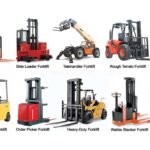
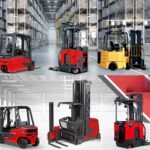
Want to see how far the forklift has come? Browse the Hebei Maoxiang 2026 Catalog to see our latest electric, high-bay, and narrow-aisle solutions that are redefining modern material handling.