For any business running diesel or LPG forklifts, fuel is rarely a one-time consideration — it's a recurring line item that quietly shapes your total cost of ownership. Yet most fleet managers only have a vague sense of what they're actually spending per hour, per shift, or per pallet moved. This guide breaks down how forklift fuel consumption works, what affects it, and how to calculate your true fuel costs.
Forklift Fuel Consumption
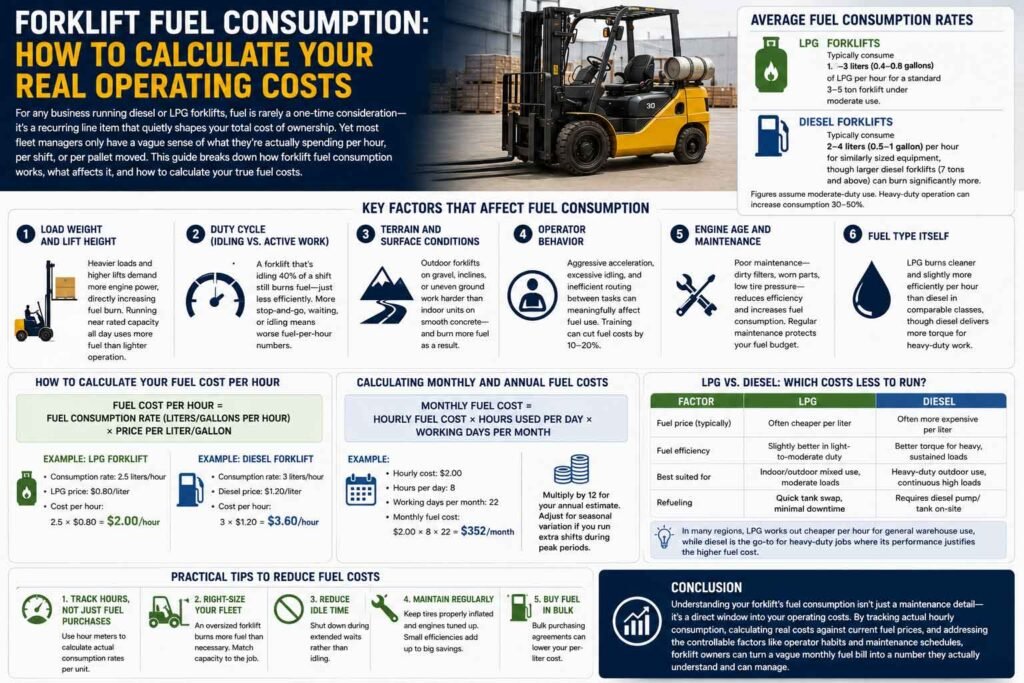
Average Fuel Consumption Rates
Fuel consumption varies by fuel type, forklift size, and load, but here are general benchmarks to start from:
- LPG forklifts: Typically consume 1.5–3 liters (0.4–0.8 gallons) of LPG per hour for a standard 3–5 ton forklift under moderate use.
- Diesel forklifts: Typically consume 2–4 liters (0.5–1 gallon) per hour for similarly sized equipment, though larger diesel forklifts (7 tons and above) can burn significantly more.
These figures assume moderate-duty use — light-duty operation (mostly idling, short lifts) will use less; heavy-duty operation (constant lifting, outdoor rough terrain, full loads) can push consumption 30–50% higher.
Key Factors That Affect Fuel Consumption
1. Load Weight and Lift Height
Heavier loads and higher lifts demand more engine power, directly increasing fuel burn. A forklift running near its rated capacity all day will consume noticeably more fuel than one running mostly empty or half-loaded.
2. Duty Cycle (How Much Idling vs. Active Work)
A forklift that's idling 40% of a shift still burns fuel — just less efficiently. Operations with a lot of stop-and-go movement, waiting, or idling between tasks often have worse fuel-per-hour numbers than expected, even though the forklift 'isn't doing much.'
3. Terrain and Surface Conditions
Outdoor forklifts working on gravel, inclines, or uneven ground work harder than indoor units gliding across smooth concrete — and that extra mechanical effort translates directly into extra fuel burned.
4. Operator Behavior
Aggressive acceleration, excessive idling, and inefficient routing between tasks can meaningfully affect fuel use. Operator training is one of the most underrated levers for reducing fuel costs, often producing 10–20% savings without any equipment changes.
5. Engine Age and Maintenance
Poorly maintained engines — dirty air filters, worn spark plugs, low tire pressure, misaligned masts — all reduce efficiency and increase fuel consumption. Regular maintenance isn't just about avoiding breakdowns; it directly protects your fuel budget.
6. Fuel Type Itself
LPG generally burns cleaner and slightly more efficiently per hour than diesel in comparable forklift classes, though diesel forklifts typically deliver more torque and are often used for heavier-duty, outdoor applications where that extra power justifies the fuel cost difference.
How to Calculate Your Fuel Cost Per Hour
Here's a simple formula to estimate your actual cost:
Fuel Cost per Hour = Fuel Consumption Rate (liters/gallons per hour) × Price per Liter/Gallon
Example (LPG forklift):
- Consumption rate: 2.5 liters/hour
- LPG price: $0.80/liter
- Cost per hour: 2.5 × $0.80 = $2.00/hour
Example (Diesel forklift):
- Consumption rate: 3 liters/hour
- Diesel price: $1.20/liter
- Cost per hour: 3 × $1.20 = $3.60/hour
Calculating Monthly and Annual Fuel Costs
Once you know your hourly cost, scale it up:
Monthly Fuel Cost = Hourly Fuel Cost × Hours Used per Day × Working Days per Month
Example:
- Hourly cost: $2.00
- Hours per day: 8
- Working days per month: 22
- Monthly fuel cost: $2.00 × 8 × 22 = $352/month
Multiply by 12 for an annual estimate — and remember to adjust for seasonal variation if your operation runs extra shifts during peak periods.
LPG vs. Diesel: Which Costs Less to Run?
There's no universal winner — it depends on local fuel prices and how the forklift is used:
| Factor | LPG | Diesel |
|---|---|---|
| Fuel price (typically) | Often cheaper per liter | Often more expensive per liter |
| Fuel efficiency | Slightly better in light-to-moderate duty | Better torque for heavy, sustained loads |
| Best suited for | Indoor/outdoor mixed use, moderate loads | Heavy-duty outdoor use, continuous high loads |
| Refueling | Quick tank swap, minimal downtime | Requires diesel pump/tank on-site |
In many regions, LPG works out cheaper per hour of operation for general warehouse use, while diesel remains the preferred choice for heavy-duty, high-torque applications like lumber yards or ports — where its higher fuel cost is offset by better performance under sustained heavy loads.
Practical Tips to Reduce Fuel Costs
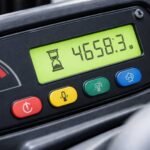
- Track hours, not just fuel purchases — Use hour meters to calculate actual consumption rates per unit, not just total fuel bought company-wide.
- Right-size your fleet — An oversized forklift burns more fuel than necessary for light loads; matching capacity to actual job requirements saves money.
- Reduce idle time — Train operators to shut down during extended waits rather than idling.
- Maintain tire pressure and engine tune-ups — Small mechanical inefficiencies compound into real fuel losses over a year.
- Buy fuel in bulk when possible — LPG and diesel bulk purchasing agreements can meaningfully reduce per-liter costs for larger fleets.
Conclusion
Understanding your forklift's fuel consumption isn't just a maintenance detail — it's a direct window into your operating costs. By tracking actual hourly consumption, calculating real costs against current fuel prices, and addressing the controllable factors like operator habits and maintenance schedules, forklift owners can turn a vague monthly fuel bill into a number they actually understand and can manage.