Forklifts are categorized into different classes based on their power source, design, and intended use. Understanding these classifications is essential for choosing the right equipment, improving operational efficiency, and ensuring workplace safety.
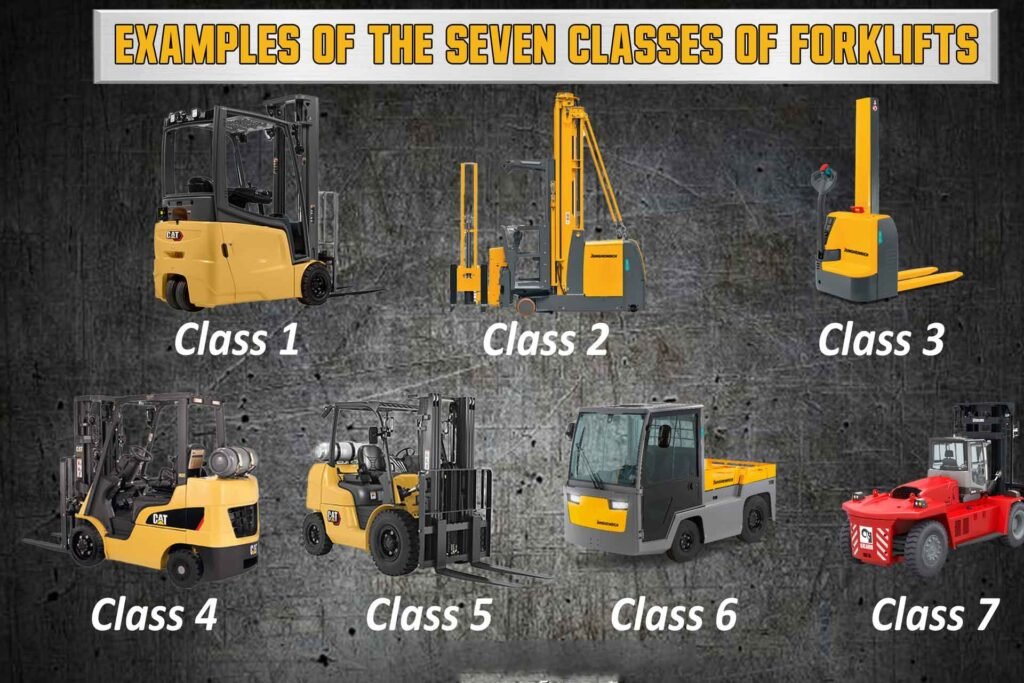
In the United States, forklift classifications are defined by the Occupational Safety and Health Administration (OSHA), which divides forklifts into seven classes (Class 1–7).
This guide explains each forklift class, its features, and when to use it—helping you make the right decision for your business.
Forklift Classes
Overview of Forklift Classes
Here is a quick summary of all forklift classes:
| Class | Type | Power Source | Typical Use |
|---|---|---|---|
| Class 1 | Electric Motor Rider Trucks | Electric | Warehouses |
| Class 2 | Narrow Aisle Forklifts | Electric | High-density storage |
| Class 3 | Electric Hand Trucks | Electric | Short-distance handling |
| Class 4 | Internal Combustion (Cushion Tires) | Gas/LPG | Indoor industrial |
| Class 5 | Internal Combustion (Pneumatic Tires) | Diesel/Gas | Outdoor use |
| Class 6 | Electric & IC Tow Tractors | Electric/IC | Towing loads |
| Class 7 | Rough Terrain Forklifts | Diesel | Construction sites |
👉 Let’s break down each class in detail.
Class 1: Electric Motor Rider Forklifts
Key features:
- Battery-powered (zero emissions)
- Quiet operation
- Suitable for indoor use
Typical applications:
- Warehousing
- Retail distribution
- Logistics centers
👉 These are the most common forklifts for general indoor material handling.
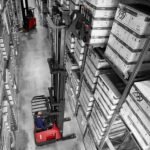
Class 2: Narrow Aisle Forklifts
Class 2 forklifts are designed for tight warehouse spaces and high-density storage.
Common types include:
- Reach trucks
- Order pickers
- Turret trucks
Key features:
- Operate in narrow aisles
- High lifting height
- Space optimization
👉 Ideal for maximizing warehouse storage capacity.
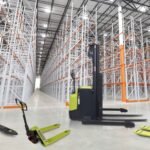
Class 3: Electric Motor Hand Trucks
Class 3 forklifts are walk-behind or walkie-type electric trucks.
Examples:
- Pallet jacks
- Walkie stackers
Key features:
- Compact design
- Easy to operate
- Best for short distances
👉 Perfect for light-duty warehouse tasks.
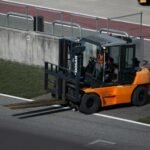
Class 4: Internal Combustion Forklifts (Cushion Tires)
Class 4 forklifts use internal combustion engines and are equipped with cushion tires.
Key features:
- Designed for smooth indoor surfaces
- Strong lifting capacity
- Smaller turning radius
Applications:
- Manufacturing facilities
- Indoor industrial environments
👉 Suitable for indoor heavy-duty operations.
Class 5: Internal Combustion Forklifts (Pneumatic Tires)
Key features:
- Diesel, gasoline, or LPG powered
- High durability
- Suitable for rough surfaces
Applications:
- Construction sites
- Lumber yards
- Outdoor logistics
👉 Best choice for heavy-duty outdoor operations.
Class 6: Tow Tractors
Class 6 forklifts are designed to pull loads rather than lift them.
Key features:
- Electric or internal combustion powered
- Used for towing materials
- Efficient for horizontal transport
Applications:
- Airports
- Assembly lines
- Warehouses
👉 Ideal for moving large volumes over distances.
Class 7: Rough Terrain Forklifts
Class 7 forklifts are built for outdoor and rugged environments.
Key features:
- Large tires
- High ground clearance
- Powerful engines
Applications:
- Construction sites
- Agriculture
- Mining
👉 Designed for uneven and challenging terrain.
How to Choose the Right Forklift Class
Selecting the right forklift depends on your working environment and operational needs.
✔ Choose Class 1–3 if:
- You operate indoors
- You need electric forklifts
- Space is limited
✔ Choose Class 4–5 if:
- You require higher power
- You work in industrial or outdoor environments
✔ Choose Class 6–7 if:
- You need towing or rough terrain capability
👉 The right choice can significantly improve efficiency and reduce operating costs.
Why Forklift Classification Matters
Understanding forklift classes helps you:
- Improve safety compliance
- Select the right equipment for your application
- Optimize warehouse layout and efficiency
- Reduce operational risks and costs
Frequently Asked Questions
What are the 7 classes of forklifts?
They are categories defined by OSHA based on power type, design, and application.
Which forklift class is best for warehouses?
Class 1, 2, and 3 forklifts are most commonly used in warehouse environments.
Which forklift class is best for outdoor use?
Class 5 and Class 7 forklifts are ideal for outdoor and rough terrain operations.
Are all forklifts classified by OSHA?
In the U.S., OSHA provides the standard classification system widely used in the industry.
Final Thoughts
Forklift classification provides a clear framework for understanding the different types of forklifts and their best use cases.
By choosing the right class, businesses can improve productivity, enhance safety, and optimize material handling operations.
Need Help Choosing the Right Forklift?
Selecting the right forklift class is critical for your business success.
At Hebei Maoxiang Technology Co., Ltd., we offer a wide range of high-quality and cost-effective forklift solutions for various industries and applications.
Why Choose Us?
- Full range of electric and internal combustion forklifts
- Reliable performance and durable design
- Competitive pricing for global markets
- Customized solutions based on your needs
👉 Contact us today to get expert advice and find the ideal forklift for your operation.