In the fast-paced world of warehouses and distribution centers, propane forklifts are the silent workhorses powering daily operations. Their reliability and efficiency make them a preferred choice for many industries. However, even the sturdiest propane-powered forklifts can hit a frustrating snag: the engine cranks but won’t start. This silent struggle can halt productivity, delay shipments, and increase operational costs.
If you’ve ever faced a propane forklift that cranks but won’t start, you know how perplexing and costly this issue can be. Understanding why this happens is crucial for operators, technicians, and fleet managers alike. This article dives deep into the common causes, diagnostic steps, and preventive maintenance tips to help you turn those frustrating cranks into consistent power.
Understanding How a Propane Forklift Engine Starts
- Fuel Type: Propane forklifts use liquefied petroleum gas (LPG), commonly known as propane, which is stored under pressure as a liquid and vaporizes when released.
- Ignition System: Unlike diesel engines, propane forklifts use spark-ignition engines similar to gasoline engines but optimized for propane’s properties.
- Starting Process: When you turn the key, the starter motor cranks the engine. Simultaneously, the ignition system delivers a spark to ignite the propane-air mixture, causing combustion and engine start.
If the engine cranks but won’t start, it means the starter motor is working, but combustion isn’t happening. This points to issues in fuel delivery, spark, compression, or safety controls.
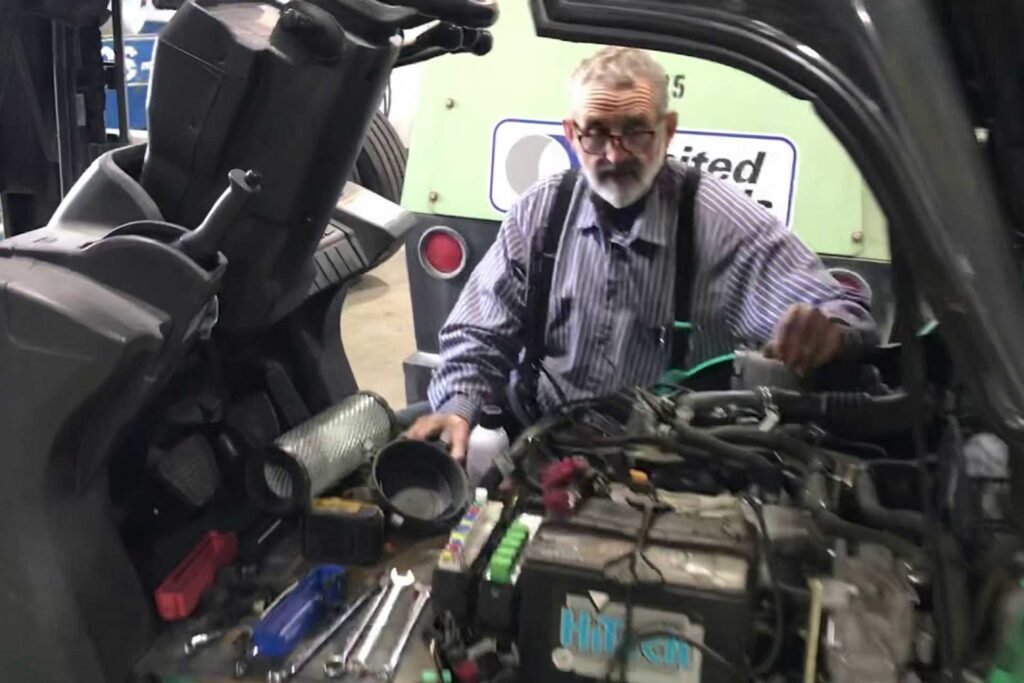
Propane Forklift Cranks But Won’t Start
Common Causes Why Your Propane Forklift Cranks But Won’t Start
1. Fuel Delivery Problems
Propane fuel delivery is more complex than gasoline or diesel due to its phase change from liquid to vapor. Common fuel-related issues include:
- Clogged Fuel Regulator or Vaporizer: Dirt, debris, or moisture can clog these components, preventing proper vaporization and fuel flow.
- Faulty Lock-Off Valve: This safety valve controls propane flow. If it fails to open, the engine starves of fuel.
- Damaged or Misfitted Tank Seals: When changing propane tanks, the sealing ring can become dislodged or stuck inside the hose fitting, blocking fuel flow.
- Frozen Vaporizer: In cold environments, moisture can freeze inside the vaporizer, restricting propane vapor flow.
- Leaking or Cracked Fuel Lines: Even small leaks reduce fuel pressure and can prevent starting.
2. Ignition System Issues
The ignition system must generate a strong spark to ignite the propane-air mixture:
- Weak or No Spark: Worn spark plugs, faulty ignition coils, or corroded wiring can cause a weak spark insufficient for ignition.
- Battery Voltage Problems: A battery with low voltage may crank the engine but fail to supply adequate power to the ignition system.
- Damaged Distributor Cap or Rotor: Cracks or carbon tracking inside the distributor can interrupt spark delivery.
- Ignition Switch or Wiring Faults: Loose connections or a failing ignition switch can disrupt the ignition circuit.
3. Mechanical Problems
Even with good fuel and spark, mechanical issues can prevent starting:
- Low Engine Compression: Worn piston rings, leaking valves, or damaged cylinder walls reduce compression, making ignition difficult.
- Valve Timing Issues: Incorrect timing from a slipped timing belt or chain affects combustion.
- Clogged Air Filter: Restricts airflow, causing a lean mixture that won’t ignite properly.
- Excessive Carbon Buildup: Deposits inside the combustion chamber can choke the engine.
4. Safety Interlocks and Control Systems
Modern propane forklifts include safety features that can prevent starting if conditions aren’t met:
- Seatbelt and Neutral Start Switches: If the operator isn’t seated or the transmission isn’t in neutral, the engine won’t start.
- Engine Shut-Off Solenoid (ESS): Controls fuel flow; failure to energize can cut fuel supply.
- Faulty Sensors or ECU Issues: On EFI (electronic fuel injection) models, sensor failures or control module errors can prevent startup.
Diagnosing a Propane Forklift That Cranks But Won’t Start
A systematic approach can save time and prevent unnecessary part replacements. Here’s a step-by-step diagnostic guide based on industry best practices:
Step 1: Check the Fuel Supply
- Verify the propane tank is full and the valve is open.
- Inspect the tank seal in the hose fitting for damage or dislodgement.
- Listen for the lock-off valve clicking when the key is turned.
- Check for frost or ice on the vaporizer in cold conditions.
- Perform a fuel pressure test using a propane pressure gauge; typical cranking pressure is 4–7 psi for many systems.
Step 2: Test the Ignition System
- Use a spark tester to check for a strong blue spark at the spark plug.
- Inspect and replace spark plugs, ignition coil, distributor cap, and rotor if worn.
- Measure battery voltage at rest (should be ~12.6V) and during cranking (should not drop below 9.8V).
- Check ignition switch continuity and wiring for corrosion or damage.
Step 3: Evaluate Mechanical Integrity
- Conduct a compression test; minimum 140 psi is recommended for propane engines.
- Check valve clearances and timing belt alignment.
- Inspect and replace clogged air filters.
Step 4: Inspect Safety Interlocks
- Ensure seatbelt, neutral start, and parking brake switches are functioning.
- Test the engine shut-off solenoid for proper operation and voltage.
- Scan for error codes if the forklift has onboard diagnostics.
Environmental and Operational Factors Affecting Starts
- Cold Weather: Propane vaporizes less efficiently in cold temperatures, leading to fuel starvation.
- Humidity and Moisture: Can cause vaporizer icing or corrosion in fuel lines.
- Operator Habits: Frequent short runs without warming the engine or improper tank handling can cause premature wear and starting issues.
Preventive Maintenance to Avoid No-Start Situations
- Regularly Replace Spark Plugs and Ignition Components: A scheduled ignition tune-up improves reliability.
- Inspect and Clean Fuel Filters and Regulators: Prevent clogging and maintain proper fuel flow.
- Check and Replace Seals When Changing Tanks: Avoid fuel supply interruptions.
- Maintain Battery Health: Keep terminals clean and battery charged.
- Use Cold-Weather Propane and Engine Coolant: For operations in low temperatures.
- Perform Routine Compression and Valve Checks: To catch mechanical wear early.
- Train Operators on Proper Procedures: Safe tank handling and pre-shift inspections.
Comparing Propane with Other Forklift Fuel Systems
Propane forklifts offer a balance between diesel and electric models:
- Cleaner Emissions: Safer for indoor use than diesel.
- Quick Refueling: Faster than electric battery swaps.
- Fuel Delivery Sensitivity: Requires precise fuel pressure and vaporization control.
- Maintenance Needs: More complex than electric but less than diesel.
Understanding these trade-offs helps operators anticipate and manage propane-specific challenges.
Conclusion: Turning Cranks Into Consistent Power
A propane forklift that cranks but won’t start is a multifaceted challenge involving fuel delivery, ignition, mechanical integrity, and safety systems. By understanding the root causes and following a structured diagnostic approach, operators and technicians can minimize downtime and maintain productivity.
Proactive maintenance, environmental awareness, and operator training are key to preventing no-start scenarios. Embracing advances in diagnostics and fuel system technology further enhances reliability.
Don’t let a silent crank stall your operation—equip your team with knowledge and tools to keep your propane forklifts running smoothly every shift.
Take Action Now
- Download your forklift’s OEM service manual for detailed specifications and diagnostic codes.
- Invest in basic diagnostic tools like a propane pressure gauge, spark tester, and multimeter.
- Schedule regular maintenance with certified technicians familiar with propane systems.
- Train your operators on pre-shift checks and safe propane handling.
Got a propane forklift that cranks but won’t start? Share your experience or questions below, and help build a community of well-informed operators ready to tackle this common issue!