Cold storage warehouses can significantly reduce lithium forklift battery performance if the battery system is not designed for low-temperature operation.
The most common cold storage battery problems include:
- Reduced battery runtime
- Slower charging speed
- Lower power output
- Increased charging time
- Faster battery degradation
- Voltage instability
- Condensation-related electrical issues
Lithium forklift batteries generally perform better than lead-acid batteries in cold storage environments, but they are still highly affected by temperature.
In freezing warehouses, battery chemistry becomes less active, which reduces energy efficiency and limits available power.
Before using lithium forklifts in cold storage facilities, companies should evaluate:
- Warehouse temperature range
- Charging conditions
- Shift duration
- Battery heating systems
- Charging schedules
- Condensation protection
Without proper planning, cold storage operations can dramatically reduce lithium battery efficiency and lifespan.
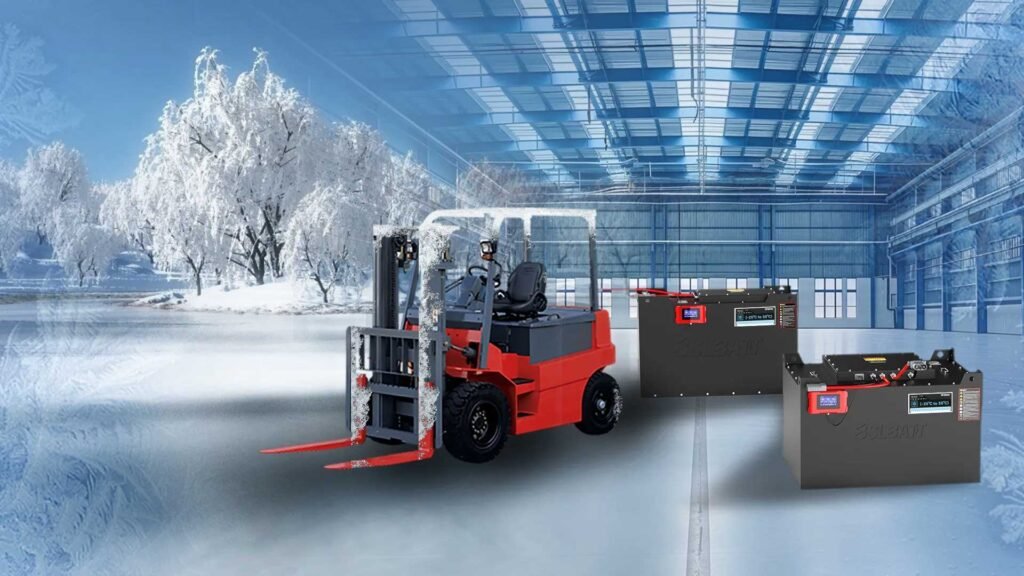
How Cold Storage Affects Lithium Forklift Batteries
Why Cold Storage Is Difficult for Forklift Batteries
Cold storage warehouses create one of the harshest operating environments for electric forklifts.
Typical cold storage temperatures include:
- 0°C (32°F)
- -10°C (14°F)
- -20°C (-4°F)
- Deep freezer environments below -30°C (-22°F)
At these temperatures:
- Battery chemical reactions slow down
- Internal resistance increases
- Available battery capacity decreases
This affects both:
- Forklift runtime
- Charging performance
Even modern lithium batteries cannot completely avoid the effects of extreme cold.
Lithium Batteries Lose Runtime in Cold Temperatures
One of the first problems operators notice is shorter battery runtime.
In low temperatures:
- Lithium ion movement slows down
- Energy transfer efficiency decreases
- Available battery capacity drops
As a result:
- Forklifts require more frequent charging
- Shift runtime becomes shorter
- Heavy lifting performance decreases
In severe cold storage environments, lithium battery runtime can drop significantly compared to normal room-temperature operation.
This becomes especially noticeable during:
- Multi-shift warehouse operations
- Continuous pallet movement
- High lifting frequency
Charging Lithium Batteries in Cold Storage Is Slower
Charging performance is another major issue.
Lithium batteries charge most efficiently within moderate temperature ranges.
When batteries become too cold:
- Charging current must be reduced
- Charging speed decreases
- Battery protection systems limit charging power
Some lithium battery systems may even temporarily block charging if battery temperature falls below safe limits.
Without temperature management, warehouses may experience:
- Long charging queues
- Reduced forklift availability
- Shift interruptions
Fast Charging Can Become a Problem in Freezing Conditions
Many warehouses use opportunity charging or fast charging systems for lithium forklifts.
However, cold temperatures create additional stress during high-speed charging.
Potential problems include:
- Excessive internal resistance
- Heat imbalance inside battery cells
- Reduced charging efficiency
- Accelerated battery wear
This is why many cold storage lithium forklifts use:
- Battery heating systems
- Temperature-controlled charging
- Smart battery management systems (BMS)
Without these protections, battery lifespan may decrease significantly.
Condensation Creates Hidden Electrical Risks
One of the most overlooked cold storage problems is condensation.
When forklifts move between:
- Freezer zones
- Ambient warehouse temperatures
- Outdoor loading docks
Moisture can form on:
- Electrical connectors
- Battery terminals
- Control systems
- Sensors
This can lead to:
- Corrosion
- Electrical faults
- Sensor failures
- Short circuits
Condensation-related failures are especially common in warehouses with frequent temperature transitions.
Cold Storage Increases Energy Consumption
Cold environments increase total forklift energy demand.
Forklifts require additional energy for:
- Battery heating
- Cabin heating
- Hydraulic system resistance
- Tire rolling resistance on cold floors
At the same time:
- Battery efficiency decreases
This combination reduces total operating efficiency.
Many warehouses underestimate how much additional battery capacity is needed for freezer operations.
Hydraulic Systems Also Become Slower in Cold Warehouses
Cold temperatures affect more than just batteries.
Hydraulic oil thickens in freezing environments, causing:
- Slower lifting speed
- Reduced hydraulic response
- Increased motor load
As hydraulic resistance increases:
- Battery power consumption rises
- Runtime decreases further
This creates a compounding efficiency problem in cold storage forklifts.
Floor Conditions in Freezers Affect Forklift Performance
Cold storage floors often contain:
- Ice buildup
- Condensation moisture
- Slippery surfaces
- Expansion joint damage
These conditions increase:
- Tire resistance
- Steering load
- Traction loss
As a result:
- Forklift motors work harder
- Energy consumption increases
- Wheel wear accelerates
Reach trucks and electric pallet jacks are especially sensitive to these conditions.
Battery Heating Systems Increase Operating Costs
To improve cold storage performance, many lithium forklift systems include:
- Battery heaters
- Thermal insulation
- Temperature monitoring systems
While these technologies improve battery operation, they also:
- Increase equipment cost
- Add electrical complexity
- Consume additional power
Some warehouses underestimate the long-term operating costs of thermal battery management.
Why Lithium Batteries Still Outperform Lead-Acid in Cold Storage
Despite these challenges, lithium batteries still offer major advantages over lead-acid batteries in freezer environments.
Compared with lead-acid batteries, lithium systems provide:
- Faster charging
- Better energy efficiency
- No battery watering
- Lower maintenance
- More stable voltage output
Lead-acid batteries often suffer even greater performance loss in cold storage warehouses.
This is why lithium forklifts are becoming increasingly common in:
- Food logistics
- Frozen warehouses
- Pharmaceutical cold chain facilities
Best Practices for Lithium Forklifts in Cold Storage
Use Cold-Storage Rated Batteries
Choose lithium battery systems specifically designed for:
- Freezer operation
- Low-temperature charging
- Thermal management
Install Battery Heating Systems
Battery heaters help maintain:
- Stable charging performance
- Better runtime
- Improved battery lifespan
Design Smart Charging Schedules
Avoid:
- Charging extremely cold batteries immediately
- Overloading charging systems during peak periods
Reduce Temperature Transitions
Minimize frequent movement between:
- Freezer zones
- Warm warehouse areas
This helps reduce condensation problems.
Monitor Battery Health Regularly
Track:
- Battery temperature
- Charging efficiency
- Runtime performance
- Voltage stability
Early monitoring helps prevent major failures.
Conclusion
Cold storage environments can significantly affect lithium forklift battery performance.
Low temperatures reduce:
- Battery runtime
- Charging efficiency
- Power output
At the same time, cold storage operations increase:
- Energy demand
- Electrical stress
- Condensation risks
- Battery management complexity
Although lithium batteries still outperform lead-acid systems in most cold storage applications, successful freezer forklift operations require proper battery design, charging strategy, and temperature management.
Before deploying lithium forklifts in cold storage warehouses, businesses should carefully evaluate operating temperatures, charging infrastructure, and long-term thermal management requirements.