Lithium forklift batteries are often advertised as providing 8 to 10 hours of runtime on a single charge. However, many warehouse operators discover that their forklifts run significantly less than expected in real-world conditions.
The reason is simple: battery manufacturers typically publish runtime figures based on ideal operating conditions. In actual warehouses, factors such as load weight, lift height, travel distance, temperature, charging habits, and operator behavior can dramatically reduce battery performance.
If your lithium forklift battery is not delivering the runtime you expected, you are not alone.
Why Lithium Forklift Batteries Rarely Deliver Their Advertised Runtime
The Difference Between Laboratory Tests and Real Warehouse Operations
Most lithium battery specifications are measured under controlled conditions.
These tests often assume:
- Flat warehouse floors
- Moderate load weights
- Normal room temperatures
- Limited lifting cycles
- Consistent travel speeds
- New battery condition
Real warehouses rarely operate under these conditions.
A forklift that runs for 8 hours during testing may only operate for 5–6 hours in a demanding warehouse environment.
Heavy Loads Consume More Energy Than Most Operators Expect
Battery runtime is directly affected by the weight being handled.
A forklift carrying loads close to its rated capacity requires significantly more power for:
- Acceleration
- Travel
- Lifting
- Steering
For example, a forklift moving 2.5-ton pallets throughout an entire shift will consume much more energy than one handling light loads.
Many runtime estimates assume average loads, not maximum loads.
High Lift Heights Drain Batteries Faster
Many warehouse managers focus on travel distance but overlook lifting energy.
Every time a forklift raises a load:
- The hydraulic pump consumes power
- The electric motor works harder
- Battery current increases
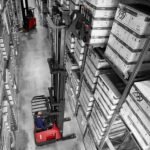
In high-rack warehouses where loads are regularly lifted 6–10 meters, battery consumption can be much higher than expected.
A reach truck working in a high-bay warehouse may use substantially more energy than the same truck operating at ground level.
Frequent Stop-and-Go Driving Reduces Runtime
Forklift batteries are most efficient when operating steadily.
In busy warehouses, operators constantly:
- Accelerate
- Brake
- Reverse
- Turn
- Reposition pallets
Each acceleration event draws a large current from the battery.
Facilities with intensive picking operations often experience shorter runtimes than facilities focused on bulk pallet movement.
Warehouse Temperature Has a Major Impact
Temperature is one of the most overlooked factors affecting lithium forklift batteries.
Cold Storage Warehouses
In cold environments:
- Battery chemistry becomes less efficient
- Internal resistance increases
- Available capacity decreases
A battery that provides 8 hours at room temperature may deliver only 5–6 hours in a freezer warehouse.
Hot Environments
High temperatures create different problems.
The Battery Management System (BMS) may limit output to protect the battery from overheating.
As a result:
- Travel speed may decrease
- Power output may be reduced
- Runtime may be shorter than expected
Battery Management Systems Limit Performance
Many operators assume they can use 100% of the battery capacity.
In reality, lithium batteries are controlled by a Battery Management System (BMS).
The BMS continuously monitors:
- Temperature
- Voltage
- Current
- Cell balance
When certain limits are reached, the BMS may:
- Reduce power output
- Restrict charging speed
- Limit current draw
These protections help extend battery life but can reduce available runtime during demanding applications.
Multi-Shift Operations Create Hidden Problems
Lithium batteries are often promoted as ideal for multi-shift warehouses because they support opportunity charging.
However, continuous operation creates additional challenges.
Common issues include:
- Battery heat buildup
- Frequent fast charging
- Charging queue delays
- Reduced charging efficiency
A battery that performs well during a single shift may struggle to maintain the same runtime during continuous 24-hour operations.
Tire Condition Can Affect Battery Life
Few warehouse operators realize that worn tires increase energy consumption.
Damaged or worn tires create:
- Higher rolling resistance
- Increased motor load
- Reduced travel efficiency
This is especially noticeable with:
- Reach trucks
- Order pickers
- Electric pallet trucks
Replacing worn tires can sometimes improve battery runtime more than expected.
Uneven Floors Increase Energy Consumption
Warehouse floor conditions directly affect forklift efficiency.
Uneven surfaces force forklifts to:
- Work harder during travel
- Compensate for vibration
- Consume additional power
Expansion joints, damaged concrete, and rough flooring all contribute to increased battery usage.
Large distribution centers often underestimate the impact of floor quality on battery performance.
Fast Charging Does Not Create Energy
A common misconception is that fast charging solves runtime problems.
Fast charging only reduces charging time.
It does not:
- Increase battery capacity
- Reduce energy consumption
- Improve operating efficiency
In some cases, excessive fast charging can increase battery temperatures and reduce long-term performance.
Battery Age Matters More Than Many Buyers Realize
Even lithium batteries gradually lose capacity over time.
As batteries age:
- Internal resistance increases
- Available capacity decreases
- Heat generation rises
After several years of operation, a battery may no longer provide the runtime it delivered when new.
This capacity reduction often occurs gradually, making it difficult for operators to notice until productivity is affected.
How to Get More Runtime From a Lithium Forklift Battery
To maximize battery performance:
Optimize Charging Practices
- Avoid unnecessary fast charging
- Follow manufacturer charging guidelines
- Maintain proper charging schedules
Maintain Tires Regularly
- Replace worn tires promptly
- Maintain proper wheel condition
Reduce Unnecessary Travel
- Optimize warehouse layout
- Shorten travel distances when possible
Monitor Battery Temperature
- Prevent excessive overheating
- Use batteries designed for cold storage when required
Match Battery Capacity to Application
Many runtime issues occur because the battery is undersized for the workload.
Selecting the correct battery capacity is often more important than choosing the cheapest option.
The Real Reason Runtime Falls Short
Most lithium forklift batteries do not fail to meet advertised runtime because the batteries are defective.
The real issue is that published specifications are usually based on ideal conditions, while actual warehouses present much more demanding operating environments.
Factors such as:
- Heavy loads
- High lift heights
- Multi-shift operation
- Temperature extremes
- Floor conditions
- Tire wear
- Frequent acceleration
can all significantly reduce runtime.
Understanding these factors helps warehouse managers set realistic expectations and select the right lithium battery solution for their operations.
Conclusion
Lithium forklift batteries offer many advantages, including faster charging, lower maintenance, and longer service life. However, advertised runtime figures are often difficult to achieve in real-world warehouse operations.
Heavy loads, high lifting heights, cold storage environments, frequent stop-and-go driving, and battery management system limitations all contribute to reduced runtime.
Before purchasing a lithium forklift battery, warehouse operators should evaluate their actual operating conditions rather than relying solely on manufacturer runtime claims.
Choosing the correct battery capacity and understanding real-world energy consumption will ultimately lead to better performance, improved productivity, and a more accurate return on investment.
Contact Us
Looking for reliable lithium battery forklifts or expert advice on selecting the right battery capacity for your warehouse?
Hebei Maoxiang Technology Co., Ltd. supplies electric forklifts, lithium battery forklifts, reach trucks, pallet trucks, and warehouse equipment for customers worldwide. Contact our team today for professional recommendations and competitive pricing.