Many forklift owners focus on one number when planning a battery replacement: the price of the new battery.
However, the purchase price is often only part of the total cost.
Whether you operate electric forklifts, reach trucks, pallet jacks, or order pickers, replacing a forklift battery can involve several hidden expenses that are frequently overlooked during budgeting.
In many cases, these indirect costs can equal or even exceed the cost difference between competing battery options.
If you are evaluating a forklift battery replacement, understanding the full financial impact can help you avoid unexpected expenses and make a better long-term investment.
The Short Answer
The true cost of forklift battery replacement is not just the battery itself.
Additional costs often include:
- Installation and commissioning
- Charger upgrades
- Downtime during replacement
- Electrical infrastructure modifications
- Labor costs
- Disposal of old batteries
- Reduced productivity during transition
- Future maintenance and replacement cycles
Ignoring these factors can make a battery replacement project significantly more expensive than expected.
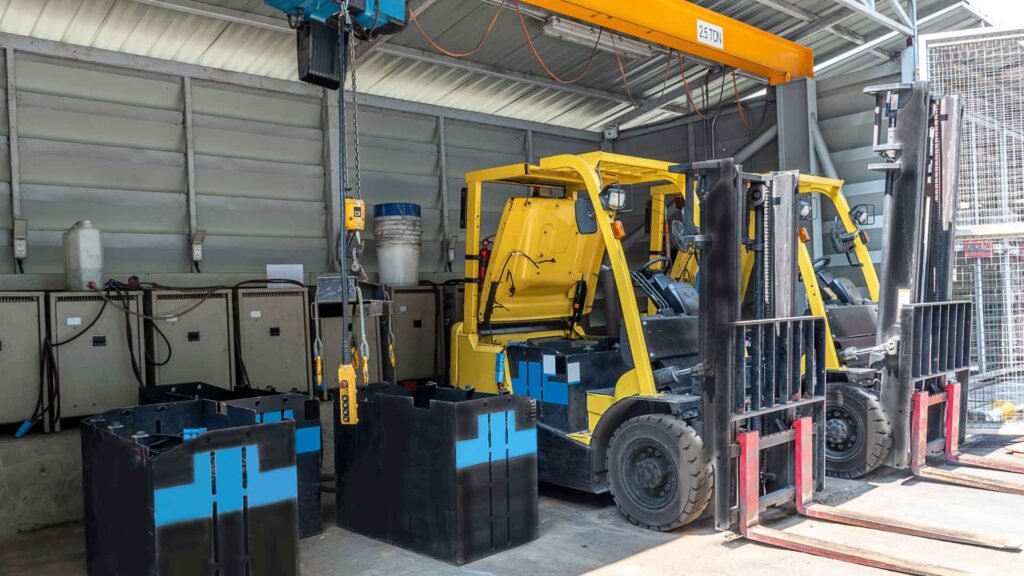
Hidden Costs of Forklift Battery Replacement
Battery Purchase Price Is Only the Beginning
When comparing battery quotes, many buyers focus solely on the battery price.
For example:
- Lead-acid battery
- Lithium-ion battery
- OEM battery
- Third-party replacement battery
While purchase cost matters, it rarely reflects the total ownership cost.
A lower-priced battery may require additional upgrades that increase overall project expenses.
Charger Replacement Costs
One of the most common hidden expenses is charger compatibility.
Many forklift operators assume an existing charger can be reused with a new battery.
This is not always true.
Different battery technologies often require different charging systems.
For example:
- Lead-acid chargers may not work with lithium batteries
- Voltage requirements may differ
- Charging profiles may be incompatible
As a result, a battery replacement may also require purchasing one or more new chargers.
For larger fleets, this cost can become substantial.
Electrical Infrastructure Upgrades
Many facilities underestimate the impact of battery charging on their electrical system.
This issue is especially common when switching from lead-acid batteries to lithium batteries with fast-charging capability.
Additional costs may include:
- New electrical circuits
- Panel upgrades
- Transformer upgrades
- Additional charging stations
- Power distribution modifications
Older warehouses often require infrastructure improvements before new charging equipment can be installed safely.
Installation and Commissioning Costs
Battery replacement is not always a simple swap.
Depending on the forklift model, installation may involve:
- Battery mounting adjustments
- Software updates
- Battery management system configuration
- Safety inspections
- Operational testing
These services add labor costs that are often excluded from initial battery quotes.
Downtime During Replacement
Downtime is one of the most overlooked costs.
Even a well-planned battery replacement can temporarily reduce equipment availability.
Potential impacts include:
- Delayed warehouse operations
- Reduced shift productivity
- Equipment scheduling conflicts
- Temporary rental equipment costs
For businesses operating multiple shifts, even a few hours of downtime can have a measurable financial impact.
Battery Disposal Fees
Old batteries cannot simply be discarded.
Depending on local regulations, disposal may involve:
- Environmental handling fees
- Recycling costs
- Transportation charges
- Hazardous material compliance requirements
Lead-acid batteries typically have recycling value, but disposal logistics can still create additional costs.
Companies replacing multiple batteries simultaneously often face significant disposal expenses.
Labor Costs During the Transition
Battery replacement projects often require additional employee time.
Staff may need training on:
- New charging procedures
- Battery safety requirements
- Daily inspections
- Maintenance practices
Maintenance personnel may also require instruction on troubleshooting and system monitoring.
These labor costs are rarely included in battery quotations.
Weight and Counterbalance Considerations
Many forklift owners overlook battery weight.
In electric forklifts, the battery is often part of the truck's counterweight system.
If the replacement battery differs significantly in weight:
- Forklift stability may be affected
- Capacity ratings may change
- Additional counterweights may be required
This issue is particularly important when converting from lead-acid to lithium-ion batteries.
Software and Battery Management System Costs
Modern lithium batteries rely on advanced Battery Management Systems (BMS).
Some installations may require:
- Communication modules
- Software integration
- Fleet management systems
- Monitoring platforms
While these tools provide valuable performance data, they can add costs that are not immediately obvious during the purchasing process.
Faster Battery Degradation Than Expected
Many battery replacement decisions are based on advertised service life.
However, actual battery life depends heavily on operating conditions.
Factors that accelerate battery wear include:
- Frequent fast charging
- Multi-shift operation
- High temperatures
- Deep discharge cycles
- Poor maintenance practices
If real-world battery life falls short of expectations, replacement costs arrive sooner than planned.
Productivity Loss From Incorrect Battery Sizing
Choosing the wrong battery capacity can create hidden operational costs.
An undersized battery may require:
- More frequent charging
- Additional battery swaps
- Increased downtime
An oversized battery may result in:
- Higher purchase costs
- Unnecessary investment
- Longer charging times
Proper battery sizing is one of the most important factors in controlling long-term ownership costs.
The Cost of Choosing the Cheapest Battery
Many buyers focus on minimizing upfront expenses.
However, low-cost batteries may create hidden costs through:
- Shorter service life
- Lower energy efficiency
- More frequent maintenance
- Reduced runtime
- Higher replacement frequency
The cheapest battery is not always the most economical solution over the life of the forklift.
Lead-Acid vs Lithium Replacement Costs
When evaluating forklift battery replacement, many operators compare lead-acid and lithium-ion options.
Lead-Acid Batteries
Advantages:
- Lower initial purchase cost
- Established technology
- Widely available
Potential hidden costs:
- Watering maintenance
- Battery changing equipment
- Dedicated charging rooms
- Longer charging times
Lithium-Ion Batteries
Advantages:
- Faster charging
- Lower maintenance
- Opportunity charging capability
Potential hidden costs:
- Higher upfront investment
- Charger replacement
- Electrical upgrades
- Battery management systems
The best choice depends on operational requirements, not just purchase price.
How to Reduce Battery Replacement Costs
Before replacing a forklift battery:
Evaluate Total Ownership Cost
Consider all direct and indirect expenses, not just battery price.
Verify Charger Compatibility
Confirm whether existing charging equipment can be reused.
Assess Electrical Capacity
Ensure the facility can support future charging demands.
Select the Correct Battery Size
Match battery capacity to actual operating requirements.
Consider Future Growth
Plan for fleet expansion and additional charging needs.
Work With Experienced Suppliers
Proper planning can eliminate many unexpected costs.
Conclusion
The cost of forklift battery replacement extends far beyond the price of the battery itself.
Charger upgrades, electrical infrastructure improvements, installation, downtime, disposal fees, labor costs, and future maintenance requirements can all have a significant impact on the total investment.
Before purchasing a replacement battery, businesses should evaluate the complete cost of ownership rather than focusing solely on upfront pricing.
A well-planned forklift battery replacement project can improve productivity, reduce operating costs, and deliver better long-term value.
Contact Us
Looking for reliable forklift battery replacement solutions?
Hebei Maoxiang Technology Co., Ltd. supplies electric forklifts, lithium battery forklifts, reach trucks, pallet trucks, and warehouse equipment for customers worldwide. Our team can help you select the right battery solution for your application while minimizing long-term operating costs.
Contact us today for expert advice and a competitive quotation.