Many electric forklift projects fail in old warehouses because the building infrastructure cannot properly support modern electric forklift operations.
The most common problems include:
- Insufficient electrical capacity
- Overloaded charging systems
- Poor warehouse layouts
- Inadequate ventilation
- Weak floor conditions
- High electricity demand during fast charging
In many cases, the forklifts themselves work perfectly. The real problem is that older warehouses were never designed for large-scale lithium battery charging and modern electric material handling systems.
Before switching from diesel or LPG forklifts to electric forklifts, companies should evaluate their electrical system, charging strategy, warehouse layout, and floor conditions to avoid unexpected costs and operational failures.
Electric forklifts are rapidly becoming the preferred choice for warehouses and logistics operations. Lower emissions, reduced maintenance, and quieter operation make them attractive alternatives to diesel and LPG forklifts.
However, many companies discover serious infrastructure problems after switching to electric forklift fleets.
This issue is becoming increasingly common as older warehouses attempt to modernize without fully understanding the hidden requirements behind electric forklift operations.
Most older warehouses were originally designed for:
- Lighting
- Basic machinery
- Small office equipment
- Limited battery charging
They were not built to support multiple high-capacity lithium forklift chargers operating simultaneously.
When several forklifts begin fast charging at the same time, the electrical load can increase dramatically.
Common problems include:
- Circuit breaker trips
- Voltage instability
- Overheating electrical panels
- Charging interruptions
- Unexpected downtime
In severe cases, the facility may require:
- Transformer upgrades
- New power distribution systems
- Additional electrical permits
- Utility company coordination
These hidden infrastructure costs are often ignored during the initial forklift purchasing stage.
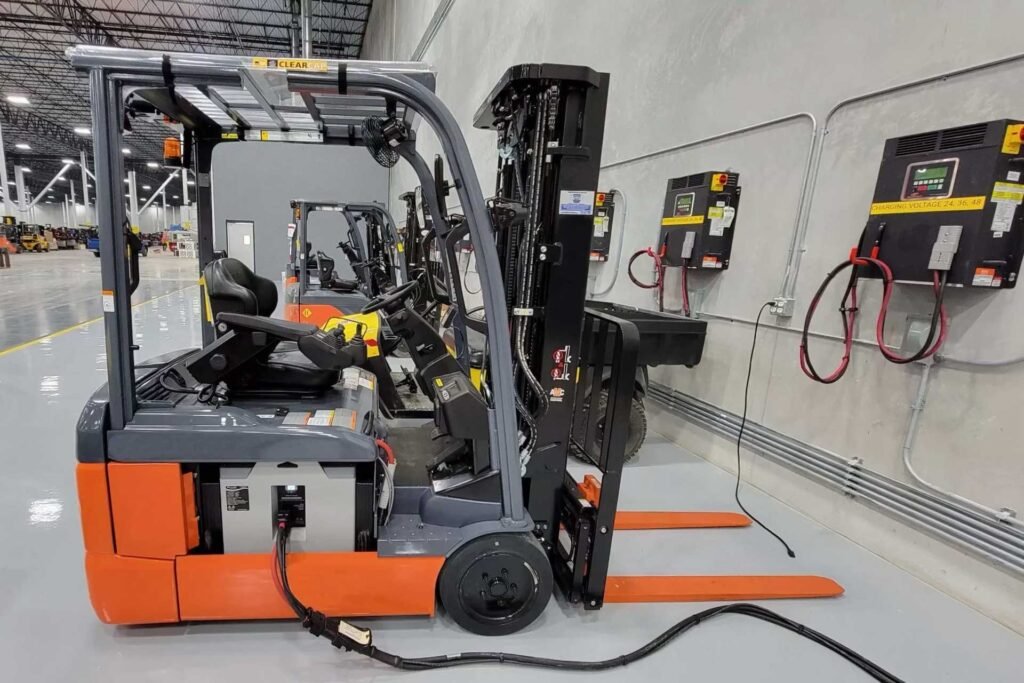
Why Electric Forklift Projects Fail in Old Warehouses
Fast Charging Creates Unexpected Peak Loads
Many warehouse operators assume electric forklifts simply plug into standard industrial power systems.
In reality, lithium battery fast chargers can create extremely high peak electricity demand.
For example:
- One forklift charger may not be a problem
- Ten fast chargers operating simultaneously can overload older warehouse electrical systems
This becomes especially risky in facilities with:
- Aging electrical wiring
- Limited transformer capacity
- Shared industrial power systems
- Poor ventilation in charging areas
Some warehouses only discover the problem after installation, when charging schedules begin causing power instability.
Old Warehouse Layouts Often Do Not Support Charging Zones
Traditional warehouses were not designed around electric vehicle charging operations.
Many older facilities lack:
- Dedicated charging rooms
- Proper cable routing
- Ventilation systems
- Heat management
- Fire safety planning
As electric forklift fleets grow, charging stations begin occupying valuable warehouse space.
Poor charging layouts can also create:
- Traffic congestion
- Unsafe pedestrian interaction
- Battery handling risks
- Reduced warehouse efficiency
In some warehouses, the forklifts perform well, but overall productivity decreases because the charging workflow was poorly planned.
Lithium Forklifts Are Sensitive to Temperature Conditions
Temperature is another commonly underestimated issue.
Older warehouses often have poor climate control, especially:
- Cold storage facilities
- Open industrial buildings
- High-temperature summer environments
Lithium batteries behave differently under extreme conditions.
In cold environments:
- Charging speed decreases
- Battery efficiency drops
- Runtime becomes shorter
In hot environments:
- Battery temperatures rise faster
- Cooling systems work harder
- Long-term battery degradation accelerates
Many buyers only see laboratory battery specifications and do not realize how real warehouse conditions affect long-term forklift performance.
Charging Strategy Is Often Ignored
One of the biggest operational mistakes is charging all forklifts during the same time period.
Without proper energy management:
- Peak electricity costs rise sharply
- Power demand charges increase
- Charging queues develop
- Shift scheduling becomes inefficient
Modern electric forklift fleets often require:
- Smart charging schedules
- Off-peak charging strategies
- Battery rotation planning
- Energy monitoring systems
Older warehouses rarely have these systems in place initially.
Some Warehouses Underestimate Daily Runtime Requirements
Electric forklift projects also fail when companies underestimate operational intensity.
For example:
- Multi-shift operations
- Continuous loading cycles
- Heavy lifting applications
- Long outdoor driving distances
These environments may require:
- Spare battery systems
- Opportunity charging
- Larger battery capacities
Without proper planning, forklifts may run out of power before shifts end, causing operational bottlenecks.
Poor Floor Conditions Can Reduce Electric Forklift Efficiency
Many old warehouses have:
- Uneven floors
- Cracked concrete
- Poor drainage
- Worn expansion joints
Electric forklifts, especially reach trucks and narrow aisle forklifts, are more sensitive to floor conditions than many operators realize.
Bad floors increase:
- Tire wear
- Battery consumption
- Vibration damage
- Steering instability
As a result, energy efficiency decreases and maintenance costs rise.
How to Avoid Electric Forklift Project Failure
Before switching to electric forklifts, warehouse operators should conduct a full facility evaluation.
Electrical Infrastructure Audit
Check:
- Transformer capacity
- Power distribution
- Existing electrical load
- Charging requirements
Charging Layout Planning
Design:
- Safe charging areas
- Ventilation systems
- Traffic flow
- Emergency access
Battery and Runtime Analysis
Evaluate:
- Daily operating hours
- Shift patterns
- Charging windows
- Spare battery requirements
Floor and Warehouse Assessment
Inspect:
- Floor flatness
- Ramp conditions
- Narrow aisles
- Environmental temperatures
The Real Lesson: Forklifts Are Only Part of the System
Many companies focus entirely on forklift specifications:
- Load capacity
- Mast height
- Battery type
But successful electric forklift operations depend on the entire warehouse infrastructure.
An old warehouse may require major upgrades before electric forklifts can operate efficiently and reliably.
Ignoring these hidden factors is one of the main reasons electric forklift modernization projects fail.
Conclusion
Electric forklifts are transforming warehouse operations worldwide, but old warehouses often face serious infrastructure challenges during the transition.
Problems such as insufficient electrical capacity, poor charging layouts, temperature limitations, and aging warehouse floors can significantly reduce operational efficiency and increase costs.
Before replacing diesel or LPG forklifts with electric models, businesses should carefully evaluate their warehouse infrastructure, charging strategy, and operational requirements.
A successful electric forklift project is not only about choosing the right forklift — it is about preparing the entire warehouse system for electrification.