Lithium forklift batteries work well in most warehouses. In multi-shift operations, the equipment usually isn't the problem — the charging infrastructure is. Electrical capacity, peak demand charges, charger placement, and thermal management determine whether a lithium conversion delivers the uptime it promises or creates a new set of operational headaches. This guide covers what actually goes wrong, with real numbers, and how to plan around it before you commit to a fleet-wide switch.
The Real Problem With Lithium Forklifts in Multi-Shift Warehouses
Why Multi-Shift Changes the Math
Single-shift warehouses have long overnight charging windows and low battery stress. Two- and three-shift operations don't have that luxury — trucks rarely stop long enough for batteries to fully cool, so operators lean on opportunity charging: short top-ups during breaks and shift changes rather than one full overnight cycle. In typical multi-shift use, daily energy draw runs around 1.5× a battery's usable daily capacity, which is exactly the scenario opportunity charging is designed for — but it also means charging infrastructure is in near-constant use rather than sitting idle overnight.
That constant use is where the real costs show up: electrical capacity, heat accumulation, and charger scheduling — not the batteries themselves.
The Biggest Hidden Cost: Electrical Infrastructure
This is the cost most buyers underestimate, and it's large enough to change the economics of a lithium conversion on its own.
A single forklift charger for a standard 5,000 lb truck typically draws 30–40 amps at 208–480V. Converting ten trucks, with most charging simultaneously during a shift change, can require an additional 240–320 amps at the panel. Many older industrial buildings already run their existing panels at 70–85% of capacity before adding a single charger.
When that additional load exceeds what the existing service can handle, the facility needs a panel upgrade, transformer upgrade, or — in the more expensive cases — a utility service entrance upgrade. Realistic cost range: $50,000–$200,000, and months of lead time, not weeks. In some conversions, this single line item costs more than the price difference between the lithium and lead-acid batteries it was meant to support.
Before ordering any fast chargers, request a load study from your utility. This tells you whether your site can actually support the planned charging load, and if transformer or feeder work is needed, that utility-side work alone commonly takes 6–18 months — a timeline that needs to be built into your project plan from day one, not discovered after the trucks arrive.
Peak Demand Charges: The Cost Most ROI Calculations Skip
Even when the electrical capacity exists, fast charging creates a second, ongoing cost: demand charges.
Utilities bill commercial accounts partly on total energy used and partly on the highest short burst of demand during the billing period — and that demand charge can represent 40–60% of a typical commercial electricity bill. A bank of fast chargers all drawing power during a shift-change window can spike facility-wide peak demand dramatically, even if the chargers only run at full power for 15–30 minutes.
The fix that most warehouses skip: stagger charging schedules instead of letting every truck plug in at once. Networked chargers that share a capped total output, or simply scheduling charging to start later in low-traffic windows, meaningfully reduce peak draw. Where the utility rate structure allows it, shifting charging to off-peak overnight hours can cut energy costs by roughly 30–50% compared to daytime charging — a saving that has nothing to do with the battery technology and everything to do with when you plug in.
Heat Accumulation and BMS Throttling
Lithium batteries generate heat during charging, discharging, and high-load acceleration. In a single-shift warehouse, batteries get hours to cool overnight. In continuous multi-shift use, that cooling window shrinks or disappears — heat accumulates across the day, especially with repeated fast charging in a poorly ventilated charging area.
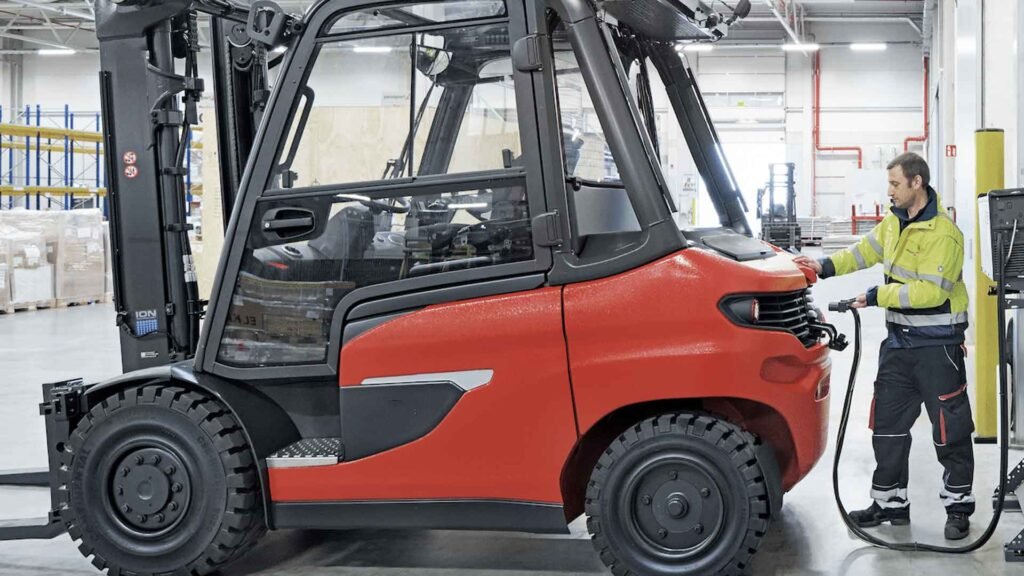
When cell temperature climbs too high, the battery management system (BMS) — the onboard electronics that protect the battery from damage — will reduce charging speed, limit power output, or pause charging entirely. This is protective behavior, not a defect, but it's frequently misdiagnosed as a charger fault or battery failure by operators who don't expect it. The practical fix is ventilation in the charging area and, where volume justifies it, dynamic load management so chargers share capacity rather than each running at full power simultaneously.
Charger Costs Are Higher Than the Lead-Acid Comparison Suggests
Lithium charging systems are more sophisticated than legacy lead-acid chargers, and the cost difference is real: DC fast chargers commonly cost roughly 3× a standard AC charger, and a facility supporting both manned forklifts and AGVs on the same charging infrastructure adds further complexity. Budget for the charger itself, plus in many cases dedicated charging-area ventilation, cable management, and — for larger installations — a networked load-management system rather than assuming a lead-acid-era charging room will suffice as-is.
Why This Hits Older Warehouses Hardest
Most of the problems above compound in older buildings, for a simple reason: they were wired for lighting, small machinery, and occasional battery charging — not for a fleet of simultaneous high-amperage lithium chargers. The forklifts themselves usually work fine; the building doesn't have the electrical backbone to support them at scale.
The other factor older facilities often lack: a charging layout planned in advance. Retrofitting dedicated charging zones, cable routing, and ventilation into an existing floor plan is more expensive and more disruptive than designing it in from the start — and poorly planned charging areas create their own problems (congestion, safety concerns near pedestrian traffic, and lost storage space) independent of the electrical questions above.
A Practical Sequence Before You Convert
- Get a utility load study before ordering equipment. Confirm what your site can support today and what an upgrade would cost and take, in writing.
- Size chargers to your actual duty cycle, not a worst-case assumption. A fleet running an average of 4–5 hours per truck per day often doesn't need the largest DC fast chargers on the market — right-sizing chargers to real usage avoids both overbuilding the electrical service and unnecessary demand charges.
- Design charging to be staggered, not simultaneous, using either scheduled start times or networked chargers that share capped output.
- Plan the physical charging layout before the equipment arrives — ventilation, cable routing, and clearance from pedestrian traffic, not an afterthought squeezed into existing floor space.
- Budget the electrical upgrade and charger costs as part of the lithium conversion project, not as a separate surprise line item.
The Bottom Line
The forklift industry markets fast charging, low maintenance, and lithium efficiency — all real advantages. In large multi-shift warehouses, the actual challenge is usually infrastructure: electrical capacity, demand charges, charging layout, and thermal management, not the trucks or batteries themselves. A lithium conversion planned around the building's real electrical capacity and your actual duty cycle delivers the uptime it promises. One planned around the battery spec sheet alone usually runs into a five- or six-figure surprise during installation.
At Hebei Maoxiang, we ask about shift pattern, fleet size, and available electrical capacity before recommending a battery and charging configuration — not after. If you're evaluating a lithium conversion, send us those three details and we'll tell you what charging setup actually fits, rather than defaulting you into the highest-spec chargers on the sheet.