A damaged or improperly repaired forklift mast is one of the biggest hidden risks when buying a used forklift.
Many used forklifts look clean on the outside because they have been repainted or refurbished, but accident damage inside the mast structure can still cause:
- Unsafe lifting
- Mast instability
- Premature bearing wear
- Uneven fork movement
- Chain failure
- Expensive future repairs
The problem is that mast damage is often difficult for inexperienced buyers to identify.
A forklift may still operate normally during a short inspection even if the mast was previously bent, welded, or structurally repaired after an accident.
The most common signs of mast accident repair include:
- Uneven weld marks
- Fresh paint around mast joints
- Fork tilt irregularities
- Uneven chain tension
- Abnormal mast vibration
- Visible rail distortion
- Grinding noises during lifting
- Misaligned carriage movement
Before purchasing a used forklift, buyers should inspect the mast carefully — not just the engine hours or overall appearance.
How to Tell If a Used Forklift Mast Was Repaired After an Accident
Why Forklift Mast Damage Is So Serious
The mast is the most critical lifting structure on a forklift.
It handles:
- Vertical lifting force
- Forward tilt pressure
- Dynamic load stress
- Impact force during operation
When a forklift crashes into:
- Warehouse racks
- Containers
- Trucks
- Concrete walls
The mast often absorbs the impact.
Even small collisions can create:
- Hidden bending
- Metal fatigue
- Rail misalignment
- Structural cracking
Poor repairs may temporarily hide the damage but cannot fully restore original factory strength.
Fresh Paint Around the Mast Can Be a Warning Sign
One of the easiest ways to identify possible mast repair is inconsistent paint condition.
Look carefully for:
- Different paint shades
- Overspray marks
- Uneven surface texture
- Paint buildup near welds
- New paint only on part of the mast
Sellers often repaint damaged mast sections to hide:
- Weld repairs
- Grinding marks
- Bent steel correction
A forklift with an older chassis but unusually fresh mast paint deserves closer inspection.
Check for Uneven or Non-Factory Welds
Factory mast welds are usually:
- Smooth
- Consistent
- Symmetrical
- Machine-finished
Repair welds often appear:
- Rough
- Uneven
- Hand-finished
- Different in color or texture
Inspect:
- Mast rails
- Cross members
- Carriage mounting points
- Tilt cylinder mounts
Look for:
- Grinding marks
- Excess filler metal
- Heat discoloration
- Irregular weld patterns
These may indicate previous structural repair work.
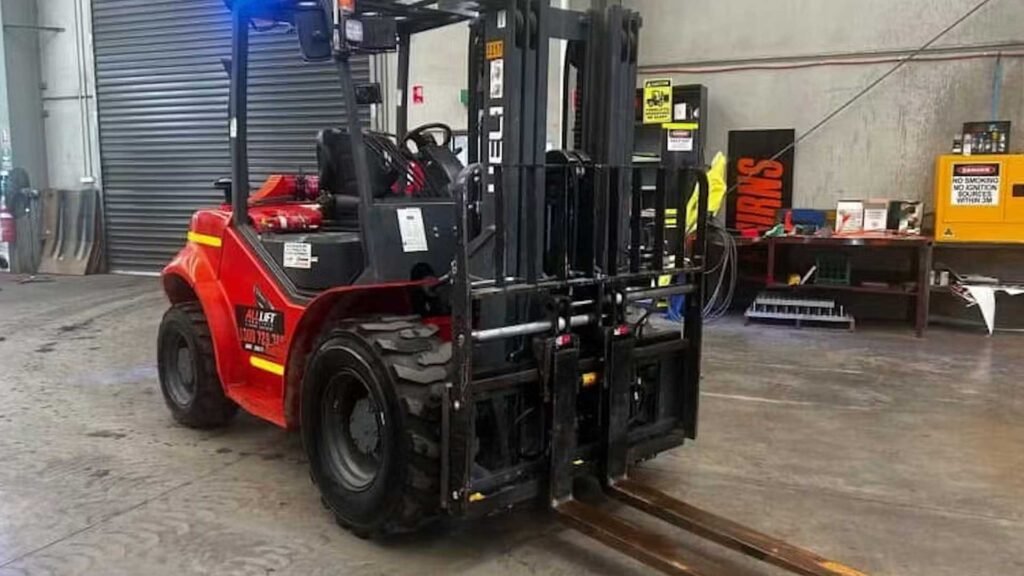
Mast Rails Should Be Perfectly Straight
A forklift mast must remain precisely aligned.
Even slight bending can cause:
- Uneven lifting
- Load instability
- Bearing damage
- Chain wear
Stand several meters away from the forklift and visually inspect:
- Left and right mast rails
- Inner mast channels
- Carriage alignment
Warning signs include:
- Visible twisting
- Uneven spacing
- Rail waviness
- Side-to-side asymmetry
A repaired mast may appear straight at first glance but still contain subtle distortion.
Fork Carriage Movement Should Be Smooth
Raise and lower the mast during inspection.
Pay attention to:
- Carriage movement
- Lift smoothness
- Side vibration
- Mast noise
Signs of previous damage include:
- Jerky lifting
- Carriage sticking
- Uneven movement
- Metal grinding noise
- Mast shaking during operation
These problems may indicate:
- Bent rails
- Worn rollers
- Improper repair alignment
Uneven Chain Tension Is a Major Warning Sign
Forklift mast chains should have balanced tension.
If one chain appears:
- Looser
- More worn
- Positioned differently
The mast may have experienced structural distortion.
Improper mast repair often changes:
- Chain geometry
- Roller alignment
- Carriage balance
This creates uneven lifting force over time.
Chain inspection is especially important on:
- Reach trucks
- High-lift forklifts
- Heavy-duty forklifts
Look for Cracks Around High-Stress Areas
Common mast crack locations include:
- Tilt cylinder mounting points
- Cross beam welds
- Fork carriage mounts
- Chain anchor areas
Use a flashlight to inspect carefully.
Small cracks may indicate:
- Previous overload
- Accident stress
- Poor welding repair
Some sellers grind and repaint cracked areas to hide the damage temporarily.
Check Mast Tilt Alignment
A damaged mast often loses proper tilt alignment.
When tilting forward or backward:
- Movement should be smooth
- Left and right sides should move evenly
Warning signs include:
- Uneven tilt speed
- Side twisting
- Hydraulic hesitation
- Visible mast leaning
These problems can indicate:
- Bent mast structure
- Damaged tilt mounts
- Previous collision repair
Excessive Mast Vibration Indicates Structural Problems
Test the forklift while lifting a load if possible.
Damaged or repaired masts often show:
- Excessive shaking
- Oscillation at height
- Side movement
- Unstable carriage positioning
This becomes more obvious at higher lift heights.
Some repaired masts appear normal when unloaded but become unstable under real operating conditions.
Measure Fork Height Symmetry
Lift the forks slightly above the ground and measure:
- Left fork height
- Right fork height
Uneven fork height may indicate:
- Twisted carriage
- Bent mast rails
- Uneven chain geometry
Even small differences can reveal hidden structural problems.
Inspect Mast Rollers and Bearings
Damaged masts often create abnormal roller wear.
Look for:
- Uneven roller surfaces
- Flat spots
- Excessive side wear
- Loose mast bearings
If rollers wear unevenly, the mast may no longer be perfectly aligned.
This is a common sign of accident repair.
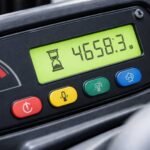
Hour Meter Readings Do Not Reveal Mast Damage
Many buyers focus only on:
- Engine hours
- Battery age
- Tire condition
But a low-hour forklift can still have severe mast damage if:
- It was overloaded
- Involved in an accident
- Used carelessly
The mast condition is often more important than operating hours when evaluating structural safety.
Professional Buyers Often Use Alignment Tools
Large equipment dealers sometimes use:
- Laser alignment tools
- Straight edge measurements
- Ultrasonic crack inspection
These tools help identify:
- Hidden bending
- Structural distortion
- Internal cracking
For expensive forklifts, professional inspection is often worth the cost.
Common Signs a Used Forklift Mast Was Repaired
Visual Signs
- Fresh paint
- Uneven welds
- Grinding marks
- Heat discoloration
Operational Signs
- Jerky lifting
- Mast vibration
- Uneven tilt
- Carriage sticking
Structural Signs
- Bent rails
- Uneven chain tension
- Fork height imbalance
- Abnormal roller wear
Why Poor Mast Repairs Are Dangerous
An improperly repaired mast can fail under load.
Potential risks include:
- Load dropping
- Mast collapse
- Fork carriage failure
- Severe operator injury
Even if the forklift still works, structural integrity may already be compromised.
This is why professional mast inspection is critical when buying used forklifts.
Conclusion
A repaired forklift mast is one of the most serious hidden problems in the used forklift market.
Many sellers repaint or refurbish forklifts cosmetically while hiding previous structural damage.
Buyers should carefully inspect:
- Weld quality
- Mast alignment
- Chain tension
- Fork movement
- Roller wear
- Lift stability
A forklift with hidden mast damage may appear inexpensive initially, but repair costs and safety risks can become extremely expensive later.
When buying a used forklift, the mast condition often matters more than the engine hours or exterior appearance.