If you manage forklifts in a warehouse, you may have noticed a frustrating pattern:
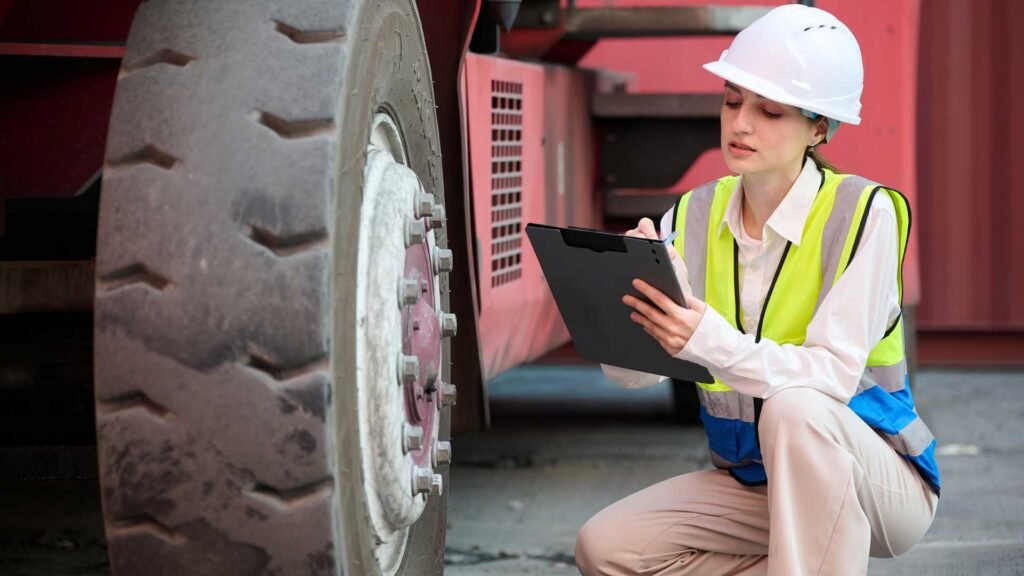
Forklift tires often wear out much faster near loading docks than anywhere else in the facility.
Many operators assume the problem is poor tire quality or excessive forklift usage. In reality, the loading dock area creates some of the harshest operating conditions found inside a warehouse.
Repeated impacts, floor transitions, heavy loads, sharp steering movements, and uneven surfaces all contribute to accelerated tire wear.
Understanding why forklift tires wear faster near loading docks can help warehouse managers reduce maintenance costs, extend tire life, and improve forklift reliability.
The Short Answer
Forklift tires wear faster near loading docks because forklifts repeatedly experience:
- Dock plate impacts
- Floor height transitions
- Heavy load concentration
- Frequent turning movements
- Uneven concrete surfaces
- Increased braking activity
These conditions create significantly more stress on tires than normal warehouse travel routes.
As a result, tire replacement intervals are often much shorter for forklifts that spend most of their time loading and unloading trailers.
Why Forklift Tires Wear Faster Near Loading Docks
Loading Docks Create Constant Impact Loads
One of the biggest causes of tire wear is impact.
Every time a forklift enters or exits a trailer, its tires encounter:
- Dock levelers
- Steel dock plates
- Expansion gaps
- Trailer floor transitions
Even small height differences create repeated impacts throughout the day.
A forklift operating hundreds of trailer cycles per shift may experience thousands of tire impacts every week.
Over time, these impacts accelerate:
- Tread wear
- Sidewall damage
- Chunking
- Tire deformation
Dock Levelers Are Hard on Forklift Tires
Most loading docks use mechanical or hydraulic dock levelers.
Although these systems provide a smooth transition for cargo movement, they often create small angles and surface changes.
As forklifts cross the dock leveler:
- Tire compression increases
- Side loads develop
- Wheel shock loads rise
The heavier the load, the greater the stress placed on the tire.
This effect is particularly noticeable on electric forklifts carrying full-capacity loads.
Heavy Loads Increase Tire Wear Dramatically
Forklifts near loading docks often operate at or near maximum capacity.
Unlike warehouse travel routes, loading dock operations frequently involve:
- Palletized goods
- Building materials
- Bulk products
- Shipping containers
Higher loads increase tire pressure against the floor.
This creates:
- More friction
- Faster tread wear
- Increased heat generation
The result is a shorter tire lifespan.
Constant Steering Causes Uneven Tire Wear
Loading dock operations involve much more steering than many warehouse managers realize.
Forklift operators must:
- Align with trailers
- Position loads accurately
- Reverse repeatedly
- Maneuver in confined spaces
These constant steering corrections create tire scrubbing.
Tire scrubbing occurs when the tire slides slightly across the floor instead of rolling smoothly.
This is one of the primary causes of:
- Uneven wear patterns
- Flat spots
- Edge wear
- Premature tire replacement
Electric Forklifts Experience Higher Tire Stress
Modern electric forklifts produce maximum torque almost instantly.
This provides excellent acceleration and productivity.
However, it also creates additional tire wear.
Rapid acceleration causes:
- Tire slip
- Increased friction
- Greater tread abrasion
In loading dock environments where forklifts constantly start and stop, this effect becomes even more pronounced.
Lithium battery forklifts often experience the highest torque levels, increasing tire stress further.
Concrete Damage Near Loading Docks Accelerates Wear
The condition of the floor plays a major role in tire life.
Loading dock areas commonly develop:
- Cracked concrete
- Surface spalling
- Potholes
- Broken expansion joints
These damaged surfaces act like sandpaper against forklift tires.
Even small imperfections can dramatically increase wear rates over time.
Warehouses that regularly repair dock floors often see noticeable improvements in tire lifespan.
Braking Activity Is Much Higher at Loading Docks
Forklifts approaching trailers frequently:
- Slow down
- Stop
- Reverse
- Reposition
This creates far more braking cycles than normal warehouse travel.
Every braking event generates friction between the tire and floor.
Excessive braking can lead to:
- Heat buildup
- Flat spotting
- Uneven tread wear
The effect becomes even worse when operators brake aggressively.
Trailer Movement Creates Additional Stress
A factor many managers overlook is trailer movement.
As trailers are loaded and unloaded, they can:
- Shift slightly
- Bounce under load
- Change height
These small movements create additional shock loads on forklift tires.
Repeated trailer movement contributes to:
- Sidewall fatigue
- Increased impact stress
- Premature tire failure
PU Tires vs Rubber Tires Near Loading Docks
Different tire materials respond differently to dock conditions.
Polyurethane (PU) Tires
Advantages:
- Low rolling resistance
- Excellent indoor performance
- Long life on smooth floors
Challenges:
- More susceptible to edge damage
- Sensitive to impacts
- Higher risk of chunking
Solid Rubber Tires
Advantages:
- Better impact resistance
- Improved durability on rough surfaces
- Greater tolerance for floor imperfections
Challenges:
- Higher rolling resistance
- Increased energy consumption
Warehouses with heavy loading dock activity often achieve longer tire life with rubber tires.
Warning Signs of Excessive Dock-Related Tire Wear
Common indicators include:
- Tire chunking
- Sidewall cracking
- Flat spots
- Uneven tread wear
- Front tire edge damage
- Frequent tire replacement
If these issues appear primarily on forklifts assigned to loading docks, operating conditions are likely the root cause.
How to Extend Forklift Tire Life Near Loading Docks
Maintain Dock Levelers
Repair damaged dock plates and uneven transitions.
Repair Floor Damage
Smooth surfaces reduce impact loading and tire abrasion.
Train Operators
Avoid aggressive acceleration, turning, and braking.
Match Tire Type to Application
Choose tire materials suitable for loading dock conditions.
Monitor Tire Pressure and Condition
Regular inspections can identify problems before major damage occurs.
Rotate Forklift Assignments
Distributing dock work across multiple forklifts helps equalize tire wear.
The Hidden Cost of Tire Wear
Most businesses focus only on tire replacement costs.
However, excessive tire wear also increases:
- Maintenance labor
- Equipment downtime
- Energy consumption
- Safety risks
- Operating costs
For large forklift fleets, these indirect costs often exceed the price of the tires themselves.
Conclusion
Forklift tires wear faster near loading docks because this area combines nearly every condition that accelerates tire degradation: heavy loads, repeated impacts, constant steering, frequent braking, uneven surfaces, and trailer transitions.
Understanding these factors allows warehouse managers to improve tire life, reduce maintenance costs, and increase overall forklift productivity.
If your forklifts seem to require tire replacement more frequently than expected, the loading dock may be the real culprit—not the tires themselves.
Contact Us
Looking for reliable forklifts designed for demanding warehouse operations?
Hebei Maoxiang Technology Co., Ltd. supplies electric forklifts, diesel forklifts, rough terrain forklifts, pallet trucks, reach trucks, order pickers, and material handling equipment for customers worldwide.
Contact us today for expert recommendations and competitive pricing.