Many companies switch to lithium battery forklifts expecting lower operating costs, faster charging, and higher efficiency. However, the real cost of converting to lithium forklifts is often much higher than buyers initially expect.
The hidden costs of switching to lithium battery forklifts usually include:
- Electrical infrastructure upgrades
- Fast charging power demand
- Charger installation costs
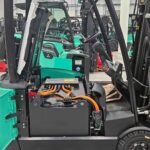
- Battery management system (BMS) maintenance
- Temperature-related battery performance issues
- Expensive battery replacement costs
- Warehouse charging layout modifications
- Downtime caused by improper charging strategies
In many cases, lithium forklifts still provide long-term advantages over diesel or lead-acid forklifts. But companies that ignore these hidden costs often experience budget overruns, operational disruptions, and lower-than-expected ROI.
Before converting an entire forklift fleet to lithium batteries, businesses should evaluate their warehouse infrastructure, charging capacity, runtime requirements, and operating environment.
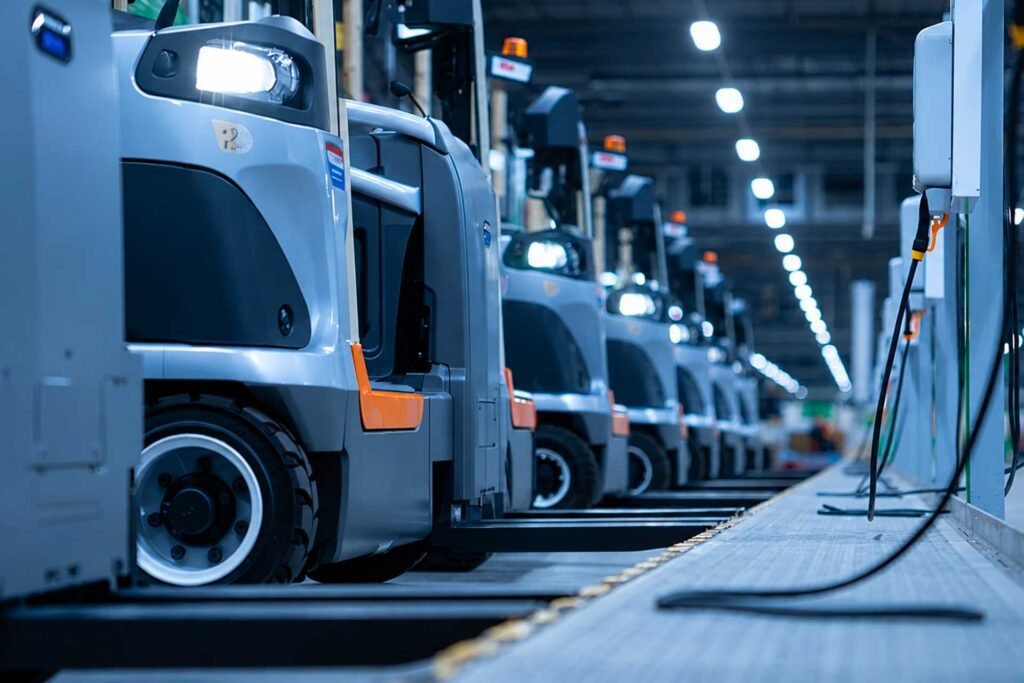
Hidden Costs of Switching to Lithium Battery Forklifts
Why Lithium Forklifts Are Becoming Popular
Lithium battery forklifts are rapidly replacing traditional lead-acid and internal combustion forklifts in modern warehouses.
Compared with lead-acid batteries, lithium forklifts offer:
- Faster charging
- Opportunity charging capability
- Lower maintenance
- Longer battery lifespan
- Higher energy efficiency
- Cleaner operation
These advantages make lithium forklifts especially attractive for:
- Warehouses
- Distribution centers
- Cold storage facilities
- High-shift operations
However, many buyers focus only on the advertised benefits while overlooking the hidden operational costs behind electrification.
The Biggest Hidden Cost: Electrical Infrastructure Upgrades
One of the most underestimated costs is upgrading the warehouse electrical system.
Older facilities were often designed for:
- Lighting
- Small machinery
- Limited battery charging
They were not designed to support multiple high-capacity lithium forklift chargers operating simultaneously.
As forklift fleets grow, warehouses may require:
- New transformers
- Larger electrical panels
- Additional wiring
- Upgraded circuit protection
- Utility company coordination
These upgrades can become extremely expensive, especially in old industrial buildings.
In some cases, infrastructure costs exceed the price difference between lithium and lead-acid forklifts themselves.
Fast Charging Can Increase Electricity Costs Dramatically
Lithium batteries support fast charging, which is one of their biggest selling points.
But fast charging also creates:
- High peak electricity demand
- Increased utility demand charges
- Heavy stress on old electrical systems
Many warehouses only calculate total electricity usage and ignore peak demand pricing.
When several forklifts begin charging simultaneously:
- Electricity bills can rise sharply
- Transformers may overload
- Voltage instability can occur
Without proper charging management, energy savings may be smaller than expected.
Charger Costs Are Often Ignored
Lithium forklift systems require specialized chargers.
Compared with traditional lead-acid charging systems, lithium chargers are:
- More advanced
- More expensive
- More sensitive to voltage fluctuations
Additional costs may include:
- Smart charging systems
- Charger software integration
- Cooling requirements
- Backup charging equipment
Some warehouses also require:
- Dedicated charging rooms
- Fire safety systems
- Ventilation upgrades
These expenses are frequently excluded from initial forklift quotations.
Battery Replacement Costs Can Be Very High
Lithium batteries last longer than lead-acid batteries, but replacement costs are significantly higher.
When a lithium battery eventually fails:
- Replacement costs can be substantial
- OEM battery compatibility may become an issue
- Battery supply lead times can be long
In some cases, businesses discover:
- Older forklift models no longer support updated battery systems
- Software compatibility problems arise
- Imported battery replacement parts are difficult to source
Long-term battery replacement planning is often overlooked during purchasing decisions.
Temperature Conditions Affect Lithium Battery Performance
Many buyers assume lithium batteries perform equally well in all environments.
In reality, extreme temperatures can significantly affect:
- Charging speed
- Battery runtime
- Long-term lifespan
Cold Storage Problems
In low-temperature warehouses:
- Charging efficiency decreases
- Battery output drops
- Runtime becomes shorter
Some lithium systems require battery heating systems before charging.
High-Temperature Problems
In hot environments:
- Battery temperatures rise rapidly
- Cooling systems work harder
- Battery degradation accelerates
Temperature management becomes a major hidden operating cost in demanding environments.
Improper Charging Strategy Creates Operational Problems
Many companies switch to lithium forklifts without redesigning their charging workflow.
This often creates:
- Charging bottlenecks
- Shift interruptions
- Charger congestion
- Uneven battery usage
Modern lithium fleets usually require:
- Opportunity charging strategies
- Smart energy scheduling
- Battery monitoring systems
- Runtime analysis
Without proper planning, operational efficiency may actually decrease.
Warehouse Layout Changes Can Be Expensive
Lithium forklift charging areas require proper planning.
Many warehouses need modifications such as:
- New charging stations
- Cable routing systems
- Safety barriers
- Emergency shutdown systems
Poor charging layouts can create:
- Traffic congestion
- Safety risks
- Reduced storage space
- Workflow inefficiency
These layout adjustments are rarely included in the original forklift purchasing budget.
Maintenance Is Lower — But Not Always Simple
Lithium forklifts are often promoted as “maintenance-free.”
While they require less routine maintenance than lead-acid batteries, they still depend heavily on:
- Electronic control systems
- Battery management systems (BMS)
- Software diagnostics
- Sensors and thermal protection systems
When electronic failures occur:
- Repairs may require specialized technicians
- Diagnostic tools can be expensive
- Downtime may increase
For some regions, local lithium forklift service support is still limited.
ROI Is Often Slower Than Expected
Many forklift buyers expect lithium conversion to immediately reduce operating costs.
But actual ROI depends on:
- Electricity pricing
- Shift intensity
- Charging efficiency
- Infrastructure upgrades
- Battery utilization rates
Warehouses with low daily usage may not recover lithium conversion costs as quickly as expected.
The highest ROI usually comes from:
- Multi-shift operations
- High forklift utilization
- Large warehouse fleets
- Intensive indoor logistics operations
How to Reduce the Hidden Costs of Lithium Forklifts
Before switching to lithium battery forklifts, businesses should conduct a complete operational analysis.
Evaluate Electrical Infrastructure
Check:
- Transformer capacity
- Existing electrical load
- Fast charging capability
- Future fleet expansion plans
Design a Charging Strategy
Plan:
- Charging schedules
- Off-peak charging
- Opportunity charging
- Charger quantity and location
Analyze Real Runtime Requirements
Evaluate:
- Shift patterns
- Travel distances
- Lift frequency
- Peak workload periods
Consider Environmental Conditions
Review:
- Temperature extremes
- Ventilation
- Cold storage operation
- Outdoor usage
Conclusion
Lithium battery forklifts offer major advantages in efficiency, charging speed, and long-term operation. However, the hidden costs of electrification are often underestimated.
Infrastructure upgrades, charging systems, battery replacement costs, temperature management, and operational redesign can significantly increase the total cost of ownership.
Before converting to lithium forklift fleets, businesses should carefully analyze their warehouse infrastructure, energy capacity, and operating conditions.
A successful lithium forklift project depends not only on the forklift itself, but also on the entire warehouse system supporting it.