⚠️ IMPORTANT SAFETY NOTICE: This guide is intended as a supplementary resource for educational purposes only. Operating a forklift requires professional hands-on training and official certification (such as OSHA in the US or local equivalents). Never operate machinery without proper authorization and training.
At Hebei Maoxiang Technology Co., Ltd., we believe that safety is the foundation of warehouse efficiency. Operating a stand-up forklift (often a Reach Truck or Stand-Up Counterbalance) is significantly different from driving a car or a sit-down forklift. This guide breaks down the essential steps and expert safety tips for beginners.
Step-by-Step: How to Drive a Stand-Up Forklift
Follow these steps to operate a stand-up forklift safely and efficiently.
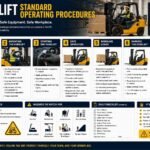
Step 1: The Pre-Operational Inspection
Before you even step onto the machine, a visual and physical check is mandatory.
- Check the Fluids: Look for hydraulic leaks under the chassis.
- Inspect the Tires: Ensure there are no chunks missing from the polyurethane tires.
- The Battery: Ensure cables are secure and there is no corrosion on the connectors.
- Forks & Chains: Check for cracks in the forks and ensuring the lift chains are properly lubricated.
Step 2: Proper Mounting and Positioning
Unlike sit-down models, stand-up forklifts require a specific 'Side-Stance.'
- Mounting: Always maintain three points of contact when stepping into the operator compartment.
- The 'Deadman' Pedal: Look at the floor of the compartment. You will see a pedal. This is the Deadman Switch. The forklift will not move or lift unless this pedal is firmly depressed. In an emergency, stepping off this pedal will cut power and engage the brakes.
- Side-Stance: Stand sideways. This allows you to look forward (towards the forks) and backward (towards the drive end) by simply turning your head, minimizing neck strain and maximizing visibility.
Step 3: Mastering the Controls
Most modern stand-up forklifts use a Multi-Function Control Handle (Joystick) and a Steering Tiller.
- The Joystick: Pushing forward or backward controls the travel direction. Side-to-side movements or buttons usually control the lift, lower, tilt, and side-shift functions.
- The Tiller: Controlled by your left hand. Note: Most forklifts use rear-wheel steering, meaning the back of the machine swings wide. It feels 'reversed' compared to a car.
Step 4: Moving and Braking (The 'Plugging' Technique)
- Starting: Depress the Deadman pedal, ensure the forks are slightly off the ground (2-4 inches), and slowly move the joystick in the desired direction.
- Braking: Stepping off the Deadman pedal will always stop the truck. Many operators also use a technique called 'Plugging' — briefly reversing the joystick to use the motor's resistance for smoother deceleration — but it should only be used at low speed with a light, lowered load, never as a substitute for the brake. For a full breakdown of when plugging is safe to use and when it isn't, see our guide: What Is Plugging on a Forklift?
Step 5: Handling a Load
- The Stability Triangle: Remember that a forklift's center of gravity shifts as the load rises. Always keep the load as low as possible during transport.
- Tilt and Center: Once the forks are fully under the pallet, tilt the mast back slightly to secure the load against the backrest before moving.
🛡️ Critical Safety Tips for Beginners
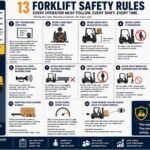
1. Watch the 'Rear-End Swing'
Because the steering wheel is at the back, the rear of the forklift swings out aggressively when you turn. New operators often accidentally pin themselves or others against racking. Always keep a 'no-go' zone of at least 1 meter around the machine.
2. Never 'Travel' with a Raised Load
Lifting a pallet while moving significantly increases the risk of a tip-over. Only lift or lower when the forklift is completely stationary.
3. Hands and Feet Inside at All Times
The operator compartment is a reinforced steel cage designed to protect you. Never let your foot hang out over the edge or rest your hand on the outside of the mast while moving.
4. Sound the Horn at Every Intersection
In a noisy warehouse, pedestrians often don't hear electric forklifts. Use your horn at every corner and doorway.
Frequently Asked Questions
Can beginners drive a stand-up forklift?
Yes, but proper training and supervision are recommended.
Is a stand-up forklift safer than a sit-down forklift?
Both are safe when used correctly, but designed for different environments.
How long does it take to learn?
Basic operation can be learned quickly, but mastering safe driving takes practice.
Final Thoughts
Driving a stand-up forklift is not just about moving the machine—it requires control, awareness, and proper technique.
By following correct procedures and safety guidelines, operators can significantly improve efficiency and reduce risks.
Looking for Easy-to-Operate Stand-Up Forklifts?
If you want safer and more efficient warehouse operations, choosing the right forklift is essential.
At Hebei Maoxiang Technology Co., Ltd., we provide stable, easy-to-operate forklifts designed for modern warehouse environments.
Why Choose Us?
- Smooth and precise control systems
- Designed for narrow aisle efficiency
- Durable and reliable performance
- Competitive pricing for global markets
👉 Contact us today to find the right forklift solution and improve your operational efficiency.