In modern material handling, a Side Shifter is no longer a luxury—it is a baseline requirement for efficiency. It allows the operator to shift the forks left and right without repositioning the entire truck.
While the mechanical benefit is simple, the commercial impact is profound. By eliminating unnecessary maneuvering, a side shifter reduces tire wear, lowers fuel consumption, and drastically cuts down on accidental pallet and racking damage.
1. What is a Side Shifter? (The Engineering Behind the Movement)
A side shifter is a hydraulic attachment integrated into the fork carriage. It enables the forks to move laterally—typically 4 inches (100mm) in either direction.
-
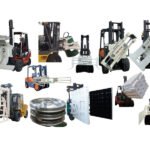
Integrated vs. Bolt-on: Integrated side shifters are built into the carriage at the factory, offering better visibility and higher residual capacity. Bolt-on versions offer flexibility for retrofitting older fleets.
-
The Third Function: To operate a side shifter, the forklift must be equipped with an auxiliary hydraulic valve and a control lever (or joystick) in the cabin.
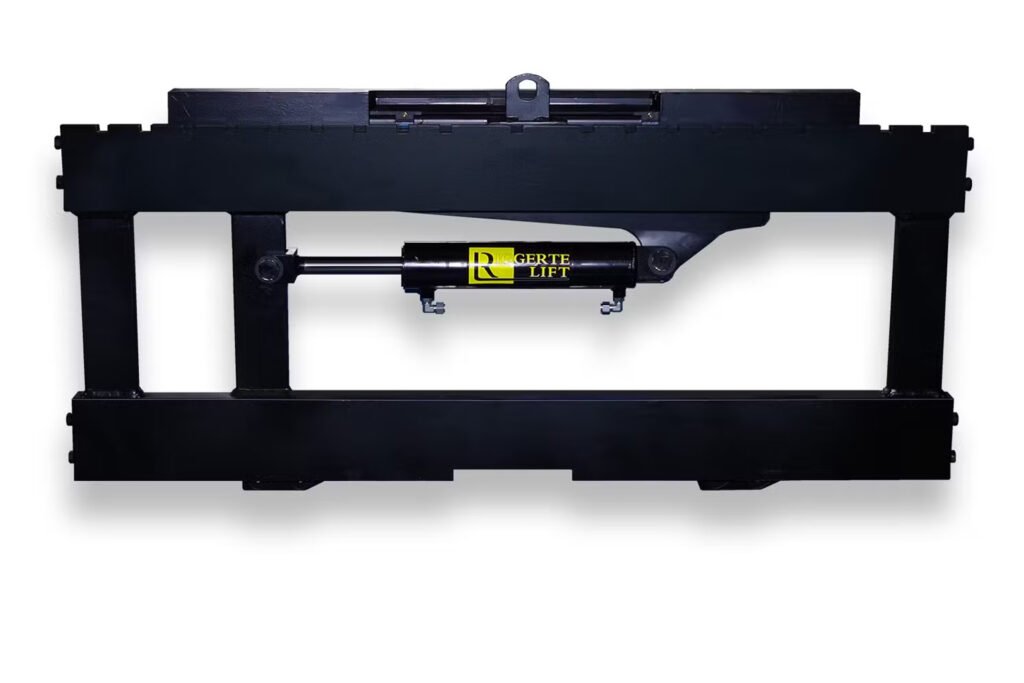
Side Shifter Forklift
2. The 3 Core Benefits for Your Bottom Line
A. 15–20% Reduction in Cycle Times
Without a side shifter, if an operator is 2 inches off-center when approaching a pallet, they must reverse, steer, and drive forward again.
-
The Gain: With a side shifter, this adjustment happens in milliseconds while the truck is stationary. In high-volume cross-docking, this saves hours of labor every week.
B. Drastic Reduction in Racking & Product Damage
When operators 'force' a forklift into a tight space without perfect alignment, the forks often scrape the racking uprights or splinter the pallet.
-
The Gain: Side shifters allow for 'surgical' precision. By aligning the forks perfectly before entry, you protect your racking integrity and reduce the high cost of damaged goods.
C. Reduced Mechanical Wear & Tear
Every time a forklift reverses and steers to realign, it puts stress on the transmission, steering linkage, and tires.
-
The Gain: Minimizing 're-shuttling' maneuvers extends the life of your steer axle tires and reduces fuel (or battery) consumption by up to 10% in intensive operations.
3. Top Applications: Where Side Shifters Are Non-Negotiable
-
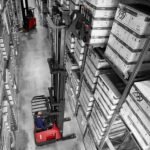
Narrow Aisle Warehousing: Where there is zero room to maneuver the chassis.
-
Container Loading/Unloading: The cramped quarters inside a shipping container make chassis realignment nearly impossible.
-
Truck Loading: Aligning pallets side-by-side on a flatbed trailer requires the millimetric precision only a side shifter can provide.
-
Cold Storage: Operators in heavy freezer gear have reduced mobility; hydraulic side shifting compensates for limited physical movement.
4. Technical Depth: Impact on Load Capacity
Important Warning: The Derating Factor Adding a side shifter adds weight to the front of the carriage and moves the load center slightly forward (usually by 1-2 inches).
-
Net Capacity: Always check your Modified Capacity Plate. A 3-ton forklift with a side shifter may have a net capacity of approximately 2.7 to 2.8 tons.
-
Hydraulic Pressure: Ensure the side shifter is fitted with a pressure relief valve to prevent the carriage from hitting the side-stops too hard, which can cause hydraulic seal failure over time.
❓ FAQ: Real-World Expert Advice
Q: Does a side shifter require special maintenance? A: Yes, but it is minimal. The upper and lower wear strips (slidewear) should be greased every 250 hours. If you hear a 'metal-on-metal' grinding sound, the wear strips are depleted and must be replaced to prevent carriage damage.
Q: Can I add a side shifter to my old forklift? A: Yes, as long as your forklift has a 3rd-function auxiliary valve. If not, you will need to install a hydraulic hose reel and a new control valve, which can be a significant investment.
Q: Is there any downside to a side shifter? A: The only downside is a slight reduction in visibility through the mast (due to the extra hydraulic hoses and the shifter frame) and the minor reduction in net lifting capacity.
🏆 Maoxiang: Factory-Integrated Precision
At Maoxiang, we specialize in the 'Integrated' approach. Our 2026 Diesel and Lithium-ion series come with factory-installed side shifters as a standard option for export.
-
High-Visibility Design: We use compact hydraulic routing to ensure the operator’s view through the mast remains unobstructed.
-
Proprietary Seal Technology: As a specialist in Hydraulic Cylinders, Maoxiang side shifters feature our premium seal kits that are tested for 500,000 cycles without leakage.
-
Hardened Slideways: We use heat-treated wear plates that offer 30% more service life than standard steel-on-steel alternatives.
Make precision your standard. Don't settle for 'close enough.'