You need to move pallets. Your budget is somewhere between $500 and $15,000. Someone told you to look at pallet jacks and walkie stackers, and now you're staring at two pieces of equipment that look vaguely similar but have prices that are worlds apart.
Here's the good news: one question resolves this for most people in about thirty seconds.
Do you need to lift pallets onto shelving or stack them on top of each other?
If the answer is no — you just need to move pallets from point A to point B on the same level — a pallet jack does the job, costs less, and is simpler to operate. Stop overthinking it.
If the answer is yes — you need to raise pallets to shelf height, stack them vertically, or place them in racking — a pallet jack physically cannot do this. You need a walkie stacker.
For the majority of readers, the decision is that simple. But if you're in the middle — not sure exactly what you need, or trying to figure out which type of stacker, or wondering whether you've outgrown both options — keep reading. The details matter more than most buying guides admit.
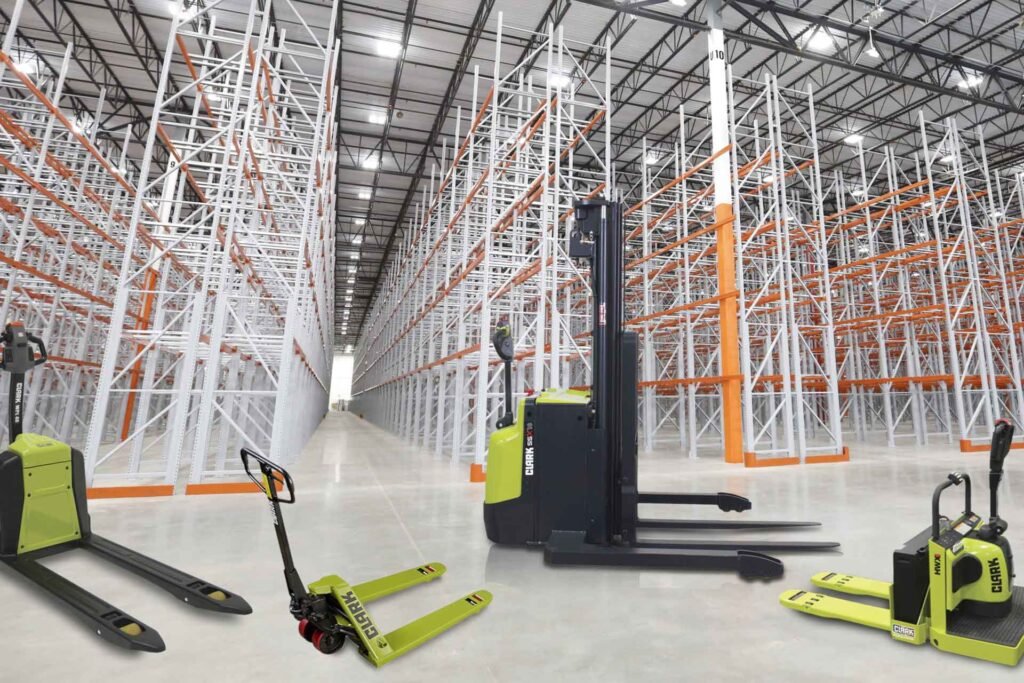
Walkie Stacker vs Pallet Jack
The Core Difference in Plain Terms
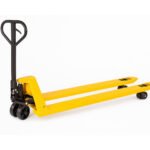
A pallet jack lifts a pallet just enough to clear the ground — typically 3 to 8 inches — and moves it horizontally. That's its entire job. It does that job well, reliably, and cheaply. It has no mast, no significant lift height, and no ability to place loads at elevation.
A walkie stacker does everything a pallet jack does, plus it can raise loads vertically using a hydraulic mast — anywhere from 5 feet to 16 feet depending on the model. It's essentially a pallet jack with a lifting system added on top.
The design consequence of that difference: a walkie stacker is larger, heavier, more complex, and significantly more expensive than a pallet jack. Whether that extra cost and complexity is justified depends entirely on whether you actually need the vertical lift capability.
What makes this comparison genuinely tricky is that the two devices look similar at a glance — both are walked by an operator, both move pallets, both run on electric power in their motorized versions. The difference in what they can do is dramatic. The difference in what they look like is subtle. That mismatch is why people get confused.
Five Specific Questions That Determine Your Answer
Question 1: How High Do You Need to Lift?
This is the question that matters most, and it's the one most buying guides answer vaguely. Here are the actual numbers:
Pallet jack lift height:
- Manual pallet jack: 3–6 inches (enough to clear the floor for movement)
- Electric pallet jack: 6–8 inches (same functional purpose, just powered)
Walkie stacker lift height by category:
- Basic electric stacker: 60–100 inches (5–8 feet) — reaches first shelf level in most standard racking
- Mid-range stacker: 100–150 inches (8–12 feet) — reaches second shelf level
- High-reach stacker: 150–190 inches (12–16 feet) — reaches third shelf level in high-bay configurations
Now do the practical translation: measure the height of your top shelf level. Add the height of your tallest pallet (typically 48–60 inches for a loaded pallet). Add 6–8 inches of clearance needed to clear the shelf beam and place the load. That total is your minimum required lift height.
Example: Top shelf beam at 96 inches + 54-inch loaded pallet + 8 inches clearance = 158 inches required lift height. A basic stacker rated to 80 inches doesn't cover this. A mid-range stacker rated to 130 inches doesn't quite cover it either. A high-reach stacker rated to 170 inches does.
This calculation catches more buyers off guard than anything else in stacker purchasing. People see a stacker rated to '130 inches' and assume it reaches their 10-foot shelf, not accounting for the pallet height and clearance margin on top. Do the math before you buy.
If you have no shelving and just need to stack pallets directly on top of each other: one loaded pallet is typically 60–66 inches tall. Stacking two high requires roughly 130–140 inches of lift height, plus clearance. Stacking three high requires 190+ inches — territory where you're looking at full-reach stacker or compact forklift equipment.
Question 2: What Are Your Aisle Widths?
This is the criteria most buyers don't think about until they take delivery and discover the equipment doesn't fit their space.
Manual pallet jack: Needs roughly 5–6 feet of aisle width to maneuver a standard 48×40 inch pallet. Very space-efficient.
Electric pallet jack: Similar aisle requirements to manual, slightly more turning space needed for powered models.
Straddle walkie stacker (most common type): Has two outrigger legs that extend forward and straddle the pallet on the outside. These legs determine the minimum aisle width — typically 6.5–8.5 feet depending on model. Crucially, the leg spread must also match your pallet dimensions: the legs need to fit around the outside of the pallet, which means your pallet width must be narrower than the inner leg spacing of the stacker.
This pallet-to-leg-spacing compatibility issue causes more post-purchase problems than almost anything else in stacker selection. If you use non-standard pallet sizes — wider than 40 inches, or different configurations — verify the stacker's inner leg clearance against your actual pallet dimensions before purchasing.
Counterbalanced walkie stacker: Uses a rear counterweight instead of outrigger legs, so no straddle requirement. Operates more like a miniature counterbalance forklift. Needs 8–10 feet of aisle width but doesn't have the pallet compatibility constraint that straddle stackers do.
Measure your narrowest aisle before you contact any supplier. It's a 2-minute job with a tape measure that eliminates a major category of purchasing mistakes.
Question 3: What Is Your Maximum Load Weight?
Manual pallet jack: Typically rated to 5,500 lbs. Surprisingly capable for a simple device.
Electric pallet jack: Usually rated to 4,500–6,600 lbs depending on model.
Walkie stacker: This is where capacity gets more nuanced.
- Basic entry-level stackers: 1,500–2,500 lbs
- Mid-range stackers: 2,500–3,300 lbs
- Heavy-duty stacker models: up to 4,400 lbs
Two important nuances:
First, stacker capacity ratings — like all forklift ratings — assume a standard load center distance, typically 24 inches from the face of the forks. Bulky loads with the center of gravity further forward will have a lower effective safe capacity than the nameplate rating.
Second, rated capacity drops with lift height. A stacker rated at 3,000 lbs at ground level may only be rated at 2,200 lbs at full extension. This matters if you're regularly lifting heavy loads to maximum height. Ask for the full capacity chart at height, not just the ground-level rating.
If your loads consistently exceed 3,000 lbs and you need to lift them to shelf height, you are in full forklift territory. A walkie stacker is not the right tool, and buying one rated to its limit for your heaviest loads creates unnecessary safety and equipment wear issues.
Question 4: How Often Will You Use It?
This question determines whether the price gap between a pallet jack and a stacker is financially justified — and which tier of each device makes sense.
Occasional use (fewer than 5 pallet moves per day): A manual pallet jack handles this easily at $300–$800. The physical effort is manageable at low frequency. If you occasionally need to lift to shelf height at this frequency, a basic entry-level electric stacker at $4,000–$6,000 is the minimum investment — but evaluate whether the frequency justifies the cost.
Regular use (5–20 pallet moves per day): Manual operation at this frequency is genuinely tiring and becomes a real labor efficiency and injury risk issue. An electric pallet jack ($3,000–$6,000) for horizontal movement, or an electric stacker ($5,000–$10,000) if you need lift capability, is the appropriate investment level.
High frequency (20+ pallet moves per day): At this intensity, manual equipment creates cumulative fatigue, injury risk, and throughput limitations that cost more in labor and workers' compensation than the equipment price difference. Electric equipment is not optional at this frequency — it's a productivity and safety necessity. If you're at this level and need lift capability, also evaluate whether a compact counterbalance forklift makes more financial sense than a high-end stacker.
Question 5: What Is Your Floor Condition?
Pallet jacks: Highly tolerant of imperfect floors. Minor cracks, uneven joints, and slight surface variations are manageable, though fully loaded pallet jacks are harder to start and stop on rough surfaces.
Walkie stackers: More demanding about floor conditions, particularly at height. A stacker operating at 10–12 feet on a floor with significant surface variation will feel unstable — not dramatically unsafe, but uncomfortable enough that operators avoid lifting to full height, which defeats the purpose of the equipment.
Both devices: Neither is appropriate for outdoor use on unpaved surfaces, significant slopes, or wet/slippery conditions. This point about slopes deserves specific emphasis.
A loaded pallet jack on a slope is dangerous in a way that's easy to underestimate. The combined weight of a loaded pallet (potentially 2,000–4,000 lbs) plus the jack creates momentum that the operator's body cannot reliably stop if control is lost. Many small warehouse and retail operation accidents involve pallet jacks on inclines — dock leveler plates, loading ramp transitions, even slight floor gradients. If your operation involves any slope, the risk needs to be actively managed with proper technique, speed control, and if necessary, powered equipment with braking systems rather than manual jacks.
The Middle Ground: Equipment Most Buyers Don't Know Exists
This is the section most buying guides skip entirely, and it's where a significant number of buyers end up after realizing neither a basic pallet jack nor a standard stacker quite fits their needs.
Walkie Rider Pallet Jack (Stand-On Electric Pallet Jack)
Price range: $6,000–$12,000
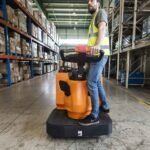
This is an electric pallet jack with a small standing platform at the rear, allowing the operator to ride rather than walk. It doesn't add any lift height — it's still a horizontal transport device — but it dramatically improves operator efficiency and reduces fatigue for operations involving long travel distances within a facility.
Best for: Large warehouses or retail distribution operations where operators are moving pallets across significant distances (100+ feet) repeatedly throughout a shift. The ride platform turns a tiring walking job into a comfortable riding one without the cost or complexity of a full forklift.
Not useful if: Your facility is small and distances are short. The ride capability adds cost and size without benefit if you're only moving pallets 20–30 feet.
Straddle Stacker (Standard Walkie Stacker)
Price range: $4,000–$12,000
The most common walkie stacker configuration. Outrigger legs extend forward and straddle the pallet. Stable design for standard pallet dimensions and moderate lift heights. The right choice for most small to medium operations needing lift capability up to 10–12 feet.
Key compatibility check: inner leg spacing versus your pallet width. This must be verified before purchase.
Counterbalanced Stacker
Price range: $8,000–$18,000
Uses a rear counterweight instead of outrigger legs. Can handle pallets of varying dimensions without compatibility constraints. Requires more aisle width than a straddle stacker but offers more flexibility for non-standard load sizes. Handles slightly better on imperfect floors due to the counterweight stabilization.
Best for: Operations with non-standard pallet sizes, varying load dimensions, or slightly challenging floor conditions where the straddle stacker's leg-and-pallet compatibility constraints create operational problems.
Double-Deep Stacker / High-Reach Stacker
Price range: $12,000–$25,000
Stackers with lift heights above 12 feet, designed for double or triple pallet stacking or high-bay racking. At this price point and capability level, the comparison to a compact counterbalance forklift becomes meaningful — a used forklift in this price range offers greater capability, capacity, and durability for many operations.
If you're seriously considering equipment in this category, get quotes for compact counterbalance forklifts alongside high-reach stackers. The right answer depends on your specific aisle widths, capacity requirements, and certification situation — but the stacker is not automatically the better choice just because it's physically smaller.
Price Comparison: What You're Actually Paying For
| Equipment Type | Typical Price Range | What the Price Buys You |
|---|---|---|
| Manual pallet jack | $300–$800 | Basic horizontal pallet movement, operator-powered |
| Electric pallet jack (walkie) | $3,000–$6,000 | Powered horizontal movement, significantly less operator fatigue |
| Walkie rider pallet jack | $6,000–$12,000 | Powered horizontal movement with ride platform for long distances |
| Basic electric stacker (5–8 ft lift) | $4,000–$8,000 | First-level racking capability, standard pallet dimensions |
| Mid-range electric stacker (8–12 ft) | $7,000–$15,000 | Second-level racking, more robust construction |
| High-reach stacker (12–16 ft) | $12,000–$25,000 | High-bay capability, approaching compact forklift territory |
| Compact counterbalance forklift | $15,000–$35,000 | Full forklift capability, highest capacity and versatility |
Is the Stacker Worth the Extra Cost Over an Electric Pallet Jack?
The price gap between an electric pallet jack ($3,000–$6,000) and a basic stacker ($5,000–$8,000) is roughly $2,000–$5,000. Whether that gap is worth paying depends on whether you need vertical lift capability — which brings us back to the opening question.
If you need to lift pallets to shelf height, the pallet jack simply cannot do it. The comparison isn't 'pallet jack vs stacker at the same capability level' — it's 'stacker vs whatever alternative you'd use to lift pallets without a stacker.' That alternative is usually manual labor with a hand truck or ladder, which is slower, harder on workers, and carries meaningfully higher injury risk.
Against that comparison, a $5,000–$8,000 stacker that reduces the manual labor burden and injury risk for a task your operation does daily pays back quickly. Typical payback periods for stacker investments over manual alternatives in regular-use operations run 6–18 months.
When You've Outgrown Both: Signs You Need a Full Forklift
Walkie stackers are excellent tools for the right operations. They are not scaled-down forklifts — they have real limitations, and pushing past those limits creates operational problems and safety risks.
Consider moving to a compact counterbalance forklift when:
Your loads exceed 3,000 lbs regularly. Most stackers are at or near their rated capacity at this weight. Operating equipment at its rated limit consistently reduces lifespan and creates safety margin concerns. A compact forklift handles 3,000–5,000 lbs as a routine working load.
You need to load and unload trucks at dock height. Walkie stackers are not designed for dock work — driving into or alongside truck trailers, managing the transition between dock height and truck floor level. Counterbalance forklifts handle this as a standard task.
Your lift height requirement exceeds 16 feet. Above this level, walkie stackers are specialized equipment at prices that compete directly with compact forklifts. At that point, a forklift offers better capacity, better stability, and better long-term durability for similar or lower cost.
Your daily pallet move count exceeds 40–50 moves. At high cycle rates, the throughput limitations of walk-behind equipment become a bottleneck. A sit-down forklift with faster travel speeds and better ergonomics for sustained operation handles high-cycle work more efficiently.
Your operation involves significant outdoor or rough-surface movement. Neither pallet jacks nor stackers are designed for outdoor terrain. If outdoor operation is part of your regular workflow, a forklift with pneumatic tires is the right equipment.
Safety: What the Manual Doesn't Emphasize Enough
Both pallet jacks and walkie stackers cause workplace injuries — and several of the most common injury scenarios are predictable and preventable.
Pallet jack injuries most often involve:
- Foot and ankle injuries from the jack rolling over or into the operator's feet during loading
- Strain injuries from manual pumping and maneuvering of heavy loads
- Loss of control on slopes — the most serious scenario, where a loaded jack builds momentum that an operator cannot stop
Walkie stacker injuries most often involve:
- Tip-over incidents from operating on uneven floors, excessive speeds during turns, or lifting above rated capacity
- Operator entrapment between the stacker and fixed structures in tight spaces
- Load falls from improper pallet positioning, overloading, or traveling with loads elevated
Practical safety practices that matter:
Never travel with a load elevated more than 6–8 inches above the floor. This applies to both pallet jacks (which shouldn't travel elevated at all) and stackers. Elevated travel dramatically increases tip-over risk and is the single most common cause of serious stacker incidents.
Check pallet condition before lifting. Damaged pallets — cracked deck boards, broken stringers, missing blocks — can fail under load at height. A pallet failure at 8 feet is a serious incident. A pallet failure at 12 feet is potentially catastrophic.
Match the equipment to the floor. Don't use either device on slopes beyond their rated incline capacity. For pallet jacks, treat any slope with meaningful grade as a risk that requires powered equipment with braking systems rather than operator-controlled manual jacks.
Ensure operators are trained specifically on the equipment they're using. OSHA's powered industrial truck standard (29 CFR 1910.178) covers walkie stackers and powered pallet jacks. Training requirements are real and legally required — not optional recommendations.
Decision Table: Your Situation at a Glance
| Your Situation | Recommended Equipment |
|---|---|
| Move pallets horizontally only, occasional use | Manual pallet jack ($300–$800) |
| Move pallets horizontally, regular use (5–20/day) | Electric pallet jack ($3,000–$6,000) |
| Move pallets long distances within large facility | Walkie rider pallet jack ($6,000–$12,000) |
| Lift to first shelf level (5–8 ft), standard pallets | Basic electric straddle stacker ($4,000–$8,000) |
| Lift to second shelf level (8–12 ft) | Mid-range electric stacker ($7,000–$15,000) |
| Non-standard pallet sizes, need lift capability | Counterbalanced stacker ($8,000–$18,000) |
| Lift above 12 ft OR loads above 3,000 lbs | Evaluate compact forklift alongside high-reach stacker |
| Dock loading/unloading, outdoor use, high cycle rates | Full counterbalance forklift |
The Point Where Maoxiang Becomes Relevant
Walkie stackers and pallet jacks are the right tools for small to medium operations with moderate throughput. When your evaluation leads you to the conclusion that you've outgrown these options — loads are too heavy, heights are too high, cycle rates are too demanding, or your operation has expanded to include dock work and outdoor movement — that's where a full electric counterbalance forklift becomes the right answer.
Hebei Maoxiang Technology Co., Ltd. manufactures CE-certified electric counterbalance forklifts from 0.6 to 5 tons. For operations that started with a walkie stacker and have grown to the point where a forklift makes more sense, Maoxiang's range covers the capacity and application profile that most growing warehouse operations need — with lithium-ion battery configurations built to your specific shift pattern, competitive pricing relative to European and American brands, genuine customization capability, and global shipping to support buyers across all major markets.
If your current evaluation points to walkie stacker or pallet jack territory, that's the right equipment for now. If it points toward forklift territory, contact Maoxiang for a configuration-specific quote.
The Bottom Line
The pallet jack vs walkie stacker decision comes down to one functional requirement: vertical lift. If you need it, a pallet jack cannot provide it, and a stacker is the minimum viable solution. If you don't need it, a pallet jack does the job at a fraction of the cost and complexity.
Beyond that binary, the details that actually determine which specific equipment to buy are: your required lift height (calculated correctly with pallet height and clearance margin included), your aisle width and pallet dimensions relative to stacker leg spacing, your maximum load weight, and your daily cycle frequency.
Get those four numbers before you talk to any supplier. With those numbers in hand, the right equipment choice becomes obvious — and you avoid the most common and most expensive mistakes in this category of equipment purchasing.