What Is an Electric Forklift?
An electric forklift runs on a rechargeable battery rather than an internal combustion engine. The battery powers everything: the drive motor, the hydraulic lift system, and all onboard electronics. No fuel tank, no engine, no exhaust.
The most important thing to understand about electric forklifts mechanically is that they have roughly 90% fewer moving parts than a fuel-powered equivalent. Fewer moving parts means fewer things that wear out, fewer things that break, and fewer service visits. That single fact is responsible for most of the cost advantage electric forklifts hold over ICE equipment over a full ownership period.
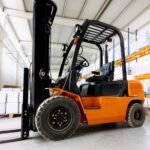
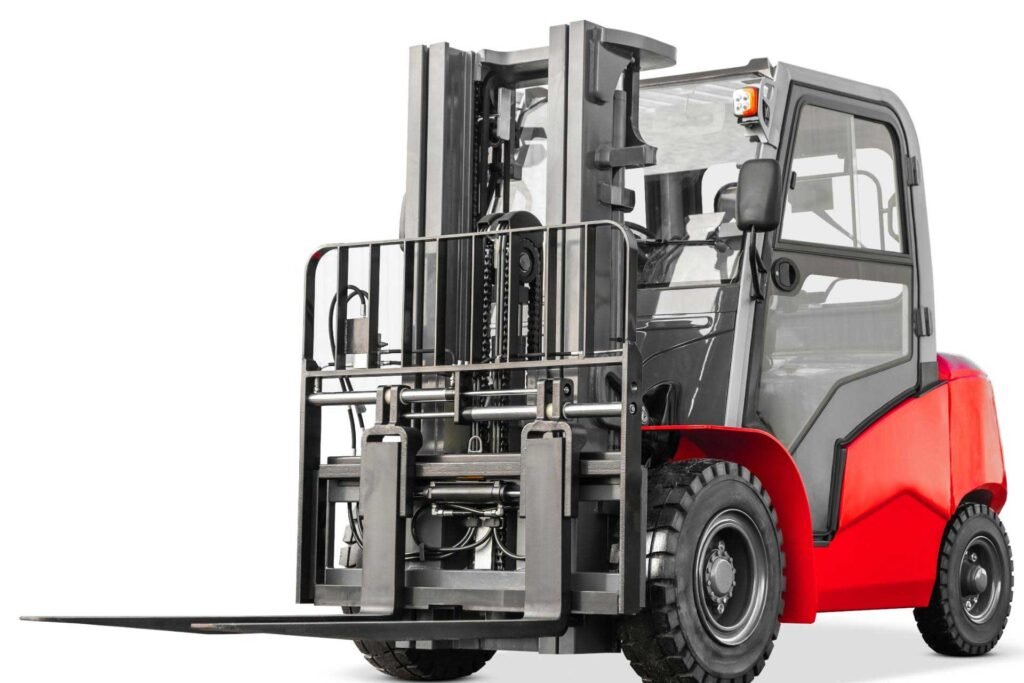
The dominant type in warehouse and industrial use is the counterbalance electric forklift — the familiar sit-down truck with forks at the front and a heavy battery pack under the seat acting as the rear counterweight. It handles loading docks, warehouse aisles, manufacturing floors, and distribution centers equally well, across load capacities from under a ton up to five tons and beyond for heavy-duty variants.
Electric Forklift
Why Electric Has Won the Argument
Ten years ago, the case for electric forklifts was mostly about emissions and corporate sustainability targets. Today it's primarily about money — and the numbers are no longer close.
Operating Cost: The Gap Is Large and Widening
Running an electric forklift costs roughly $1.50–$3.00 per operating hour in electricity. Running a comparable propane forklift costs $3.00–$7.00 per hour in fuel. That gap — call it $2,000–$4,000 per truck per year at typical utilization — compounds across every truck in your fleet and every year of ownership.
Over a five-year period at 2,000 operating hours per year, the fuel savings alone typically exceed the price premium of electric over ICE. The electric forklift effectively pays for its own cost advantage. And unlike fuel costs, which fluctuate with energy markets, electricity prices are relatively stable — so the savings are predictable, not speculative.
Maintenance: Half the Cost, Twice the Intervals
Electric forklifts typically go 500 hours between scheduled service intervals. ICE forklifts need attention every 200 hours. No engine oil, no coolant, no fuel filters, no transmission fluid, no exhaust system. Annual maintenance costs for a well-run electric forklift run $800–$1,500. For a comparable diesel unit, $3,500–$5,000 is a realistic figure once parts and labor are fully accounted for.
The less-discussed cost here is downtime. Every unplanned service visit on an ICE forklift is a disruption to your operation. Electric forklifts break down less often, and when they do need service, the jobs tend to be simpler. For operations running tight throughput schedules, that reliability difference has real dollar value.
Emissions Compliance: A Regulatory Tailwind Turning Into a Headwind for ICE
California's Air Resources Board has mandated that new ICE forklifts cannot be sold or leased in California starting in 2026. The EU's Green Industry Plan targets zero-emission logistics equipment across European markets by 2030. These regulations are not distant future concerns — they are shaping resale markets and fleet replacement cycles right now.
Buying ICE equipment today means buying into a shrinking resale market and an accelerating depreciation curve. Buying electric today means buying into the direction the global market is already moving.
Indoor Air Quality: Non-Negotiable in Many Industries
Propane and diesel forklifts produce carbon monoxide and other combustion byproducts. In enclosed facilities — food processing plants, pharmaceutical warehouses, cold storage facilities, any space with limited ventilation — this creates real air quality and compliance problems. Electric forklifts produce zero exhaust at the point of use. For these industries, electric isn't a preference; it's a requirement.
Better Visibility and Control
Because the battery sits beneath the operator's seat rather than behind it, there's no propane tank or engine housing obstructing the operator's rearward sightlines. Electric motors also respond more precisely to throttle input than mechanical transmissions, giving operators tighter, more predictable control — particularly useful in confined spaces and around pedestrian traffic.
Quieter Working Environment
The noise difference between an electric forklift and a propane equivalent is substantial. In facilities where operators work full shifts, the reduction in noise fatigue is a real productivity and safety factor. It's also increasingly relevant for operations in mixed-use facilities or urban environments where noise ordinances apply.
The Real Disadvantages — Honestly Assessed
The Upfront Cost Trap
The sticker price on an electric forklift is almost never the full cost. Many manufacturers and dealers quote the truck price separately from the battery and charger — two components you cannot operate without.
A lead-acid battery for a standard 3-ton electric forklift adds $3,000–$6,000 to the truck price. A lithium-ion battery adds $8,000–$20,000 depending on voltage and capacity. A compatible charger adds $1,500–$5,000. The all-in cost can run $10,000–$25,000 higher than the advertised price.
The rule is simple: always ask for a single all-in price that includes truck, battery, and charger before comparing quotes from different suppliers. This is the most reliable way to avoid an unpleasant surprise after signing.
Multi-Shift Operations Need Planning
A standard lead-acid battery runs about 8 hours, then needs 8 hours of charging and 8 hours of cooling before it can be used again. For two- or three-shift operations, this means buying multiple battery sets per truck, plus the space and equipment to manage swaps. That infrastructure cost is real and often underestimated in fleet budget calculations.
Lithium-ion solves most of this problem — but at a higher upfront cost. The battery technology section below covers the tradeoffs in detail.
Capacity Has a Ceiling
Most electric counterbalance forklifts are rated up to 10,000–12,000 lbs. For very heavy industrial applications — steel mills, ports, certain construction contexts — internal combustion engines still hold the advantage at the upper end of the capacity range. For the overwhelming majority of warehouse and distribution operations, which involve loads well under 6,000 lbs, this ceiling is never reached.
Cold Storage Requires the Right Battery
Lead-acid battery performance drops significantly in sub-zero environments. For cold chain operations, lithium-ion is the right battery choice — it maintains more consistent performance across temperature ranges. This is a battery selection issue, not an electric forklift issue, but it's worth confirming before purchase.
Lead-Acid vs. Lithium-Ion: The Decision Inside the Decision
Choosing electric is step one. Choosing the right battery technology is step two — and it shapes your operating costs, your infrastructure requirements, and your daily workflow for the life of the equipment.
When Lead-Acid Still Makes Sense
Lead-acid batteries cost one-third to one-quarter of equivalent lithium-ion units upfront. For single-shift operations with moderate utilization — say, four to five hours of actual running time per day — and where capital budget is genuinely constrained, lead-acid is a defensible choice. The technology is well understood, parts and service are available everywhere, and the economics work at low utilization levels.
Lead-acid is the right choice when utilization is low, operation is single-shift, ownership horizon is short, or the forklift is being used in a rental or temporary context.
Why Lithium-Ion Is Becoming the Industry Standard
The argument for lithium-ion isn't complicated once you look at the full picture rather than just the purchase price.
Energy efficiency matters more than most buyers realize. Lithium-ion batteries convert about 95% of stored energy into usable work. Lead-acid batteries are roughly 60% efficient. That 35-point gap means a lead-acid forklift is consuming significantly more electricity — and paying more on every energy bill — to do the same amount of work.
Opportunity charging changes the economics of multi-shift operations entirely. Lithium-ion batteries can be plugged in during any break — 15 minutes at lunch, 10 minutes between shifts — without any negative effect on battery life. Lead-acid batteries must complete a full charge-and-cool cycle before reuse. One lithium-ion battery per truck handles multiple shifts. Lead-acid requires two or three battery sets per truck plus the space, equipment, and labor to manage them.
Zero maintenance is a genuine operational advantage. Lead-acid batteries require regular watering (adding distilled water to individual cells), equalization charging, terminal cleaning, and ventilated storage because they off-gas flammable hydrogen during charging. Lithium-ion requires none of this. No watering, no equalization, no dedicated battery room, no ventilation system. Across a fleet of ten trucks, the labor hours eliminated annually are substantial — and every one of those hours is paid labor that produces zero output.
Consistent performance throughout the shift. Lead-acid voltage drops as the battery discharges. Operators experience the forklift getting noticeably slower and less responsive as the shift progresses. Lithium-ion maintains consistent voltage and full performance from full charge to near-depletion. The last task of the shift performs identically to the first.
The lifespan math favors lithium-ion over a long ownership horizon. A well-maintained lead-acid battery lasts 3–5 years. Lithium-ion lasts 7–10 years. Over a 10-year fleet ownership period, you replace a lead-acid battery twice. A lithium-ion battery bought at the start is likely still running at the end. When you factor in replacement costs, the cumulative spend on batteries over a decade often favors lithium-ion despite the higher initial unit cost.
Where does lithium-ion make clear sense? Any operation running more than one shift. Any high-utilization single-shift operation (6+ hours of running time per day). Any operation where floor space for a battery room is genuinely constrained. Any facility subject to California CARB or EU emissions requirements. Any operation planning to integrate telematics or automation systems within the next few years.
Electric Forklift Prices: What to Expect in 2026
These ranges reflect current market pricing for fully equipped units — truck, battery, and charger included. Prices vary by mast configuration, tire type, voltage specification, and certification requirements.
| Configuration | Capacity | All-In Price Range |
|---|---|---|
| Electric counterbalance — lead-acid | 0.6–1.5 ton | $15,000–$25,000 |
| Electric counterbalance — lead-acid | 1.5–3 ton | $22,000–$38,000 |
| Electric counterbalance — lead-acid | 3–5 ton | $32,000–$52,000 |
| Electric counterbalance — lithium-ion | 0.6–1.5 ton | $20,000–$32,000 |
| Electric counterbalance — lithium-ion | 1.5–3 ton | $28,000–$48,000 |
| Electric counterbalance — lithium-ion | 3–5 ton | $40,000–$65,000 |
What pushes prices within these ranges:
- Battery voltage and amp-hour capacity
- Mast type: duplex, triplex, or full free-lift
- Tire type: cushion (smooth indoor floors) vs. pneumatic (outdoor or uneven surfaces)
- Safety and cab options
- Certification requirements: CE for European markets, specific compliance specs for other regions
- Customization beyond standard catalog configurations
Infrastructure costs that belong in your budget:
- Charging station installation: $500–$3,000 for standard setups; up to $8,000 for high-amperage fast-charging
- Electrician labor for installation: varies significantly by facility and local rates
- Battery room ventilation (lead-acid only): $500–$5,000 depending on facility size
- Lithium-ion requires no dedicated battery room — standard outlets are often sufficient
What to Look For in an Electric Forklift Supplier
The right equipment from the wrong supplier creates problems that outlast the purchase decision. Here is what actually separates a good supplier relationship from an expensive one.
Full capacity range coverage
Most operations fall within the 1–5 ton counterbalance range, but requirements vary. A supplier whose standard product line covers your specific load requirements — without pushing you into a custom build for a standard application — saves time and reduces cost. Confirm that the capacity you need is a stock configuration, not a special order.
Battery flexibility and honest guidance
A supplier who sells you lithium-ion when lead-acid would genuinely serve your operation just as well — or vice versa — is prioritizing their margin over your outcome. Look for suppliers who ask about your shift pattern, your utilization hours, and your infrastructure before recommending a battery configuration. Battery technology should be matched to your actual operation, not to whatever configuration is easiest to sell.
Current, applicable certifications
CE certification is mandatory for European markets. ISO 9001 quality management certification signals consistent manufacturing standards rather than inconsistent batch quality. Verify that certifications are current and specifically cover the models you are purchasing — broad company certifications that don't extend to individual product lines are not the same thing.
Genuine customization capability
Standard configurations cover most applications. But non-standard mast heights, specific attachment compatibility, unusual floor surface requirements, special cab configurations for challenging environments — these needs are common enough that customization capability is a real differentiator. A manufacturer who can build to specification is genuinely more useful than a catalog supplier who offers only what's already in the brochure.
Delivery reliability
Equipment delivery timelines affect facility planning, lease starts, contract fulfillments, and capital deployment schedules. A supplier who can commit to specific delivery windows and has a demonstrable history of meeting them is worth a real price premium over a cheaper option with unpredictable lead times. Get delivery commitments in writing.
After-sales support with global reach
For international buyers, parts availability and technical support responsiveness after delivery matter as much as the initial purchase experience. Confirm: Can parts be shipped to your market without excessive delays? Is technical documentation available in your language? What does the warranty cover and for how long? What happens when something goes wrong six months after delivery?
Maoxiang Electric Forklifts: Built for Global Operations
Hebei Maoxiang Technology Co., Ltd. manufactures CE-certified electric counterbalance forklifts across the full 0.6–5 ton capacity range — covering light-duty fulfillment operations through heavy manufacturing floor applications with a single product family.
Price that reflects real manufacturing advantage
The assumption that Chinese-manufactured forklifts trade quality for price is outdated. Maoxiang forklifts are engineered and built to certified international standards — CE certification for European customers, ISO-compliant quality management throughout production — at price points that reflect genuine manufacturing efficiency rather than compromised specifications. Buyers currently paying $35,000–$55,000 per unit for European or American-branded equivalents will find Maoxiang configurations delivering the same functional performance at significantly better economics.
Lithium-ion as the engineering focus
Maoxiang's product development is oriented around lithium-ion technology — not as a premium upgrade to a lead-acid baseline, but as the primary platform. Battery management systems, drivetrain calibration, charging architecture, and thermal management are all engineered around lithium-ion performance characteristics. For buyers transitioning their fleet to lithium-ion — which is the direction the entire global market is heading — this focus matters.
Battery configuration to match your operation
A single-shift warehouse in a temperate climate has different battery requirements than a three-shift cold storage facility or a continuous-cycle distribution center. Maoxiang builds battery specifications — voltage, capacity, chemistry — to customer requirements rather than fitting every application into a fixed catalog option. The right battery for your operation is the one that matches your actual duty cycle, not the one that's easiest to ship.
Customization across the product range
Mast height, fork dimensions, tire type, cab configuration, attachment compatibility, and finish specifications are all available as genuine build-to-order options across Maoxiang's product range. For buyers with specific operational requirements, or those building uniform fleets with particular specifications, this manufacturing flexibility makes a practical difference.
Competitive lead times for international orders
Maoxiang maintains production scheduling and inventory management that supports reliable delivery timelines for international customers. For buyers whose operations depend on predictable equipment arrival — new facility openings, fleet replacement cycles, contract startups — reliable delivery is a core part of the value proposition.
After-sales support that travels with the product
Parts availability, technical documentation, and responsive support for buyers across Europe, Southeast Asia, the Middle East, and other markets are built into Maoxiang's export operations — not handled as an afterthought once the sale is complete.
The Bottom Line on Electric in 2026
Electric forklifts are not the future of material handling — they are the present. For standard indoor warehouse, distribution, manufacturing, food processing, pharmaceutical, and retail operations, the question is no longer whether to go electric. It is which electric configuration fits your operation, and which supplier gives you the best combination of equipment quality, price, and long-term support.
The buyers who will overpay in 2026 are those who evaluate electric forklifts purely on sticker price, ignore the battery and charger in the comparison, underestimate the long-term cost difference between lead-acid and lithium-ion at their utilization level, and choose a supplier based on upfront price without evaluating after-sales capability.
The buyers who will come out ahead are those who model five-year total cost of ownership, get all-in pricing across comparable configurations, match battery technology to their actual shift pattern, and choose a supplier with both the manufacturing capability and the export infrastructure to support their operation reliably.