Here's a number worth sitting with before anything else: a standard propane forklift running a single 8-hour shift costs roughly $6,000–$10,000 per year in fuel alone. Switch to electric, and that same energy cost drops to $1,500–$3,000. That's not a marginal difference — it's money that either stays in your operation or doesn't, every single year.
But fuel savings are just the starting point. This guide covers everything you actually need to make a smart decision about electric forklifts: the real advantages (layered by what matters most), the honest limitations, how to choose between lead-acid and lithium-ion batteries, what you should actually pay, and how to evaluate a supplier without getting burned by hidden costs.
What Is an Electric Forklift?
An electric forklift runs on a rechargeable battery rather than an internal combustion engine. No fuel tank, no exhaust, no engine oil. The battery powers the drive motor, the hydraulic lift system, and all onboard electronics.
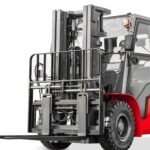
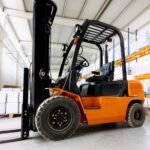
The most common type is the counterbalance electric forklift — the standard sit-down truck with forks at the front and a battery pack under the seat acting as the rear counterweight. It's the workhorse of warehouses, distribution centers, and manufacturing floors worldwide, available in capacities from under a ton up to five tons for standard configurations.
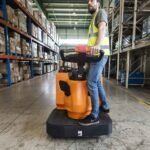
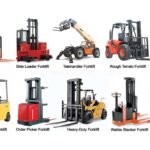
Electric forklifts also come in narrower aisle formats — reach trucks, order pickers, powered pallet jacks — but when most people say 'electric forklift,' they mean the counterbalance unit. That's the focus of this guide.
Who electric forklifts are NOT right for: Before getting into the advantages, it's worth being direct about the limitations. Electric forklifts are a poor fit for very heavy outdoor applications requiring capacities above 12,000 lbs, remote job sites with no charging infrastructure, or ultra-low utilization operations (under 2 hours per day) where the economics of the upfront premium never recover. If that describes your situation, internal combustion equipment is still the better choice.
For everyone else — standard indoor warehouse, distribution, food processing, manufacturing, pharmaceutical, retail — read on.
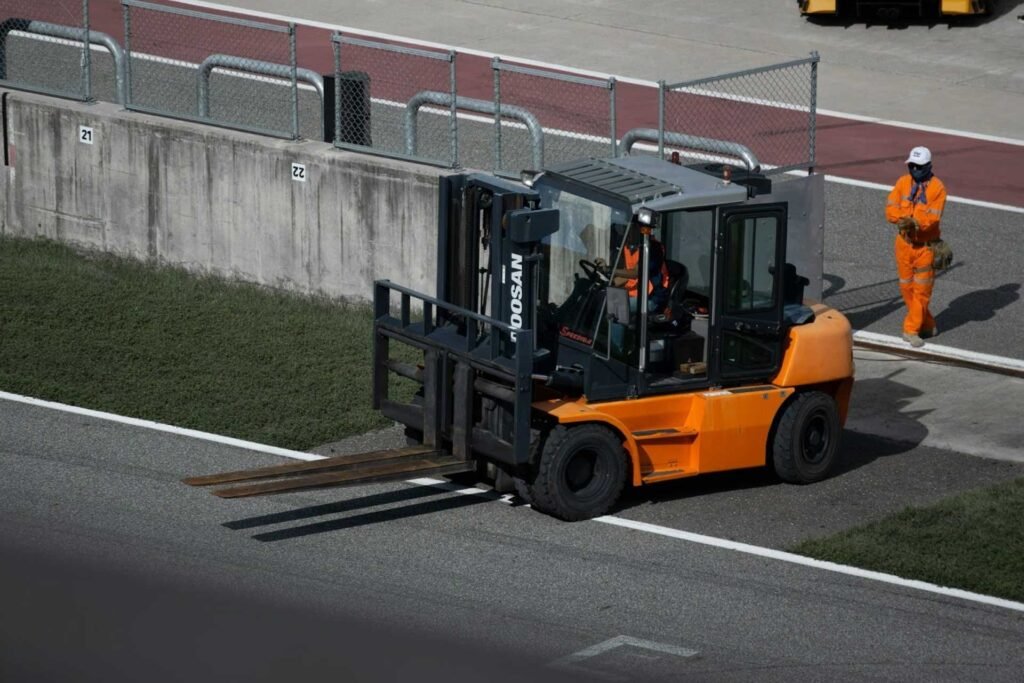
counterbalance electric forklift
The Advantages of Electric Forklifts — Layered by What Matters Most
Most articles list six or eight advantages in a flat list, leaving readers unsure which ones actually matter for their situation. The advantages of electric forklifts fall into three distinct layers. Understanding which layer is most relevant to your operation helps you make a faster, better decision.
Layer 1: The Financial Advantages (Where the Case Is Strongest)
Lower fuel costs — and the math is specific
Running an electric forklift costs approximately $1.50–$3.00 per operating hour in electricity. An equivalent propane forklift costs $3.00–$7.00 per hour in fuel. At 2,000 operating hours per year — one full shift, five days a week — that gap translates to $3,000–$8,000 in annual savings per truck.
Over a five-year ownership period, the fuel savings alone often exceed the price premium of electric over LPG equipment. The machine effectively pays for the cost difference, and then keeps saving money every year after.
One more factor that rarely gets mentioned: electricity prices are far more stable than propane or diesel prices. Fossil fuel costs fluctuate with markets and geopolitics. Your electricity bill next year is reasonably predictable. Your propane bill is not.
Lower maintenance costs — with a concrete reason why
Electric forklifts have roughly 90% fewer moving parts than fuel-powered equivalents. No engine, no transmission, no exhaust system, no fuel injectors, no coolant system. Scheduled service intervals stretch to every 500 operating hours, compared to every 200 hours for internal combustion engines.
The practical result: annual maintenance costs for a well-run electric forklift typically run $800–$1,500. For a comparable diesel unit, the realistic figure is $3,500–$5,000 once parts, labor, and fluid changes are fully accounted for.
That $2,000–$3,500 annual difference per truck adds up fast across a fleet. On ten trucks over five years, you're looking at $100,000–$175,000 in maintenance savings — a number that tends to get people's attention when it's laid out that plainly.
Better total cost of ownership — the number that actually matters
Purchase price is not the cost of a forklift. Total cost of ownership — fuel, maintenance, parts, downtime, depreciation — is the number that determines whether you made a good investment.
Here's a simplified five-year TCO comparison for a standard 3-ton counterbalance forklift at 2,000 hours/year:
| Cost Category | Electric (Lithium-Ion) | LPG Equivalent |
|---|---|---|
| Purchase price (all-in) | $35,000–$45,000 | $22,000–$30,000 |
| Fuel / energy (5 years) | $15,000–$30,000 | $30,000–$70,000 |
| Maintenance (5 years) | $7,500–$12,500 | $17,500–$25,000 |
| 5-year total | $57,500–$87,500 | $69,500–$125,000 |
Electric costs more on day one. It costs less over five years — often significantly less. The exact breakeven depends on your utilization, local energy prices, and fuel costs, but for most operations running standard hours, electric reaches breakeven somewhere between year two and year four.
Layer 2: The Operational Advantages (What Affects Your Day-to-Day)
Zero emissions indoors
Propane and diesel engines produce carbon monoxide, nitrogen oxides, and particulates. In enclosed facilities, this creates real air quality and compliance problems — mandatory ventilation systems, health risks for operators working full shifts, and in food, pharmaceutical, or cold storage environments, regulatory barriers to ICE equipment entirely.
Electric forklifts produce zero exhaust at the point of use. No ventilation requirements, no air quality concerns, no restrictions in sensitive environments. For many operations, this isn't a preference — it's the only option that clears compliance requirements.
Quieter operation than you might expect
The noise level difference between an electric forklift and a propane equivalent is substantial — not subtle. In facilities where operators run equipment for full 8-hour shifts, noise fatigue is a genuine productivity and safety factor. Quieter equipment also enables better communication on the floor, which reduces accidents. In mixed-use facilities or urban environments with noise ordinances, the difference can determine what equipment is legally operable.
Better maneuverability and rear visibility
Because the battery sits under the seat rather than behind the operator as a propane tank or engine housing, rear sightlines are meaningfully clearer. Electric motors respond more precisely to throttle input than mechanical transmissions, giving operators tighter, more predictable control — particularly noticeable in confined spaces, narrow aisles, and around pedestrian traffic. Less equipment damage and fewer minor incidents is the practical outcome.
Consistent performance through the shift
With lithium-ion batteries specifically, the forklift performs identically at the start of a shift and at the end. Lead-acid batteries — and propane tanks running low — deliver diminishing performance as they deplete. Operators notice the machine getting slower and less responsive. Lithium-ion eliminates this entirely: the last pick of the shift is as fast as the first.
Layer 3: The Strategic Advantages (What Affects Your Next Five Years)
Regulatory direction is clear — and moving fast
California's Air Resources Board has mandated that new ICE forklifts cannot be sold or leased in California starting in 2026. The EU's Green Industry Plan targets zero-emission logistics equipment across European markets by 2030. These regulations are already reshaping resale markets and fleet replacement cycles globally.
Buying ICE equipment today means buying into a shrinking resale market, an accelerating depreciation curve, and increasing compliance exposure. Buying electric means aligning with the direction the entire global market is moving — which matters when you go to resell or trade in equipment five years from now.
Electric fleets integrate with automation far more easily
As warehouses move toward partial or full automation — fleet telematics, warehouse management system integration, automated guided vehicles — electric drivetrains are substantially more compatible with these systems than ICE platforms. The data connectivity, precise motor control, and consistent operating profiles of electric forklifts are why the most advanced automated fulfillment operations are built almost entirely on electric equipment. If automation is anywhere in your five-year plan, your fleet platform choice today affects what that transition costs.
The Real Disadvantages — Honestly
The upfront cost is higher, and the battery quote problem is real
Electric forklifts cost more upfront than LPG equivalents. That's simply true. What makes it worse is that many manufacturers and dealers quote the truck price separately from the battery and charger — two components you cannot operate without.
A lead-acid battery for a standard 3-ton electric forklift adds $3,000–$6,000 to the truck price. A lithium-ion battery adds $8,000–$20,000 depending on voltage and capacity. A charger adds another $1,500–$5,000. The all-in cost can run $10,000–$25,000 higher than the advertised truck price.
The rule: always ask for a single all-in price that includes truck, battery, and charger before comparing quotes from any supplier. This is the most reliable way to avoid an expensive surprise after signing.
Multi-shift operations need planning with lead-acid
A standard lead-acid battery runs about 8 hours, then requires 8 hours of charging and another 8 hours of cooling before reuse. For two- or three-shift operations, this means purchasing multiple battery sets per truck plus the infrastructure to manage swaps. That cost is real and frequently underestimated. Lithium-ion solves most of this — more on that in the battery section below.
Cold storage requires the right battery choice
Lead-acid battery performance drops significantly in sub-zero environments. For cold chain operations, lithium-ion is the correct battery chemistry — it maintains far more consistent performance across temperature ranges. This is a battery selection issue, not an electric forklift issue, but it needs to be confirmed before purchase for any cold storage application.
Lead-Acid vs. Lithium-Ion: The Battery Decision That Changes Everything
Choosing electric is step one. Choosing the right battery is step two — and it determines your daily workflow, your infrastructure requirements, and your actual operating costs for the life of the equipment.
Most buyers treat this as a simple price comparison. It isn't.
The Core Comparison
| Factor | Lead-Acid | Lithium-Ion |
|---|---|---|
| Upfront battery cost | $3,000–$6,000 | $8,000–$20,000 |
| Charge time | 8–10 hours + 8 hours cooling | 1–3 hours, no cooling needed |
| Opportunity charging | Not recommended — degrades battery | Yes — plug in any time |
| Energy efficiency | ~60% | ~95% |
| Battery lifespan | 3–5 years / 1,000–1,500 cycles | 7–10 years / 2,500–4,000+ cycles |
| Maintenance required | Watering, equalization, cleaning | None |
| Dedicated battery room | Required (hydrogen off-gassing) | Not required |
| Performance late in shift | Degrades as battery depletes | Consistent throughout |
| 10-year battery cost (per truck) | $12,000–$18,000 (2–3 replacements) | $8,000–$20,000 (zero replacements) |
The hidden costs of lead-acid that don't show up in the sticker price:
Lead-acid batteries off-gas flammable hydrogen while charging. Regulations require a dedicated, ventilated battery room — that's floor space you're losing from your operation. The watering, equalization, and cleaning maintenance takes real labor hours: on a fleet of ten trucks, that's hundreds of man-hours per year that produce zero output. And for multi-shift operations, buying two or three battery sets per truck multiplies the upfront battery investment by 2–3x.
When you add up the dedicated room, the labor, and the replacement cycles, the lead-acid 'cheaper option' frequently costs more over a five-year period than lithium-ion — particularly for any operation running above moderate utilization.
When lead-acid is the right choice:
Single-shift operation at moderate utilization (4–5 hours of actual running per day), genuinely constrained capital budget, and short ownership horizon. Lead-acid is also fine for rental scenarios where long-term TCO isn't the primary consideration.
When lithium-ion is the right choice:
Any multi-shift operation. Any high-utilization single-shift operation (6+ hours per day). Any facility where floor space for a battery room is constrained. Any operation subject to California CARB or EU emissions regulations. Any facility planning to integrate telematics or automation within the next few years. And increasingly — given the 40%+ drop in lithium-ion costs over the past five years — any operation with an ownership horizon of more than three years.
Electric Forklift Prices: What to Expect in 2026
These ranges reflect fully equipped units — truck, battery, and charger included — at current market prices.
New Electric Counterbalance Forklifts
| Capacity | Lead-Acid (All-In) | Lithium-Ion (All-In) |
|---|---|---|
| 0.6–1 ton | $12,000–$20,000 | $18,000–$28,000 |
| 1–1.5 ton | $16,000–$26,000 | $22,000–$34,000 |
| 1.5–2 ton | $20,000–$32,000 | $27,000–$40,000 |
| 2–3 ton | $25,000–$38,000 | $33,000–$50,000 |
| 3–4 ton | $32,000–$48,000 | $42,000–$62,000 |
| 4–5 ton | $40,000–$58,000 | $52,000–$75,000 |
What drives price within these ranges:
- Battery voltage and amp-hour capacity (higher voltage = more expensive but better performance for heavy use)
- Mast configuration: duplex, triplex, or full free-lift (taller masts cost more)
- Tire type: cushion tires for smooth indoor floors; pneumatic for outdoor or uneven surfaces
- Cab and safety options
- Certification requirements: CE for European markets
- Customization beyond standard configurations
Used Electric Forklifts
Used electric forklifts run $8,000–$30,000 depending on age, hours, and condition. The single most important variable: battery condition. A truck with 5,000 hours and a degraded battery is not a bargain at $10,000 — after battery replacement, you may have spent more than a newer unit would have cost.
Before purchasing any used electric forklift, insist on an independent battery health assessment. Hours on the meter tell you how much the machine has been used; battery state of health tells you how much usable life remains.
Infrastructure costs that belong in your budget:
- Charging station installation: $500–$3,000 for standard 208/240V setups
- High-amperage fast-charging installation: $3,000–$8,000
- Electrician labor: varies by facility and local rates
- Battery room ventilation (lead-acid only): $500–$5,000 depending on facility size
- Lithium-ion typically requires no dedicated infrastructure beyond standard outlets
How to Choose the Right Electric Forklift: A Decision Framework
Rather than recommending specific brands — which may or may not be available in your market or suited to your specific needs — here is the decision sequence that produces the best outcome for most buyers.
Step 1: Define your actual load and environment
What is your heaviest real load — not your theoretical maximum? Where will the forklift operate: smooth indoor concrete, outdoor paved surfaces, or rough terrain? What are your aisle widths? What is your maximum required lift height? These four questions determine what category of forklift you need before any other consideration.
Step 2: Determine your shift pattern and utilization
How many hours per day will the forklift actually run? How many shifts? This determines your battery technology choice more than any other single factor. Single-shift, moderate utilization: lead-acid is defensible. Multi-shift or high utilization: lithium-ion is the correct investment regardless of the higher upfront cost.
Step 3: Get all-in pricing
Truck price plus battery plus charger plus delivery. Never compare headline truck prices across suppliers without normalizing for what's included. The supplier with the lowest truck price frequently ends up being the most expensive all-in.
Step 4: Verify certifications for your market
CE certification is mandatory for European markets. ISO 9001 quality management certification signals consistent manufacturing standards. Confirm certifications are current and apply to the specific models you're purchasing — not just the manufacturer's broader product line.
Step 5: Evaluate supplier after-sales capability
This is consistently the most underweighted factor in purchase decisions, and the one that causes the most regret. Ask specifically: How quickly can parts be shipped to your location? What technical support is available after delivery? What does the warranty actually cover and for how long? A slightly more expensive forklift from a supplier with strong after-sales support will cost less over its life than a cheaper machine from a supplier who disappears after the sale.
Why Maoxiang Electric Forklifts Are Built for Serious Operations
Hebei Maoxiang Technology Co., Ltd. manufactures CE-certified electric counterbalance forklifts across the full 0.6–5 ton capacity range — the complete spectrum of standard warehouse and industrial applications, in a single product family built to consistent quality standards.
Real price advantage, not a quality compromise
The assumption that Chinese-manufactured forklifts trade quality for price has not kept pace with reality. Maoxiang forklifts are engineered and produced to certified international standards — CE certification for European markets, ISO-compliant quality management throughout production — at price points that reflect genuine manufacturing efficiency. Buyers paying $35,000–$55,000 per unit for equivalent European or American-branded configurations will find Maoxiang delivers the same functional performance at substantially better economics. That price difference goes straight to your bottom line.
Lithium-ion as the engineering focus, not an afterthought
Maoxiang's product development is oriented around lithium-ion technology from the ground up. Battery management systems, drivetrain calibration, charging architecture, and thermal management are all engineered around lithium-ion performance characteristics — not retrofitted onto a lead-acid baseline. For buyers transitioning to lithium-ion fleets, this engineering focus produces better real-world performance than a lead-acid-first design with lithium as an add-on option.
Battery configuration built for your operation
There is no universal correct battery specification. A single-shift warehouse in a moderate climate needs a different battery than a three-shift cold storage facility or a continuous-cycle distribution center. Maoxiang builds battery configurations — voltage, capacity, chemistry — to customer specifications rather than forcing every application into a fixed catalog option. The right battery for your operation is the one matched to your actual duty cycle.
Genuine customization, not just catalog options
Mast height, fork dimensions, tire type, cab configuration, attachment compatibility — these are available as genuine build-to-order options across Maoxiang's product range. For buyers with specific operational requirements, or those building uniform fleets with particular specifications, real customization capability makes a practical difference that a catalog-only supplier cannot match.
Fast delivery to global markets
Maoxiang maintains production scheduling and inventory management that supports reliable delivery timelines for international customers — Europe, Southeast Asia, the Middle East, and beyond. For buyers whose operations depend on predictable equipment arrival, delivery reliability is a core part of the value equation, not a secondary consideration.
After-sales support that travels with the product
Parts availability, technical documentation, and responsive support after delivery are built into Maoxiang's export operations. Not handled as an afterthought once the transaction is complete.
Rent or Buy? A Brief Framework
Some buyers searching for electric forklift information haven't yet decided whether to buy at all. Here's a simple way to think about it.
Renting makes sense when:
- You need equipment for a defined short-term project (weeks to a few months)
- Your needs are seasonal — busy for three months, slow for nine
- You want to test an electric forklift before committing to a fleet purchase
- Capital preservation is the priority right now
Buying makes sense when:
- You run forklifts consistently, five or more days per week, year-round
- You've been renting the same equipment for more than six months — at that point, monthly rental costs typically approach or exceed ownership costs
- Downtime waiting for a rental company to service or replace equipment has real operational cost
A practical rule of thumb: if you're paying $1,500–$2,500 per month in rental fees for a standard electric forklift, you're at or approaching the monthly equivalent cost of owning that equipment. Beyond six months of continuous rental, the economics of ownership typically become compelling.
The Bottom Line
Electric forklifts cost more on day one. They cost less over five years — often significantly less. The fuel savings are real, the maintenance savings are real, and the regulatory direction is clear. For the vast majority of indoor warehouse, distribution, manufacturing, and logistics operations, the question in 2026 is not whether to go electric. It's which configuration fits your operation, and which supplier gives you the right combination of equipment quality, price, and long-term support.
The buyers who overpay are those who compare headline truck prices without normalizing for battery and charger inclusions, choose lead-acid for multi-shift operations to save on upfront cost, and pick a supplier based on price alone without evaluating after-sales capability.
The buyers who come out ahead model five-year total cost of ownership, get all-in pricing across comparable configurations, match battery technology to their actual shift pattern, and treat supplier after-sales support as a core part of the purchasing decision — not a secondary consideration.