Buying an electric pallet jack is a straightforward decision once you know what you're looking at. The problem is that most buyers — especially those sourcing for the first time — focus on price alone and overlook the specifications that actually determine whether the unit fits their operation.
Buy the wrong model and you'll either have a machine that's underpowered for your loads, incompatible with your pallets, or running out of battery halfway through a shift. None of these are small problems.
This guide walks you through every specification that matters, how to choose between walkie and rider types, how to evaluate battery options, and what to expect on price — so you can buy with confidence.
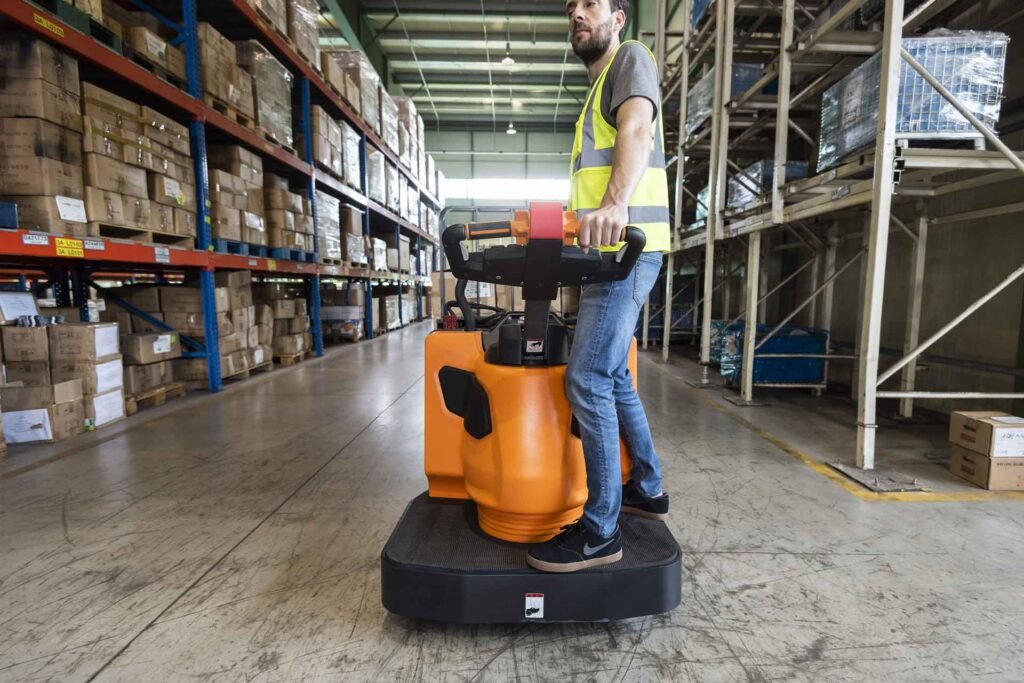
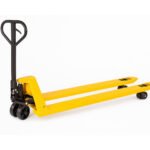
electric pallet jack
Why Electric Over Manual?
Before getting into the details, it's worth being clear on when an electric pallet jack makes sense over a manual one.
The answer comes down to three factors: distance, frequency, and shift length.
| Situation | Manual | Electric |
|---|---|---|
| Trips under 20 metres | Fine | Overkill |
| Trips over 20 metres | Fatiguing | Right choice |
| Under 20 pallets per shift | Fine | Overkill |
| Over 30 pallets per shift | Exhausting | Right choice |
| Single operator, long shift | High injury risk | Right choice |
| Multi-shift operation | Not practical | Essential |
If your operation involves repeated pallet movement over meaningful distances throughout the day, an electric pallet jack pays for itself through productivity gains and reduced injury risk — typically within 12 to 24 months.
Core Specifications Explained
This is the section most buying guides skip. Understanding these specs is the difference between buying the right unit and buying the wrong one.
1. Load Capacity
Load capacity is the maximum weight the unit is rated to carry safely. Standard electric pallet jacks are rated between 1,500 kg and 3,000 kg.
What buyers get wrong: They look only at the weight of the goods and forget the weight of the pallet itself. A wooden pallet typically weighs 20–25 kg. A plastic pallet, 10–15 kg. Always calculate: goods weight + pallet weight = actual load.
What to do: Identify the heaviest load you'll regularly move — not occasionally, regularly. Then select a unit rated for at least 10–15% above that figure. Running a machine at its absolute rated limit as a daily practice shortens its lifespan and increases risk.
| Operation Type | Recommended Capacity |
|---|---|
| Light warehousing, retail | 1,500 – 2,000 kg |
| Standard distribution | 2,000 – 2,500 kg |
| Heavy industrial, dense goods | 2,500 – 3,000 kg |
2. Lift Height
Electric pallet jacks are not stackers. They lift loads just enough to clear the floor for transport — typically between 115 mm and 200 mm. This is sufficient for moving pallets across a flat surface, loading onto trucks with dock levellers, or moving between floor-level racking positions.
If you need to lift pallets to any meaningful height — onto shelving, into racking, or above ground level — you need a stacker or reach truck, not a pallet jack.
What matters here: Ensure the lift height is compatible with your loading docks, truck bed heights, and any floor-level obstacles in your facility. Most standard operations are well served by 115–150 mm of lift.
3. Fork Dimensions
Fork length and fork width determine whether the unit physically fits your pallets and your aisles.
Fork length — Standard is 1,150 mm, which fits the vast majority of standard pallets worldwide (EUR pallets, GMA pallets, ISO pallets). If you use non-standard or oversized pallets, confirm dimensions before ordering.
Fork width — Standard is 540 mm (outside width). This fits most standard pallets. If you work in narrow aisles or use half-pallets, a narrow model with reduced fork width (around 280–450 mm) may be required.
| Pallet Type | Fork Length Needed | Fork Width Needed |
|---|---|---|
| EUR pallet (1200×800) | 1,150 mm | 540 mm |
| GMA pallet (1219×1016) | 1,150 mm | 540 mm |
| Half pallet | 800 mm | 450 mm or less |
| Non-standard / oversized | Custom | Custom |
4. Travel Speed
Manual pallet trucks move at walking pace — roughly 4–5 km/h at best. Electric walkie pallet jacks travel at 4–6 km/h. Rider models reach 8–12 km/h.
In a small facility, travel speed is irrelevant. In a large distribution centre where operators are covering hundreds of metres per shift, the difference between 5 km/h and 10 km/h compounds into significant productivity gains across a full day.
Rule of thumb: If individual trips regularly exceed 30–40 metres, travel speed starts to matter. If trips are short, focus your budget elsewhere.
5. Wheel Type and Floor Compatibility
This specification is almost universally overlooked — until the unit arrives and doesn't perform as expected.
Electric pallet jacks come with different wheel configurations for different floor surfaces:
| Wheel Type | Best Surface | Not Suitable For |
|---|---|---|
| Polyurethane (PU) | Smooth concrete, epoxy floors | Rough, uneven, or wet surfaces |
| Rubber | Slightly uneven surfaces, outdoor use | Very rough terrain |
| Nylon | Smooth floors, light duty | Any uneven surface |
| Tandem wheels | Uneven floors, better load distribution | Not required on smooth floors |
Important: Electric pallet jacks are indoor machines designed for smooth, flat surfaces. They are not suitable for gravel, mud, steep ramps, or outdoor terrain. If you need to move pallets outdoors or across rough ground, you need a different category of equipment entirely.
Also confirm: your facility's floor drains, expansion joints, and thresholds. If your floor has significant gaps or lips, ensure the wheel configuration can handle them without risk of tipping or load instability.
6. Turning Radius
In tight warehouse environments, turning radius determines whether a unit is actually usable in your aisles.
Walkie electric pallet jacks have a tighter turning radius than rider models — they're more manoeuvrable in confined spaces. Rider units require significantly more floor space to turn safely.
Before buying a rider pallet jack: measure your aisle width and confirm it accommodates the turning radius of the specific model you're considering. This information should be in the product specification sheet — request it if it's not provided.
Walkie vs Rider: Which Type Do You Need?
This is the most common decision buyers face when choosing an electric pallet jack. Here's a direct breakdown:
Electric Walkie Pallet Jack
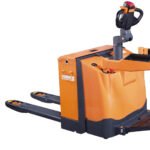
The operator walks behind the unit, controlling direction with a tiller handle. Lifting and travel are powered — the operator guides, not pushes.
Choose walkie if:
- Your facility is under 2,000 m²
- Individual trips are under 30–40 metres
- Your aisles are relatively narrow
- You run a single shift operation
- Budget is a primary consideration
- Operators are moving 20–50 pallets per shift
Advantages:
- More compact and manoeuvrable
- Lower purchase price
- Easier to operate and train on
- Fits in smaller facilities
Limitations:
- Operator fatigue over very long distances
- Slower than rider units
- Not suitable for very high-volume, long-distance operations
Rider Electric Pallet Jack
The operator stands or sits on a platform at the rear of the machine. No walking required — the operator rides between every pickup and drop-off point.
Choose rider if:
- Your facility is over 2,000 m²
- Individual trips regularly exceed 40–50 metres
- You run two or three shifts
- Throughput is high (50+ pallets per shift per operator)
- Operator productivity is a critical metric
Advantages:
- Significantly faster travel speed
- Eliminates walking fatigue entirely
- Higher throughput per operator per shift
- Better suited to large distribution operations
Limitations:
- Larger turning radius
- Higher purchase price
- Requires more floor space to manoeuvre
- Not ideal for tight or congested facilities
Head-to-Head Comparison
| Feature | Walkie Electric | Rider Electric |
|---|---|---|
| Travel speed | 4–6 km/h | 8–12 km/h |
| Operator fatigue | Low | Very low |
| Turning radius | Tight | Wide |
| Best facility size | Small to medium | Large |
| Throughput | Moderate | High |
| Purchase price | Lower | Higher |
| Training required | Minimal | Moderate |
Lithium Battery vs Lead-Acid Battery
Battery choice has a significant impact on operating cost, shift coverage, and maintenance requirements. This decision deserves careful consideration.
Lead-Acid Battery
The traditional battery technology. Widely available, lower upfront cost, proven performance over decades of use.
How it works: Lead plates submerged in sulphuric acid electrolyte solution. Requires periodic watering (topping up with distilled water) to maintain performance.
Key characteristics:
- Full charge takes 6–8 hours
- Should be charged after each shift — not mid-shift (damages the battery)
- Requires a dedicated charging area with ventilation (emits hydrogen gas during charging)
- Battery lifespan: 3–5 years with proper care
- Heavier than lithium equivalents
- Sensitive to deep discharge — running the battery flat consistently shortens its life significantly
Best suited for: Single-shift operations where the battery can charge fully overnight and be ready for the next day.
Lithium-Ion Battery
The newer technology. Higher upfront cost, but superior performance in multi-shift and high-intensity operations.
How it works: Lithium-ion cells with a battery management system (BMS) that monitors charge level, temperature, and cell health automatically.
Key characteristics:
- Opportunity charging — can be plugged in for 15–30 minutes during breaks without damaging the battery
- Full charge in 1–3 hours
- No watering, no ventilation requirements
- Battery lifespan: 8–10 years
- Lighter weight
- More consistent power output throughout the discharge cycle
- Higher upfront cost, but lower total cost of ownership over time
Best suited for: Multi-shift operations, facilities without a dedicated charging area, and operations where fast charging between shifts is necessary.
Total Cost of Ownership Comparison
| Factor | Lead-Acid | Lithium-Ion |
|---|---|---|
| Upfront battery cost | Lower | Higher |
| Replacement cycle | 3–5 years | 8–10 years |
| Maintenance | Regular watering required | None |
| Charging infrastructure | Ventilated charging room | Standard outlet |
| Productivity impact | Downtime for full charge | Opportunity charging |
| Long-term cost | Higher (more replacements) | Lower |
For single-shift, budget-conscious operations: lead-acid is a rational choice. For multi-shift, high-intensity operations: lithium-ion delivers better ROI within 2–3 years.
Price Guide: What Should You Expect to Pay?
Electric pallet jack pricing varies based on type, capacity, battery technology, and brand. Here's a realistic overview for buyers sourcing new units:
Walkie Electric Pallet Jack
| Battery Type | Price Range (FOB) |
|---|---|
| Lead-acid | $2,500 – $4,500 |
| Lithium-ion | $3,500 – $6,000 |
Rider Electric Pallet Jack
| Platform Type | Price Range (FOB) |
|---|---|
| Stand-on rider | $5,000 – $9,000 |
| Seated rider | $8,000 – $15,000+ |
What Drives the Price Up
- Higher load capacity (2,500 kg+ vs 1,500 kg)
- Lithium-ion battery vs lead-acid
- Rider platform vs walkie
- Brand premium (European and US brands carry significant premiums)
- Dealer markup vs factory-direct pricing
What Drives the Price Down
- Buying direct from a manufacturer (factory-direct)
- Ordering in volume (multiple units)
- Lead-acid over lithium where suitable
- Walkie over rider where sufficient
Why Buy Factory-Direct from China?
The global electric pallet jack market is dominated by Chinese manufacturers — including the OEM supply chains behind many European and American brands. Buying direct from a verified Chinese manufacturer offers several concrete advantages:
1. Significantly lower unit price Removing the importer, distributor, and dealer layers from the supply chain typically reduces unit cost by 30–50% compared to buying from a local dealer.
2. Access to the full specification range Dealers stock what sells in their market. Manufacturers offer the full range — including custom fork dimensions, special voltage requirements, cold storage specifications, and non-standard capacities.
3. Direct after-sales support Working directly with the manufacturer means direct access to technical documentation, spare parts, and engineering support — without going through a middleman.
4. Volume flexibility Whether you need 1 unit or 100, a manufacturer can accommodate. Dealers often have minimum order requirements or limited stock.
5. OEM and customisation options Need your company branding on the unit? Custom colour? Specific voltage for your country? Factories offer OEM and customisation that distributors cannot.
What to Look for in a Manufacturer
Before placing an order, verify:
| Requirement | What to Check |
|---|---|
| CE certification | Request the actual certificate, not just a claim |
| ISO 9001 | Confirms quality management system in place |
| Factory audit | Ask for factory photos or video walkthrough |
| Export experience | How many countries have they exported to? |
| Warranty terms | Minimum 1 year, ideally 2 years |
| Spare parts availability | Can they supply parts after the sale? |
| References | Can they provide references from existing customers? |
Before You Buy: A Quick Checklist
Run through this before placing any order:
- What is the maximum load weight I'll regularly move (including pallet weight)?
- What is the average travel distance per trip in my facility?
- How many pallets do I move per shift?
- Do I run single or multiple shifts?
- What are my aisle widths?
- What type of floor surface do I have?
- Do I need walkie or rider type?
- Lead-acid or lithium battery?
- What fork dimensions do my pallets require?
- Has the manufacturer provided CE certification documentation?
- What are the warranty and spare parts terms?
If you can answer every question on this list, you have everything you need to make a confident purchasing decision.
Ready to Get a Quote?
At Hebei Maoxiang Technology Co., Ltd., we manufacture a full range of electric pallet jacks — walkie and rider types, lead-acid and lithium battery options, standard and heavy duty capacities — exported to customers in 86 countries worldwide.
All units are CE certified. Factory-direct pricing. Minimum order: 1 unit.
Tell us about your operation and we'll recommend the right model.