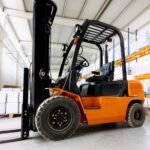
The forks are the only part of your forklift in direct contact with the load. Despite being made of high-strength steel, they are subject to constant friction, stress, and potential bending.
Using worn or incorrect forks isn't just a maintenance issue—it's a massive safety liability. This guide provides the technical breakdown of fork sizing, mounting classes, and the critical 'Point of No Return' for replacement.
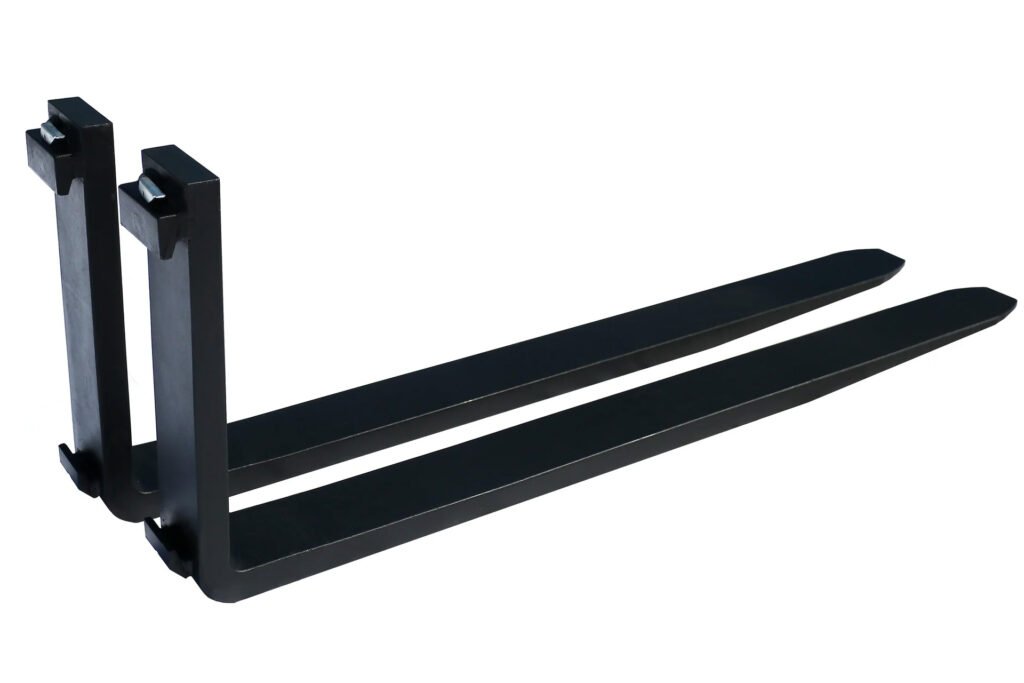
Forklift Forks
1. Understanding Fork Mounting Classes (ITA/ISO)
You cannot simply buy 'any' fork. Forks are categorized by their mounting height (the distance between the top and bottom hooks of the carriage). This is known as the ITA (International Truck Association) class.
| ITA Class | Carriage Height | Typical Capacity (Lbs) |
| Class 2 | 16 inches (406 mm) | 2,000 – 5,500 |
| Class 3 | 20 inches (508 mm) | 6,000 – 10,000 |
| Class 4 | 25 inches (635 mm) | 11,000 – 17,500 |
| Class 5 | 30 inches (762 mm) | 18,000 – 24,000 |
2. Fork Anatomy and Sizing
When ordering replacement forks, you need three primary measurements:
-
Width: Standard is 4' or 5'. Wider forks distribute the weight better for fragile loads.
-
Thickness: Usually starting at 1.5' or 2'.
-
Length: Common lengths are 42' or 48'. Pro Tip: Your forks should ideally be at least two-thirds of the length of the load you are carrying to ensure stability.
3. The 10% Rule: When to Replace Your Forks
This is the most critical technical detail for SEO and safety. According to international safety standards (ISO 5057):
If the fork blade thickness is worn down by 10% of its original thickness, its load-carrying capacity is reduced by a staggering 20%.
How to Inspect:
-
Use a Fork Caliper: Measure the thickness of the fork 'shank' (the vertical part).
-
Measure the 'Blade': Measure the thickness of the horizontal part near the 'heel' (the bend).
-
The Math: If the blade is 10% thinner than the shank, the fork must be retired immediately.
4. Common Types of Specialized Forks
-
Standard Hook-on Forks: The industry standard for most counterbalance trucks.
-
Shaft/Pin Mount Forks: Common on larger construction or telehandler units where forks slide on a heavy-duty pin.
-
Bolt-on Forks: Used for specialized attachments or very heavy-duty industrial applications.
-
Coil Forks (Chamfered): Featuring a radiused inner edge to carry cylindrical loads like steel coils or concrete pipes without damaging the product.
-
Folding Forks: Ideal for forklifts that need to navigate tight spaces or be transported on trucks where protruding forks are a hazard.
5. Warning Signs: Beyond the Wear Line
Forks don't just wear down; they fail in other ways. Replace your forks if you see:
-
Surface Cracks: Especially in the 'heel' area. Even a hairline crack can lead to a catastrophic snap under load.
-
Difference in Tip Height: If the tips of your two forks differ in height by more than 3% of the blade length, they are bent and unsafe.
-
Bent Shank or Blade: Usually caused by 'impact loading' or trying to pry things open with the forks.
❓ FAQ: Expert Troubleshooting
Q: Can I weld my forklift forks to repair a crack?
A: NO. Welding a fork is strictly prohibited by OSHA and international safety bodies. The intense heat of welding destroys the heat-treatment of the high-carbon steel, making the fork brittle and prone to snapping.
Q: How often should I inspect my forks?
A: A visual inspection should be part of the daily pre-shift checklist. A formal measurement with calipers should be done at every 6-month or 1,000-hour service interval.
Q: Why do my forks wear out so fast?
A: Usually due to 'fork dragging.' If the operator drives with the forks lowered too much, they grind against the concrete. Training operators to keep forks 2-4 inches off the ground can double fork life.
🏆 Maoxiang: Forged for Strength
At Maoxiang, we know that the fork is the 'business end' of your machine. We don't cut corners on metallurgy.
-
Full-Heel Forging: Our forks are forged with a reinforced heel to resist the extreme stress of high-cycle lifting.
-
Premium Heat Treatment: We use a controlled quenching and tempering process to ensure the perfect balance of hardness (for wear resistance) and ductility (to prevent snapping).
-
Certified Quality: Every fork we ship is stamped with its Load Capacity and Batch Number, ensuring 100% traceability and peace of mind for your safety audits.
Don't wait for a failure. Audit your forks today.