If you're sourcing a pallet jack for your warehouse, factory, or logistics operation, you've likely run into the same question every buyer faces: manual or electric?
Both types move pallets. Both are widely used. But they serve different operations, and choosing the wrong one can cost you in productivity, labour, or maintenance down the line.
This guide breaks down the real differences — so you can make the right call before you buy.
What Is a Manual Pallet Jack?

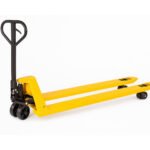
manual pallet jack
A manual pallet jack (also called a hand pallet truck or pump truck) is a simple hydraulic device operated entirely by hand. The operator pumps a handle to raise the forks, then pushes or pulls the load to its destination.
No battery. No motor. No charging required.
Typical specs:
- Capacity: 2,000 kg – 5,000 kg
- Lift height: 85 mm – 200 mm (just enough to clear the floor)
- Fork length: 1,150 mm (standard)
- Power source: Manual hydraulic pump
What Is an Electric Pallet Jack?
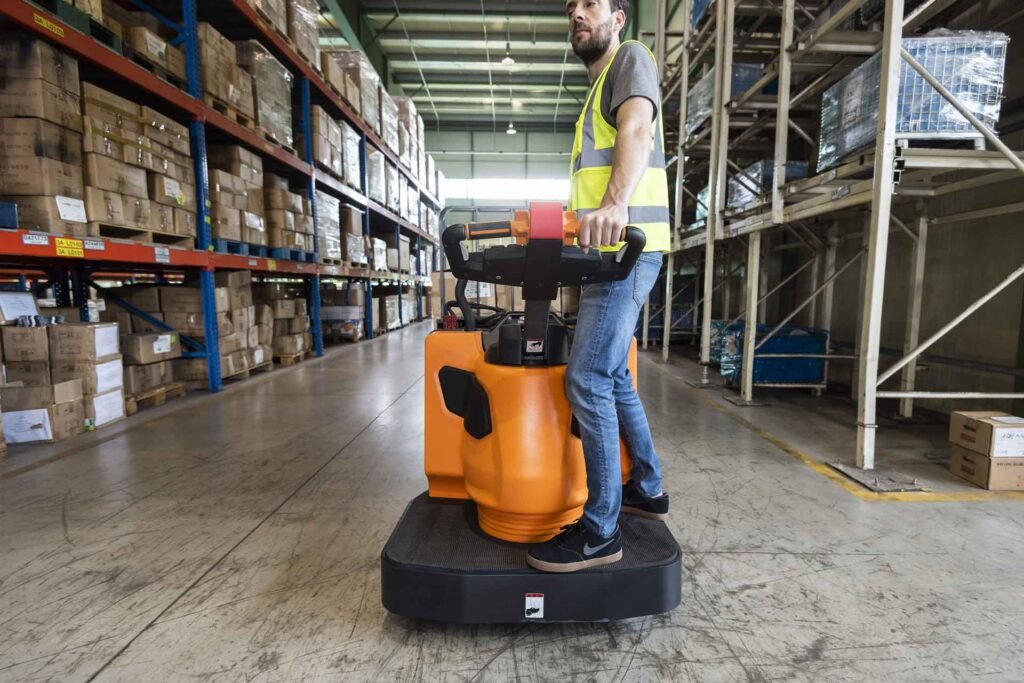
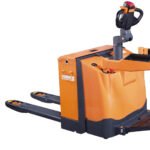
electric pallet jack
An electric pallet jack uses a battery-powered motor to handle lifting and driving. The operator controls movement with a handle or tiller — no physical pushing required for travel.
There are two main types:
| Type | How It Works |
|---|---|
| Walkie Electric Pallet Jack | Operator walks behind and steers with a tiller |
| Rider Electric Pallet Jack | Operator stands or sits on the machine |
Typical specs:
- Capacity: 1,500 kg – 3,000 kg
- Travel speed: 4 – 6 km/h
- Battery: Lead-acid or lithium-ion
- Lift height: 115 mm – 200 mm
Core Differences at a Glance
| Feature | Manual Pallet Jack | Electric Pallet Jack |
|---|---|---|
| Power source | Human effort | Battery (lead-acid or lithium) |
| Lifting | Manual pump | Electric motor |
| Travel | Operator pushes/pulls | Self-propelled |
| Speed | Slow | 4 – 6 km/h |
| Operator fatigue | High over long shifts | Low |
| Load capacity | Up to 5,000 kg | Up to 3,000 kg (standard) |
| Purchase cost | Low ($300 – $800) | Higher ($2,500 – $8,000+) |
| Maintenance | Minimal | Battery + motor servicing |
| Indoor use | Yes | Yes |
| Outdoor use | Limited | Limited |
| Charging required | No | Yes (6 – 8 hours typical) |
Which One Fits Your Operation?
Choose a Manual Pallet Jack if…
1. You move pallets short distances infrequently
If your operators are moving pallets across a small space — from a truck to a storage area, or across a shop floor — a manual pallet jack handles the job without any complexity. Short runs, low frequency: manual wins on simplicity and cost.
2. Your warehouse is small
In tight spaces under 500 m², a manual jack is often more practical. Electric models need turning radius, charging stations, and regular battery maintenance. In small operations, this overhead isn't worth it.
3. Your budget is limited
A quality manual pallet jack costs a fraction of an electric model. For startups, small businesses, or operations with occasional pallet movement, the investment in an electric unit simply doesn't pay off.
4. You have no power infrastructure
Some warehouses, outdoor yards, or temporary job sites have limited access to electricity for charging. Manual jacks need nothing but a flat surface.
5. You need a backup unit
Even operations running electric fleets keep manual jacks on hand. They serve as reliable backups when electric units are charging or under maintenance.
Choose an Electric Pallet Jack if…
1. Your operators move pallets over long distances repeatedly
If your team is travelling 30, 50, or 100+ metres per trip — dozens of times a day — manually pushing heavy loads causes fatigue, slows productivity, and increases the risk of injury. An electric pallet jack eliminates this entirely.
2. You run a large warehouse or distribution centre
In facilities over 1,000 m², self-propelled movement is not a luxury — it's a necessity. Electric pallet jacks allow operators to cover more ground, handle more pallets per shift, and maintain consistent speed throughout the day.
3. Worker safety and fatigue are priorities
Manual handling injuries are a significant cost in warehouse operations — through workers' compensation, lost productivity, and staff turnover. Electric pallet jacks dramatically reduce the physical strain on operators, especially during long shifts.
4. You need a rider pallet jack for high-volume throughput
If your operation involves moving large quantities of pallets continuously — such as in cold storage, food distribution, or e-commerce fulfilment — a rider electric pallet jack lets operators travel at consistent speed without stopping to rest.
5. You're operating in a regulated environment
Some industries and regions have strict manual handling regulations. Electric pallet jacks help operations stay compliant with occupational health and safety standards.
Cost Comparison: What You're Really Paying For
Buying price is only part of the equation. Here's how the two options compare over time:
Purchase Cost
| Type | Typical Price Range |
|---|---|
| Manual pallet jack | $300 – $800 |
| Walkie electric pallet jack | $2,500 – $5,000 |
| Rider electric pallet jack | $5,000 – $10,000+ |
Operating Cost
| Cost Factor | Manual | Electric |
|---|---|---|
| Energy | None | Electricity for charging |
| Battery replacement | None | Every 3–5 years (lead-acid) |
| Maintenance | Hydraulic fluid, seals | Battery, motor, electronics |
| Labour productivity | Lower | Higher |
| Injury-related cost | Higher risk | Lower risk |
The bottom line: A manual pallet jack costs less upfront but delivers less productivity per operator hour. An electric pallet jack costs more to buy and maintain, but in high-volume operations, the productivity gain and reduction in injury risk typically deliver a positive return within 12–24 months.
For low-frequency use, a manual jack will almost always be the more cost-effective choice.
What About Lithium Battery vs Lead-Acid?
If you go electric, you'll face another choice: lithium-ion or lead-acid battery.
| Feature | Lead-Acid | Lithium-Ion |
|---|---|---|
| Upfront cost | Lower | Higher |
| Charge time | 6 – 8 hours | 1 – 3 hours |
| Battery life | 3 – 5 years | 8 – 10 years |
| Maintenance | Requires watering | Maintenance-free |
| Weight | Heavier | Lighter |
| Opportunity charging | Not recommended | Yes |
For single-shift operations, lead-acid is a practical and cost-effective choice. For multi-shift operations or anywhere fast charging matters, lithium-ion is worth the investment.
Quick Decision Guide
Not sure which way to go? Run through these questions:
1. How far does each pallet travel on average?
- Under 20 metres → Manual
- Over 20 metres → Electric
2. How many pallets do you move per shift?
- Under 20 pallets → Manual
- Over 20 pallets → Electric
3. What is your warehouse size?
- Under 500 m² → Manual
- Over 1,000 m² → Electric
4. Do you run multiple shifts?
- Single shift, light use → Manual
- Multiple shifts, heavy use → Electric (lithium recommended)
5. What is your budget?
- Limited budget → Manual
- ROI-focused, long-term thinking → Electric
Summary
Neither manual nor electric pallet jacks are universally better — they're built for different operations.
A manual pallet jack is the right choice when your operation is small, your pallet movement is infrequent, and upfront cost matters most. It's simple, reliable, and requires almost no maintenance.
An electric pallet jack is the right choice when your operators are moving pallets frequently, over long distances, in a large facility. The productivity gains and reduction in physical strain justify the higher investment.
When in doubt, think about your busiest day. If your operators are exhausted by the end of a shift from pushing loads, that's a clear sign it's time to go electric.
Ready to Source a Pallet Jack?
At Hebei Maoxiang Technology Co., Ltd., we manufacture both manual and electric pallet jacks for export to customers in 86 countries. All products are CE certified and available with factory-direct pricing.
Whether you need a single unit or a full fleet, we can help you find the right model for your operation.
Contact us today for a free quote and product recommendation.