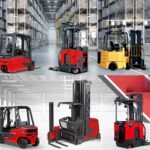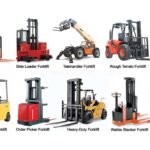
Choosing between a Reach Truck and a Standard Counterbalance Forklift is one of the most critical decisions in warehouse planning. One is a powerhouse of versatility; the other is a specialist in space-saving efficiency. Picking the wrong one doesn't just waste money—it can cause your entire logistics workflow to grind to a halt.
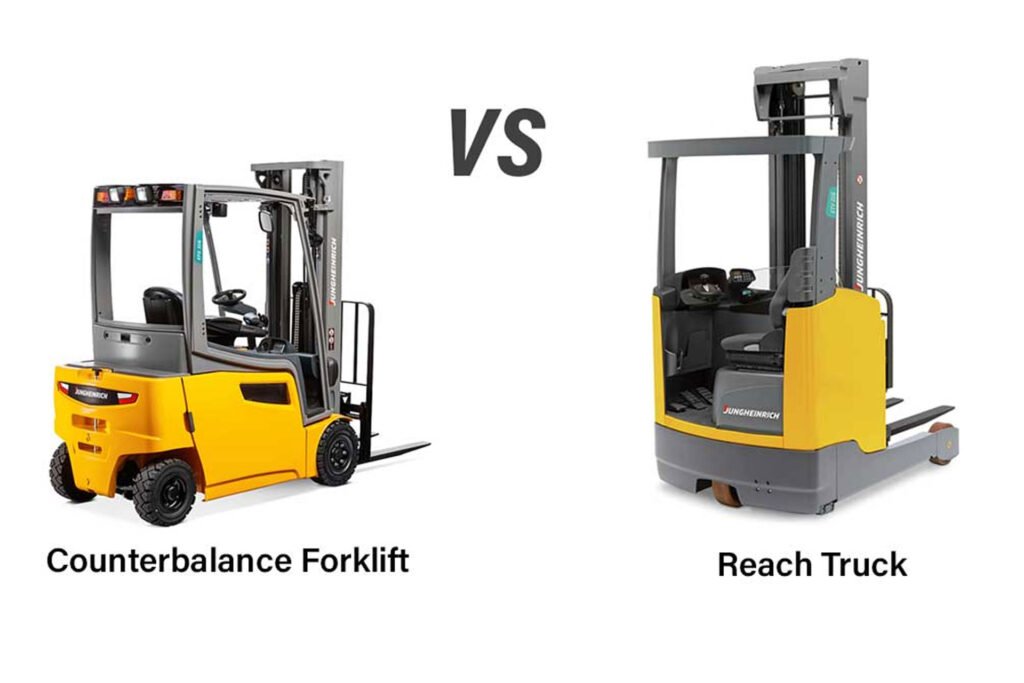
Reach Truck vs Forklift
Here is the 'no-nonsense' breakdown of the key differences and, more importantly, how to choose based on your actual operational environment.
The Core Mechanical Difference: Balance vs Precision
The fundamental difference lies in how they handle gravity.
-
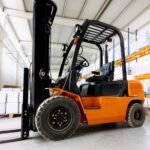
The Counterbalance Forklift: It works like a seesaw. It has a heavy weight in the rear to offset the load at the front. Because it has no 'legs' extending forward, it can drive right up to a truck or a rack. However, this heavy rear makes the machine long and bulky.
-
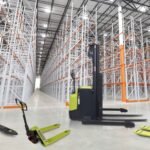
The Reach Truck: Instead of a massive counterweight, it uses two outrigger legs to distribute the load. The mast (or the forks) 'reaches' out beyond these legs to grab a pallet and then pulls it back within the wheelbase. This design allows the machine to be incredibly compact.
Aisle Width: The Battle for Square Footage
This is where the Reach Truck wins the 'Space Race.'
-
Forklift: Typically requires an aisle width of 11 to 13 feet (3.4 to 4.0 meters). If your warehouse rent is high, this 'dead space' is costing you a fortune.
-
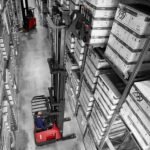
Reach Truck: Can operate in aisles as narrow as 8 to 10 feet (2.4 to 3.0 meters).
-
The Value Tip: By switching from forklifts to reach trucks, you can often add 20% to 35% more racking rows in the same building. In the long run, the reach truck literally 'pays for itself' by reducing your real estate costs per pallet.
Lifting Height: Reaching for the Sky
-
Forklift: Generally optimized for heights up to 20 feet (6 meters). Beyond that, the machine becomes too unstable or too heavy for standard warehouse floors.
-
Reach Truck: These are the kings of high-bay racking. Many models can comfortably lift to 30 or even 40 feet (9 to 12 meters). If you are going vertical to save space, the reach truck is your only real option.
Indoor vs Outdoor: The Terrain Test
This is the Forklift’s 'Home Turf.'
-
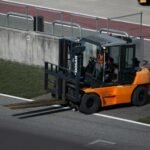
Counterbalance Forklifts are the 'SUVs' of the industry. With larger tires (often pneumatic) and higher ground clearance, they can handle gravel, uneven yard surfaces, and loading docks with ease.
-
Reach Trucks are 'Indoor Specialists.' They have small, hard polyurethane wheels and very low ground clearance. Taking a reach truck onto a bumpy yard is a recipe for a broken machine and a dropped load.
Summary: The 'Quick-Decision' Matrix
| Feature | Counterbalance Forklift | Reach Truck |
| Best Environment | Indoor/Outdoor, Loading Docks | Indoor Only, Narrow Aisle Warehouses |
| Typical Height | Up to 6 Meters | Up to 12+ Meters |
| Aisle Requirement | Wide (3.5m+) | Narrow (2.5m - 3.0m) |
| Tires | Large (Pneumatic or Solid) | Small (Polyurethane) |
| Primary Use Case | Cross-docking, Truck Loading | High-density Pallet Storage |
The Verdict: Which One Should You Buy?
Choose a Counterbalance Forklift if:
You need a versatile 'all-rounder.' If you are unloading trucks in a yard, moving different sized loads, and your warehouse isn't cramped, the forklift is the most durable and flexible tool for the job.
Choose a Reach Truck if:
You are running a high-volume distribution center. If every square inch of floor space counts and you need to stack pallets 4-5 levels high in narrow aisles, the reach truck is a precision instrument that will maximize your storage density.