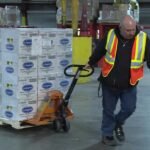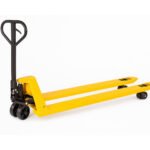
Also known as: forklift truck / fork truck / lift truck
What Is a Forklift?
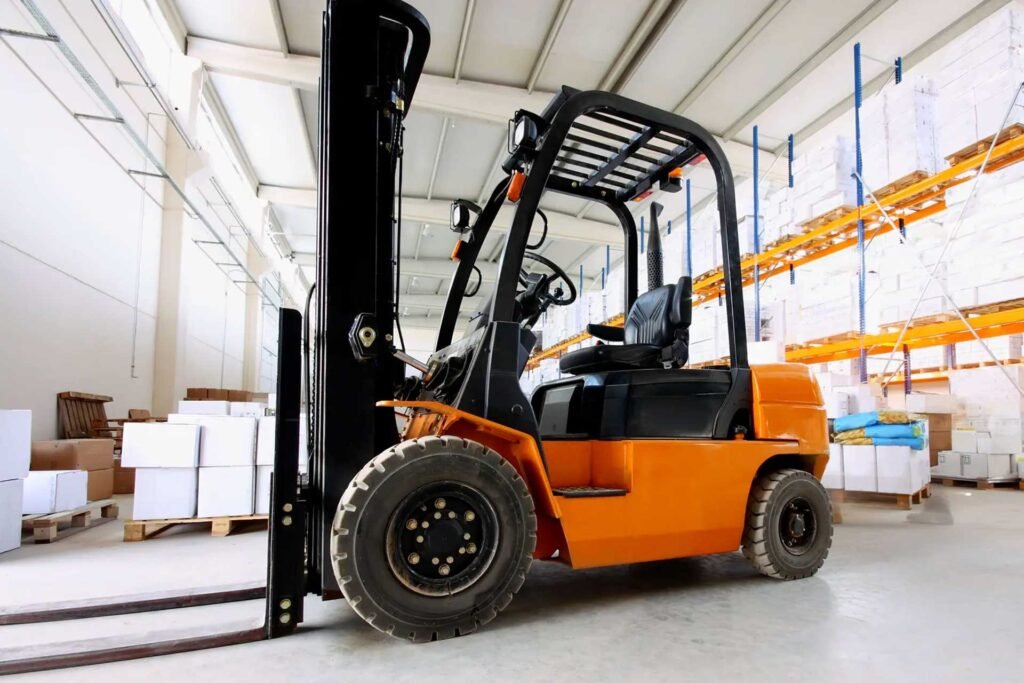
forklift truck
A forklift — also called a lift truck, fork truck, or forklift truck — is a powered industrial vehicle equipped with a pronged platform (the 'forks') at the front, used to lift, carry, and stack heavy loads over short distances. It is one of the most consequential pieces of equipment in modern supply chains, yet most buyers approach the purchase process the same way they'd buy a car: focusing on brand name and sticker price while underweighting the variables that actually drive long-term cost.
This guide cuts through that. Whether you're a warehouse manager evaluating your first fleet, a small business owner replacing a single unit, or a logistics director benchmarking your total cost of ownership, you'll find specific, actionable information here — not just generic category descriptions you could get from any product brochure.
A Metric That Should Change How You Think About Forklifts
Before diving into types and prices, here's a number worth sitting with: the global forklift market was valued at approximately $84 billion in 2025, with projections to exceed $141 billion by 2032. That growth isn't driven by construction booms or manufacturing surges alone — it's being driven overwhelmingly by e-commerce warehouse expansion and a once-in-a-generation shift from internal combustion engines (ICE) to electric powertrains.
In 2024, electric forklifts already commanded 69%+ of global market share by units sold. By 2026, lithium-ion battery packs are expected to become the dominant technology within that electric segment, exceeding 80% share by 2034. This matters for buyers right now: if you purchase an ICE forklift today, you are buying into a category in structural decline, with increasingly constrained resale markets, tightening emissions regulations (especially in California and the EU), and higher long-term operating costs compared to electric alternatives.
That doesn't mean ICE is always wrong — but it reframes the decision.
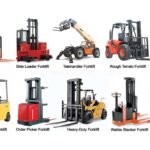
The 7 Main Types of Forklifts (and What Nobody Tells You About Them)
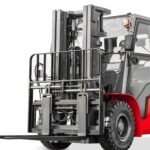
1. Counterbalance Forklift
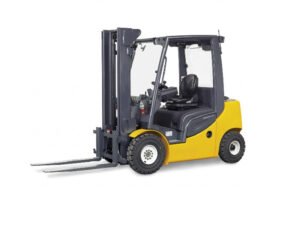
Counterbalance forklifts
The most common type on the planet. It has a heavy counterweight at the rear to offset the load at the front, allowing it to drive directly up to a shelf or pallet without outrigger legs. Available in electric, propane, gasoline, and diesel variants.
What buyers miss: 'Counterbalance' is a design category, not a specification. Two counterbalance forklifts from the same manufacturer at the same listed capacity can have dramatically different real-world performance depending on the load center distance (typically rated at 24 inches). A forklift rated for 5,000 lbs at a 24-inch load center may only safely handle 3,500 lbs if the load center is 36 inches — a common scenario with bulky goods. Always ask for the full load capacity chart, not just the headline number.
Best for: General warehousing, loading docks, manufacturing floors. Price range (new): $20,000–$50,000; electric models start around $22,000 before battery/charger.
2.
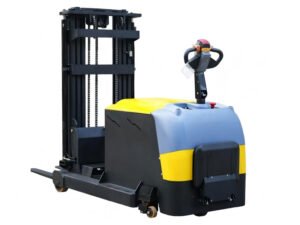
Reach Truck
A narrow-aisle specialist with an extending mast (or moving carriage) that allows it to reach deep into racking systems without the entire truck needing to enter the aisle. Almost exclusively electric.
What buyers miss: Reach trucks require very flat, well-maintained concrete floors. A floor flatness rating (often measured as F-number) below the manufacturer's requirement can cause load sway at height, which is both a safety and operational problem. If you're fitting out a new facility, specify your floor before you spec your trucks.
Best for: High-density warehouses with racking above 20 feet, narrow aisles (8–10 feet). Price range (new): $25,000–$65,000.
3.
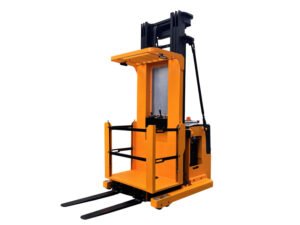
Order Picker
The operator platform rises with the forks, allowing workers to pick individual items at height. Common in e-commerce fulfillment.
What buyers miss: Order pickers are among the highest-risk forklifts for operator injury because the worker is elevated with the load. OSHA citations related to order pickers disproportionately involve fall protection failures. If you're buying order pickers, budget for full-body harnesses and anchor points — not as an optional add-on, but as a required system cost.
Best for: E-commerce fulfillment, piece-picking operations. Price range (new): $20,000–$45,000.
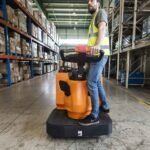
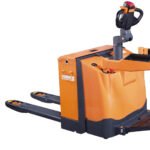
4. Pallet Jack (Manual and Powered)
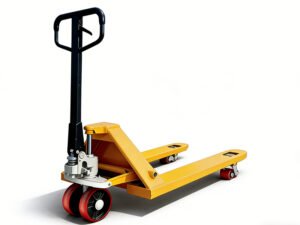
CBD Manual Pallet Jack 2–5 Ton Hydraulic Hand Pallet Truck
The most basic form factor: no mast, low lift height (typically 7–8 inches off the ground), designed purely to move palletized loads horizontally. Manual versions are hand-pumped; powered walkie or rider versions add an electric motor.
What buyers miss: A powered pallet jack ($3,000–$8,000) versus a sit-down counterbalance ($25,000+) is not just a cost difference — it's a different workflow. Many operations that think they need a full forklift could operate efficiently with a fleet of powered pallet jacks at a fraction of the cost and with far less operator certification complexity.
Best for: Retail backrooms, cross-docking, short-distance pallet movement on flat surfaces. Price range: Manual: $250–$1,500; Powered walkie: $3,000–$8,000; Rider: $8,000–$15,000.
5. Rough Terrain Forklift
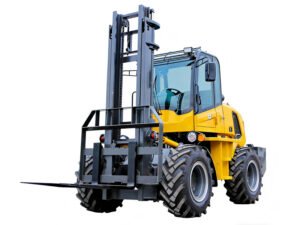
Rough Terrain Forklift
Built for outdoor, uneven ground. Large pneumatic tires, high ground clearance, and ICE engines (usually diesel). Used heavily in construction, agriculture, and lumber yards.
What buyers miss: Rough terrain forklifts are almost never the right choice for mixed indoor/outdoor operations. Their large turning radius and weight make them slow and destructive on warehouse floors. If your operation genuinely spans both terrain types, consider a telehandler (telescoping handler) instead — it offers the outdoor capability of a rough terrain unit with greater versatility.
Best for: Construction sites, outdoor lumber/building materials storage, agricultural operations. Price range (new): $20,000–$80,000+ depending on capacity.
6. Telehandler (Telescoping Handler)
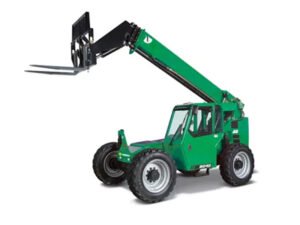
Telehandler
Technically a separate category, but frequently purchased alongside or instead of traditional forklifts. Features a telescoping boom that can extend forward and upward simultaneously, offering reach that a standard forklift cannot.
Best for: Construction, agriculture, any operation requiring variable load placement angles. Price range (new): $40,000–$150,000+.
7. Automated / Autonomous Forklift (AGF)
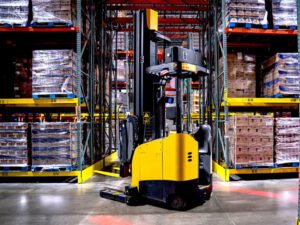
Autonomous Forklifts
The fastest-growing segment in the industry. Uses LiDAR, cameras, and AI navigation to operate with minimal human intervention. Amazon has deployed autonomous forklifts across its fulfillment network and projected automation across 55% of its fulfillment volume by 2026.
What buyers miss: Autonomous forklifts are not a forklift purchase — they are a systems integration project. The hardware cost is often less than the cost of retrofitting facility infrastructure (floor markings, sensor networks, WMS integration). Evaluate total implementation cost, not unit price.
Best for: High-volume, high-repetition operations with consistent SKU profiles. Price range: $50,000–$200,000+ per unit, before integration costs.
Fuel Type: The Decision That Outlasts Everything Else
This is the most consequential choice most buyers make too quickly.
| Power Source | Upfront Cost | Annual Fuel/Energy | Maintenance | Indoor Use | Outdoor Use |
|---|---|---|---|---|---|
| Electric (Lead-Acid) | Mid | Low | Low-Mid | ✅ Excellent | ⚠️ Limited |
| Electric (Lithium-Ion) | Higher | Lowest | Lowest | ✅ Excellent | ⚠️ Limited |
| LPG/Propane | Low-Mid | Mid | Mid | ⚠️ Ventilation needed | ✅ Good |
| Diesel | Low | High | Higher | ❌ Emissions issue | ✅ Excellent |
| Hydrogen Fuel Cell | Very High | Mid-Low | Low | ✅ Good | ✅ Good |
The electric advantage is real, but conditional. Electric charging can save operators 30–40% annually on fuel costs compared to propane or diesel. Lithium-ion models also reduce routine maintenance costs to roughly $1,400–$2,400 per year versus significantly more for ICE equivalents. However, electric requires infrastructure: charging stations, dedicated electrical capacity, and in multi-shift operations, either opportunity charging or battery-swap systems.
A specific scenario where ICE still wins: Cold storage. Electric battery performance degrades significantly in sub-zero environments. Hydrogen fuel cell forklifts are increasingly preferred in cold storage precisely because hydrogen refueling takes minutes and battery capacity isn't affected by temperature — though the cost premium remains substantial.
Forklift Prices: A Realistic 2025–2026 Reference
Most price guides give you ranges so wide they're nearly useless. Here's a more honest breakdown based on current market conditions:
New Forklifts
| Category | Typical Range | Notes |
|---|---|---|
| Pallet jack (manual) | $250–$1,500 | No certification typically required |
| Powered pallet jack (walkie) | $3,000–$8,000 | Often underutilized alternative to full forklifts |
| Electric counterbalance (3,000–5,000 lb) | $22,000–$38,000 | Add $7,500–$9,500 for battery + charger |
| LPG counterbalance (3,000–5,000 lb) | $20,000–$35,000 | Tank rental often ongoing cost |
| Reach truck | $25,000–$65,000 | Mast height drives price significantly |
| Order picker | $20,000–$45,000 | Safety equipment add-on budget required |
| Rough terrain / telehandler | $40,000–$150,000+ | Capacity and reach are key price drivers |
| Industrial (10,000+ lb capacity) | $45,000–$100,000+ | |
| Autonomous forklift | $50,000–$200,000+ | Excludes integration costs |
Used Forklifts
Used pricing is where buyers can save significantly — or get burned badly. A general framework:
- Under 3,000 hours: Close to new performance, expect to pay 50–70% of new price
- 3,000–7,000 hours: Working life remains, 30–55% of new price, budget for increased maintenance
- 7,000–10,000 hours: Approaching end of typical economic life (most forklifts max around 10,000 hours); buy only with clear inspection data and realistic maintenance budget
- Over 10,000 hours: Generally avoid unless for very light-duty, low-frequency use
Used market range: $5,000–$25,000 for most standard counterbalance units.
Rental
- Daily: $150–$400 for standard electric or LPG
- Weekly: $400–$1,200
- Monthly: $600–$2,000+
Rental makes sense for peak season operations, short-term project work, or as a trial before committing to a purchase.
Total Cost of Ownership: The Number That Actually Matters
Sticker price is not the cost of a forklift. Over a five-year ownership period, consider:
- Purchase price (obviously)
- Fuel or electricity: LPG averages $3,000–$5,000/year; electric roughly $1,000–$2,500/year
- Maintenance: $1,400–$6,000/year depending on age, type, and usage intensity
- Tires: $800–$2,000 per replacement cycle (cushion tires last longer on smooth surfaces; pneumatic wear faster on rough ground)
- Insurance: $1,000–$3,000/year
- Operator training and certification: OSHA requires formal training; budget $100–$300 per operator, with renewal every 3 years
- Depreciation: Forklifts typically depreciate 15–25% in year one, then 10–15% annually
A rough five-year TCO for a standard electric counterbalance forklift: $55,000–$90,000. For an equivalent LPG model: $65,000–$110,000. The electric advantage compounds over time.
The Buying Decision Framework: 6 Questions Before You Sign Anything
1. What surface will this operate on?
Indoor concrete → cushion tires. Outdoor or mixed terrain → pneumatic tires. Getting this wrong destroys tires prematurely and creates safety risk.
2. What is your actual maximum load — and load center?
Don't just tell a dealer '5,000 lbs.' Measure your heaviest pallet's weight and its load center distance. Then ask for a rated capacity chart, not just a headline spec.
3. How many shifts per day?
Single shift (roughly 2,000 hours/year) → standard electric with overnight charging works fine. Two or three shifts → you need either battery swap capability, opportunity charging infrastructure, or LPG/diesel. This is a common miscalculation in electric fleet transitions.
4. What are your aisle widths?
Measure before you visit a dealer. Standard counterbalance trucks need 12–13 feet of aisle to turn; reach trucks can operate in 8–10 feet. Buying the wrong format for your racking configuration is an expensive mistake.
5. New, used, or lease?
- New: Best for high-usage operations (4+ hours/day), where downtime is costly and warranty matters.
- Used: Best for low-to-medium usage, budget-constrained operations, or backup/overflow machines.
- Lease: Best for seasonal operations, rapidly evolving businesses, or when capital preservation matters more than TCO optimization.
6. Who is servicing it?
This is consistently the most underweighted factor. A slightly cheaper forklift from a dealer with poor parts availability or slow service response will cost more over its life than a premium unit from a dealer with a strong service network. Ask specifically: What is the average response time for a service call? Are parts stocked locally or shipped?
Top Forklift Brands: A Candid Assessment
Toyota Material Handling dominates the global market and for good reason — reliability data consistently places Toyota among the lowest in unplanned downtime. Their 8-Series counterbalance line is the reference product for most fleet comparisons.
Crown Equipment is the choice for serious narrow-aisle operations. Their reach trucks and order pickers are considered best-in-class for operator ergonomics and fleet telematics integration.
Hyster and Yale (both under Hyster-Yale Group) offer strong heavy-duty options, particularly for 10,000+ lb capacity applications. Well-regarded in ports and steel/metals operations.
Jungheinrich and Linde are the dominant European electric specialists. If electric performance and lithium-ion integration is your priority, these brands often lead in technology — though dealer networks outside Europe and North America can be thinner.
Hangcha and HELI (Anhui Heli) are Chinese manufacturers with fast-growing global market share, particularly in Southeast Asia, Europe, and emerging markets. Price-competitive with increasingly competitive quality — but evaluate local service network carefully before purchasing outside major markets.
5 Mistakes That Cost Buyers the Most Money
1. Buying on capacity alone. A 5,000 lb forklift and a 10,000 lb forklift are not interchangeable. Oversized machines are slower, harder to maneuver, and cost more to operate. Right-size your equipment to your actual 90th-percentile load — not your theoretical maximum.
2. Ignoring floor condition. Cracked, uneven warehouse floors cause premature tire wear, mast stress, and operator fatigue. A $2,000 floor repair can extend forklift life by years.
3. Skipping the service history on used equipment. A used forklift with 7,000 hours and documented preventive maintenance records is a better buy than one with 4,000 hours and no service history. Hours alone don't tell the story.
4. Under-investing in operator training. OSHA estimates that approximately 85% of forklift accidents involve operator error. Trained operators also reduce equipment wear significantly — it's one of the highest-ROI investments in any fleet operation.
5. Treating the sticker price as the final number. With electric forklifts, batteries and chargers are often quoted separately, adding $7,500–$9,500. With any used forklift, factor in an independent inspection ($200–$400) and a realistic first-year maintenance budget. What looks like a $12,000 bargain can easily become a $20,000 acquisition once you're honest about all the costs.
What's Changing in 2026 and Beyond
Three trends are reshaping the forklift market in ways that affect buying decisions today:
Electrification is no longer a niche. Electric forklifts accounted for roughly 68% of global unit shipments in 2025. California's zero-emission forklift regulations and the EU's Green Industry Plan (targeting zero-emission logistics equipment by 2030) will continue accelerating this shift. If you're buying ICE today, factor a shorter resale window into your calculation.
Lithium-ion is replacing lead-acid fast. Lead-acid batteries require equalization charging, venting space, and watering maintenance. Lithium-ion eliminates all of that, supports opportunity charging, and lasts roughly twice as long. The price premium over lead-acid has narrowed substantially and for most new purchases, lithium-ion is now the more economical choice over the machine's life.
Telematics are becoming standard. Fleet management software that tracks utilization, impact events, maintenance intervals, and operator behavior is now available from most major manufacturers. For fleets of 10+ units, telematics consistently pays for itself through reduced maintenance costs and improved safety compliance. If your dealer can't offer telematics, ask why.
Quick Reference: Match Your Operation to the Right Forklift
| Your Situation | Recommended Type | Fuel | Notes |
|---|---|---|---|
| Warehouse, indoor, racking under 20 ft | Counterbalance | Electric (Li-ion) | Most common correct choice |
| Warehouse, narrow aisles, high racking | Reach truck | Electric | Verify floor flatness rating |
| E-commerce fulfillment, piece picking | Order picker | Electric | Include fall protection in budget |
| Construction site, outdoor | Rough terrain or telehandler | Diesel | Don't try to use indoors |
| Retail backroom, flat floor, low volume | Powered pallet jack | Electric | Often cheaper than counterbalance |
| Cold storage, multi-shift | Hydrogen fuel cell or LPG | Hydrogen/LPG | Electric battery degrades in cold |
| High-volume, repetitive routes | Autonomous forklift | Electric | Evaluate as systems project |
Final Verdict
A forklift is not a commodity purchase. The wrong type costs you in productivity. The wrong fuel type costs you in operating expenses. The wrong dealer costs you in downtime. And ignoring total cost of ownership in favor of the sticker price is the single most common and most expensive mistake buyers make.
The good news: with the information in this guide, you're equipped to ask the right questions before you walk into a dealership — and to evaluate what you hear with a clear framework rather than relying on a salesperson's judgment alone.
The market is moving toward electric, toward lithium-ion, and toward telematics-integrated fleet management. Align your purchase with that direction and your forklift investment will hold its value — and its productivity — longer.