The counterbalance forklift is the workhorse of global material handling. While it looks straightforward, its operation is a balance of physics, hydraulic precision, and energy management. For procurement managers and fleet operators, choosing a truck isn't just about lifting capacity — it's about total cost of ownership and site safety. This guide covers the mechanics, specifications, and selection logic that actually determine how well a truck performs in your operation.
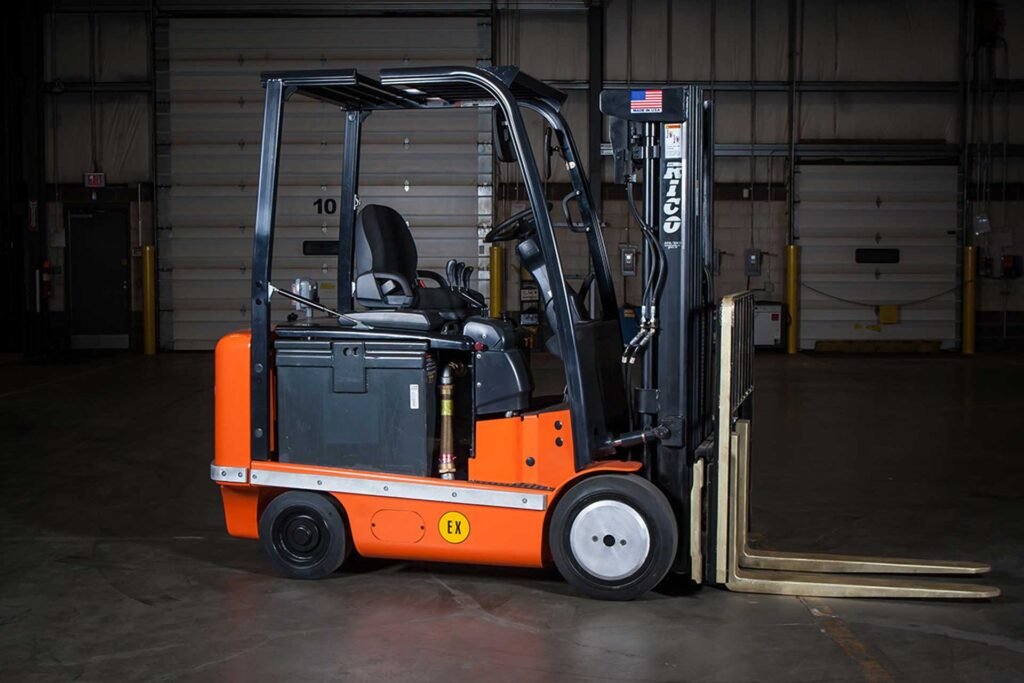
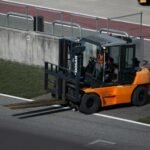
Counterbalance Forklift
1. The Physics of Stability: Beyond the Basics
Most operators know the rear counterweight offsets the front load. Understanding safety fully means understanding the stability triangle.
The Stability Triangle & Center of Gravity (CG)
A forklift's suspension creates a triangle between the two front tires and the pivot point of the rear axle.
- The safe zone: as long as the combined CG of the truck and load stays within this triangle, the truck remains upright.
- Lateral shift: turning or operating on an incline pushes the CG toward the edge of the triangle through centrifugal force. Side-to-side tip-overs are widely recognized in industry safety guidance as the more common failure mode compared to forward tip-overs, which is why cornering speed and incline handling get so much emphasis in operator training.
- Dynamic loading: braking suddenly with the mast elevated shifts the CG forward, risking a longitudinal tip-over.
2. Power Systems: The 2026 Energy Matrix
The shift toward lithium-ion continues to accelerate, but diesel and LPG still hold real roles in specific heavy-duty and outdoor environments.
| Feature | Lithium-ion | Lead-Acid Electric | Diesel (IC) | LPG / Propane |
|---|---|---|---|---|
| Operational pattern | Near-continuous with opportunity charging | 8h work / 8h charge / 8h cool | Refuel and go | Tank swap and go |
| Maintenance cost | Lowest (no watering/filters) | Higher (watering, cleaning) | Highest (oil, filters, belts) | Medium |
| Indoor use | Fully clean | Fully clean | Generally not recommended without strict ventilation and emissions control | Requires ventilation |
| 5-year TCO | Best ROI for multi-shift use | Moderate | Higher (fuel and repair costs) | Moderate |
3. Specifications That Actually Determine Productivity
When comparing Maoxiang or any tier-1 brand, look past the headline '3-ton' label. These specs determine real-world performance:
A. Load Center and Capacity Derating
Standard forklifts are rated at a 24-inch (600 mm) load center.
- The baseline: at the rated load center, you get 100% of the listed capacity.
- The derating: capacity drops as load center distance increases, but not in direct proportion to the load's length — the relevant distance is measured from the front axle, not the fork face, so doubling the load center does not simply cut capacity in half. For a typical 3-ton truck, an oversized load with a 1,200 mm load center (double the standard 600 mm) might realistically derate to somewhere in the 1.8–2.2 ton range— but the exact figure depends entirely on your specific truck's geometry.
- Always consult the load capacity chart on your specific truck before handling oversized cargo. The chart, not a rule of thumb, is the only reliable source for your actual safe capacity at a given load center.
B. Mast Configurations and 'Free Lift'
- Simplex/duplex: best for outdoor loading and lower-height work.
- Triplex (3-stage): the standard for high-bay warehousing.
- Full free lift: essential for container loading — forks rise to the top of the mast's travel without the mast sections extending upward, so you don't hit the container ceiling.
C. Gradeability (Full Load)
Measured as a percentage, this tells you whether the truck can climb your facility's ramps at maximum rated load. Typical industrial trucks are commonly rated in the 15–25% range, but always check the specific model's rated gradeability at full load, not just its unloaded figure — the two numbers can differ significantly.
D. Right Angle Stack (Aisle Width)
The minimum width needed for the truck to turn 90 degrees and place a pallet. For a 2.5-ton counterbalance truck, this typically falls in the 3,800–4,200 mm range, though exact figures vary by model and mast configuration.
4. Maintenance: Protecting Your Hydraulic System
Hydraulic system issues are among the most common sources of forklift downtime, because the system is under constant pressure during every lift cycle. To protect your investment:
- Cylinder inspection: check daily for 'weeping' at the chrome rod. Catching a seal issue early is a minor repair; a scored cylinder from a missed leak is a major one — the cost difference is substantial enough that daily inspection pays for itself many times over.
- Chain tension: chains stretch over time. Uneven tension between sides causes the mast to twist, which leads to accelerated roller wear and, left unaddressed, more serious mast failure.
- Tire wear line: replace solid tires once wear reaches the manufacturer's marked safety line. Worn tires increase rolling resistance, which increases energy consumption — the exact percentage varies by tire condition and surface, so treat this as a real but variable cost rather than a fixed number.
Frequently Asked Questions
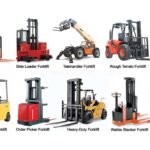
Can I use an electric counterbalance forklift outdoors? Yes — modern lithium-ion forklifts with adequate weatherproofing (check the specific IP rating for your model) can operate in rain and light snow. For deep mud or unpaved terrain, a rough terrain model is the correct choice instead.
How often should I service my counterbalance truck? Service intervals vary by manufacturer and power type — always follow your operator's manual, since hour-based intervals matter more than calendar-based ones for equipment with variable usage. As a general planning reference, IC trucks are commonly serviced in the 200–250 hour range, and electric/lithium-ion trucks at longer intervals given the absence of engine components — confirm the specific interval for your truck rather than assuming a fixed number across brands.
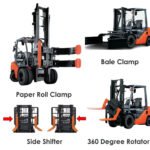
What is a side shifter, and do I need one? A side shifter lets the operator move the forks left and right without repositioning the truck, reducing unnecessary maneuvering and the wear that comes with it. One trade-off worth knowing: like any attachment, a side shifter adds weight and shifts the load center slightly, which typically reduces the truck's effective capacity by roughly 10–15% — confirm the de-rated capacity with your supplier rather than assuming the base truck's rated capacity still applies once it's installed.
The Maoxiang Factory Advantage: Why Buy Direct?
At Hebei Maoxiang, we bridge heavy-duty engineering with factory-direct value, specializing in counterbalance solutions built for global export.
- Engineering depth: we manufacture our own hydraulic cylinders and mast sections in-house, giving us direct control over component quality rather than relying on third-party assembly.
- Global compliance: our counterbalance trucks are CE certified, and our manufacturing operates under ISO 9001 quality management, supporting export to Europe, the Middle East, and the Americas.
- Lithium platform: our G-Series lithium forklifts are built around fast-charging and long battery life as core design goals, not retrofitted features.
Stop buying off-the-shelf. Start buying equipment engineered for your actual operating conditions — tell us your load center, aisle widths, and duty cycle, and we'll recommend the right configuration.