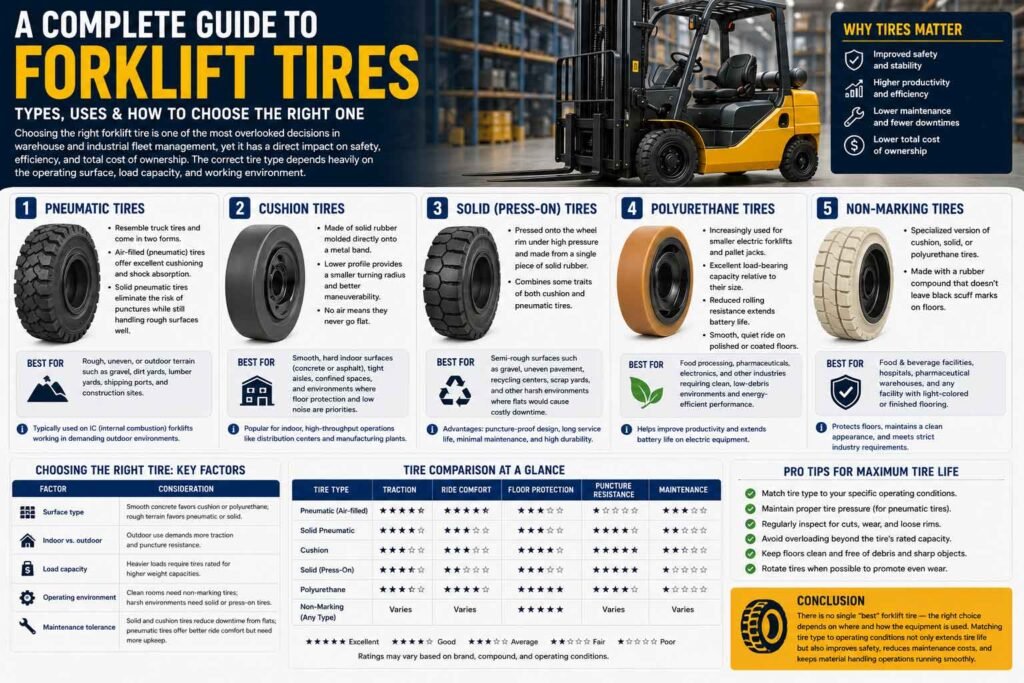
Choosing the right forklift tire is one of the most overlooked decisions in warehouse and industrial fleet management, yet it has a direct impact on safety, efficiency, and total cost of ownership. The correct tire type depends heavily on the operating surface, load capacity, and working environment. Below is an overview of the main forklift tire categories and how to choose between them.
Forklift Tire Types
1. Pneumatic Tires
Pneumatic forklift tires resemble truck tires and come in two forms:
- Air-filled (pneumatic) tires: Hollow and inflated with air, offering excellent cushioning and shock absorption. They are ideal for rough, uneven, or outdoor terrain such as gravel, dirt yards, or construction sites.
- Solid pneumatic tires: Built with the same tread pattern as air-filled tires but made of solid rubber, eliminating the risk of punctures while still handling outdoor and rough surfaces well.
Pneumatic tires are typically used on IC (internal combustion) forklifts working in lumber yards, shipping ports, and construction environments where puncture resistance and traction matter more than a smooth ride.
2. Cushion Tires
Cushion tires are made of solid rubber molded directly onto a metal band, without the deep treads seen on pneumatic tires. They have a lower profile, which gives forklifts a smaller turning radius and better maneuverability.
Best suited for:
- Smooth, hard indoor surfaces (concrete or asphalt warehouse floors)
- Tight aisles and confined spaces
- Environments where floor protection and low noise are priorities
Because they lack air, cushion tires never go flat, making them popular for indoor, high-throughput operations like distribution centers and manufacturing plants.
3. Solid (Press-On) Tires
Solid tires, also called press-on tires, are pressed onto the wheel rim under high pressure and made from a single piece of solid rubber. They combine some traits of both cushion and pneumatic tires.
Advantages include:
- Puncture-proof design
- Long service life with minimal maintenance
- Good performance on semi-rough surfaces, such as gravel or uneven pavement
These tires are common in recycling centers, scrap yards, and other harsh environments where flat tires would cause costly downtime.
4. Polyurethane Tires
Polyurethane tires are increasingly used for smaller electric forklifts and pallet jacks. They offer:
- Excellent load-bearing capacity relative to their size
- Reduced rolling resistance, which extends battery life on electric units
- A smooth, quiet ride on polished or coated floors
These tires are popular in food processing, pharmaceuticals, and other industries requiring clean, low-debris environments.
5. Non-Marking Tires
Non-marking tires are a specialized version of cushion, solid, or polyurethane tires, made with a rubber compound that doesn't leave black scuff marks on floors. They're essential for:
- Food and beverage production facilities
- Hospitals and pharmaceutical warehouses
- Any facility with light-colored or finished flooring
Choosing the Right Tire: Key Factors
When selecting forklift tires, consider the following:
| Factor | Consideration |
|---|---|
| Surface type | Smooth concrete favors cushion or polyurethane; rough terrain favors pneumatic or solid |
| Indoor vs. outdoor | Outdoor use demands more traction and puncture resistance |
| Load capacity | Heavier loads require tires rated for higher weight capacities |
| Operating environment | Clean rooms need non-marking tires; harsh environments need solid or press-on tires |
| Maintenance tolerance | Solid and cushion tires reduce downtime from flats; pneumatic tires offer better ride comfort but need more upkeep |
Conclusion
There is no single 'best' forklift tire — the right choice depends on where and how the equipment is used. Warehouses with smooth floors typically benefit from cushion or polyurethane tires, while outdoor or rugged job sites call for pneumatic or solid tires. Matching tire type to operating conditions not only extends tire life but also improves safety, reduces maintenance costs, and keeps material handling operations running smoothly.