In the fast-paced environment of a modern warehouse, understanding the safety mechanisms of your material handling equipment is not just a training requirement—it’s a lifesaver. A common question among operators and safety managers is: 'Which operator control acts as an emergency brake?'
The answer depends on the type of equipment, but the principle remains the same: immediate power disconnection and mechanical locking.
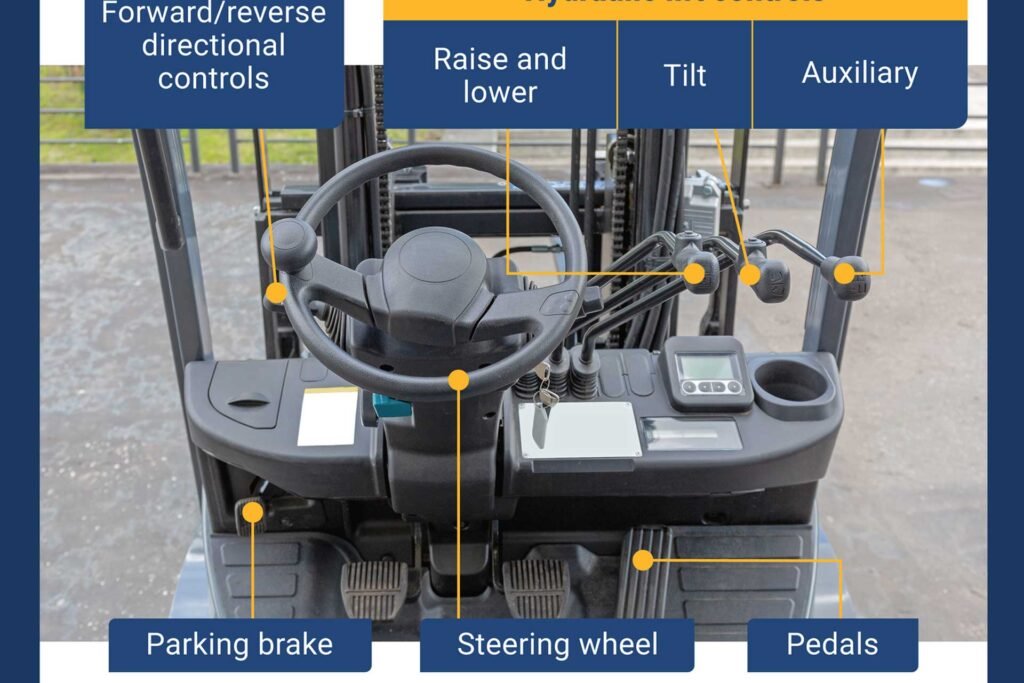
Which Operator Control Acts as an Emergency Brake
The Primary Emergency Controls
■ The Emergency Disconnect Switch (The 'Red Knob')
On almost all electric pallet jacks, stackers, and reach trucks, the large, red, mushroom-shaped button is the primary emergency brake.
How it works: Pressing this button physically breaks the electrical circuit between the battery and the controller.
The Result: It triggers the Electromagnetic Brake, which is designed to be 'Normally Closed.' When power is cut, heavy-duty springs instantly force the brake pads against the drive motor shaft, bringing the vehicle to a dead stop.
■ The 'Belly Button' (Emergency Reverse Switch)
For walkie-style equipment like the [CBD15 Electric Pallet Truck], the red button at the end of the tiller handle is the most critical safety control.
The Scenario: If an operator is being pinned against a wall or racking, this button will be the first to make contact with their body.
The Action: It instantly reverses the motor's direction for a brief second and then cuts power, pushing the truck away from the operator to prevent crushing injuries.
Equipment-Specific Emergency Brakes
Different machines utilize different ergonomic controls to achieve an emergency halt:
Stand-on & Rider Units: The Deadman Switch
On [Stand-on Pallet Trucks] or Order Pickers, the operator must stand on a floor-mounted pedal.
Emergency Brake Action: If the operator falls, faints, or steps off the platform, the 'Deadman Switch' is released. This immediately engages the parking brake and shuts down the drive system.
Sit-on Forklifts & Towing Tractors: The Emergency Stop & Pedal
On [Electric Towing Tractors], there is usually a prominent E-stop button on the dashboard. Additionally, slamming the hydraulic brake pedal to its full depth serves as the manual emergency stop during high-speed travel.
The Science of the 'Fail-Safe' Braking System
Modern industrial equipment uses Electromagnetic (EM) Brakes. It is vital for operators to understand that these are Fail-Safe systems.
Under Normal Operation: Electricity is used to create a magnetic field that pulls the brake pads away from the motor, allowing it to spin.
In an Emergency: When you hit the emergency disconnect or if the battery cables are severed, the magnetic field disappears. The mechanical springs take over, locking the wheels.
Key Takeaway: If the machine loses total power, it will stop automatically.
Operational Safety: What You Must Know
Never Use the E-Stop for Routine Parking
A common mistake is using the Emergency Disconnect to turn off the machine daily. This can arc the electrical contacts and eventually weld them shut, potentially causing the safety system to fail when you actually need it. Always use the key switch or designated parking brake.
The Daily 'Three-Point' Safety Check
Before starting a shift, every operator should:
Test the Belly Button: Ensure the truck reverses upon contact.
Verify the Red Knob: Ensure it kills all power instantly.
Check the Tiller Braking: Ensure the truck brakes when the handle is in the fully vertical and fully horizontal positions.
Summary: Essential Controls for Safety
| Control Name | Primary Function | Equipment Type |
| Emergency Disconnect | Total Power Cut-off | All Electric Units |
| Belly Button | Anti-Crushing Reverse | Walkie Trucks/Stackers |
| Deadman Pedal | Operator Presence Check | Stand-on/Rider Units |
| Tiller Arm Position | Mechanical/Static Brake | Manual & Walkie Units |
Why Trust Our Safety Insights?
As a professional manufacturer of [Electric Pallet Trucks] and [Counterbalanced Stackers], we prioritize the integration of CE-certified safety components in every machine. Understanding these controls is the first step toward a zero-accident workplace.