Electric Stand-Up Forklift for Sale — Narrow Aisle Warehouse Forklift
Also called: stand-up rider forklift, electric stand-up counterbalance, warehouse stand-up forklift, stand-up end control forklift
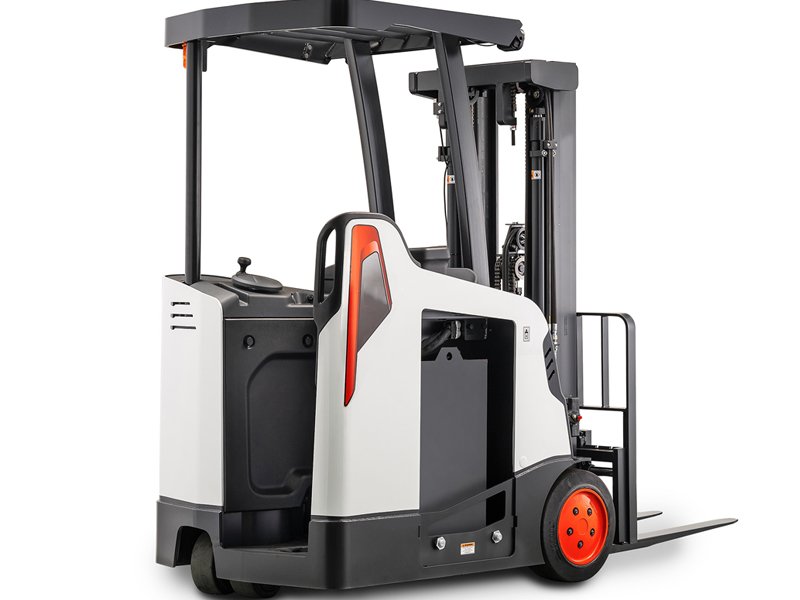
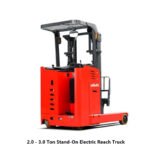
A stand-up forklift is a counterbalanced electric truck where the operator stands instead of sits. The driver faces sideways or forward, steps on and off in seconds, and works in aisles too tight for a sit-down truck.
Key difference from sit-down: Stand-up trucks have a smaller turning radius, faster entry/exit, and better visibility in tight spaces. The trade-off: the operator stands all shift — fine for stop-start work, not ideal for long-distance driving.
A typical sit-down forklift needs 3,500–4,200 mm aisle width. Switching to stand-up reclaims 30–40% of your aisle space — which means more rack rows, more pallet positions, lower per-pallet rent cost.
Typical Specifications (by Capacity Range)
Rating
Load Center
Lift Height
Battery
Travel Speed
0.8–1.0 ton
500 mm
up to 4,500 mm
24V–48V Li-ion / Lead-acid
9–12 km/h
1.2–1.5 ton
500 mm
up to 5,000 mm
48V Li-ion / Lead-acid
10–13 km/h
1.8–2.0 ton
500 mm
up to 5,500 mm
48V–80V Li-ion / Lead-acid
10–14 km/h
Full spec sheet with measured quiescent current, ramp grade, and real cycle life available on request for your target capacity.
Best Applications
Application
Why Stand-Up Works
Narrow aisle warehouse (≤3 m)
Tight turning radius fits where sit-down can’t
E-commerce/3PL fulfillment
Operators dismount 50+ times/shift — saves 15–20s per cycle
Cold storage / freezer
Lithium battery maintains capacity in -20°C; no acid to freeze
Dock-to-staging transfer
Quick in-and-out, no seat climb
Multi-shift operations
Side-pull battery swap in 2 minutes
Not Ideal For
Application
Why
Outdoor / rough floors
Small solid tires, jarring ride, poor traction on debris
All-day continuous driving (7+ hrs seated needed)
Standing all shift fatigues the operator
Heavy ramp traffic
Less rear weight bias than sit-down
>3.5 ton loads
Most stand-up models top out at 2.5–3.0 ton
Steel / lumber / heavy fabrication
Rough floors destroy solid tires in 4–6 months
Key Features to Look For
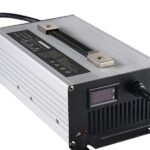
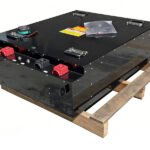
Lithium battery (recommended)
No watering room needed — park anywhere
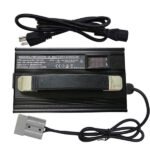
2-hour full charge, 40-minute opportunity charge to 80%
Side extraction tray — swap in 2 minutes, no overhead hoist
No acid, no gassing, no floor corrosion
AC drive motor
2 moving parts — no brushes, no commutator rebuild at 2,000 hours
Regenerative braking recovers 8–15% energy in stop-start operation
Curtis or ZAPI controller (not unbranded white-label boards)
Industry standard diagnostics, parts available globally
Operator Presence Sensing (OPS)
Truck won’t drive unless operator is in position — OSHA-aligned
Estimated Price Range (FOB Tianjin)
Capacity
Price Range
Typical Configured Price
0.8–1.0 ton
$3,500–$4,500
~$4,000
1.2–1.5 ton
$4,200–$5,800
~$5,000
1.8–2.0 ton
$5,500–$7,500
~$6,500
2.5–3.0 ton
$7,000–$9,500
~$8,200
Price varies by: lift height, battery type (Li-ion / lead-acid), attachment options (side-shifter, fork positioner), and accessories (cold storage package, blue light, strobe beacon).
Lead Time & Shipping
Lead time: 20–35 days from deposit
Packaging: Steel crate + shrink wrap
Port: FOB Tianjin or CIF to your port
Documents: CE certificate, SGS inspection report, Bill of Lading, Certificate of Origin
Customization: OEM branding, color, decals, and voltage available
When to Buy Stand-Up vs Sit-Down
Buy stand-up if:
Your aisles are under 3.2 m wide
Operators get on and off the truck multiple times per hour
You’re setting up a new warehouse and want maximum rack density
You want lithium batteries with side-pull swap for multi-shift
Buy sit-down if:
Your aisles are 3.5 m+
Operators drive continuously for 6+ hours per shift
You move heavy loads (3+ ton) every cycle
Your floors are rough, outdoor, or uneven
Still not sure? Send us your warehouse layout and load cycle. We’ll tell you which configuration fits — even if it’s not one of ours.

Reviews
There are no reviews yet.