A standard counterbalance forklift typically stands 7–8 feet tall with its mast lowered, while overhead guard height alone (without the mast) is usually around 6.5–7 feet. But 'how tall is a forklift' is actually several different questions in disguise — lowered height, extended mast height, and overhead guard clearance all matter for different reasons, and mixing them up is one of the most common (and costly) mistakes when moving a forklift through a facility. Here's how to figure out the number you actually need.
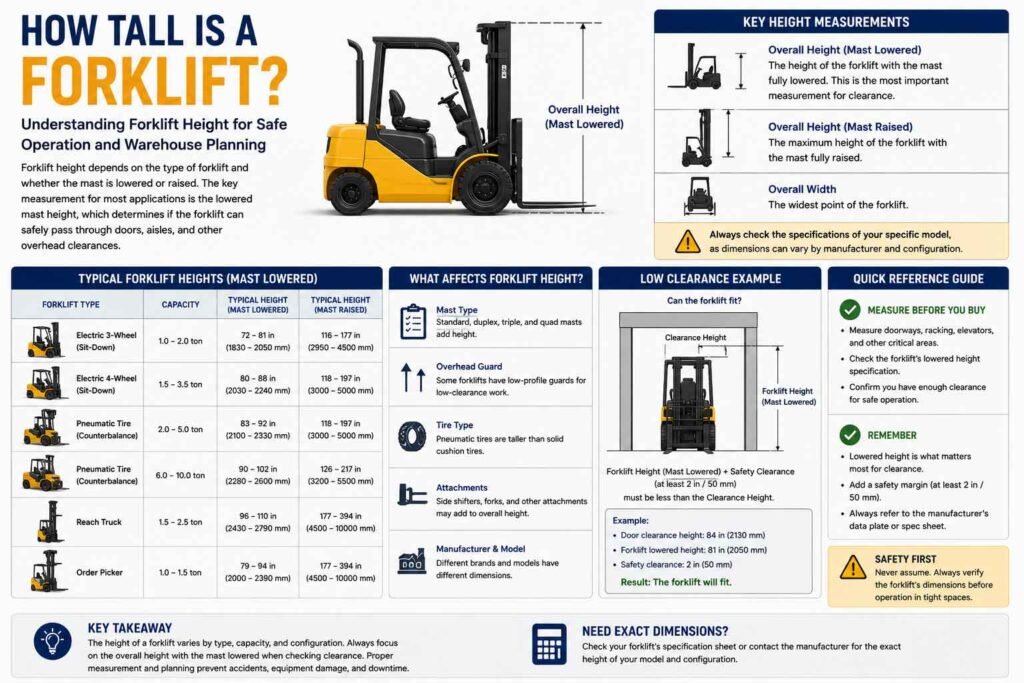
How Tall Is a Forklift
Why This Question Has More Than One Answer
Unlike a car, where 'height' is a single fixed number, a forklift's height changes dramatically depending on whether the mast is raised or lowered — and even the 'lowered' height varies by class, model, and mast type. Someone asking this question is usually trying to solve one of three real problems: fitting through a doorway, loading into a truck or container, or clearing an overhead obstruction. Each of those needs a different measurement.
The Three Heights That Actually Matter
1. Overall Lowered Height (Mast Collapsed)
This is the forklift's height with the mast fully retracted and forks resting near the ground — the number relevant for driving through doorways, under low ceilings, or into standard shipping containers.
- Standard counterbalance forklift: 6.5–8 feet
- Compact electric warehouse forklift: 6–7 feet
- Heavy-duty diesel forklift: 7.5–9 feet
2. Overhead Guard Height
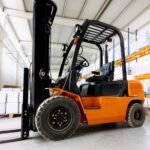
The overhead guard (the protective cage over the operator's head) is usually the tallest fixed point on the forklift when the mast is lowered. This is the figure most relevant for garage doors, warehouse entrances, and low-clearance areas the forklift will pass through daily.
- Typically 80–92 inches (6.5–7.7 feet) for standard counterbalance models, though this varies by manufacturer and forklift class.
3. Maximum Extended Height (Mast Fully Raised)
This is the forklift's tallest possible height when the mast is fully extended to reach maximum lift height — relevant only when checking clearance for overhead power lines, sprinkler systems, or structural beams in areas where the forklift will be lifting loads.
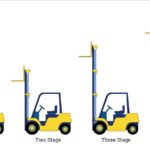
- Can range from 12 feet on compact units to over 20 feet on forklifts built for high-bay racking with triplex masts.
Why Mixing These Up Causes Real Problems
The most common costly mistake is checking only the 'collapsed' height against a doorway, then discovering the mast can't extend inside because of a low ceiling once the forklift is already inside a warehouse aisle or building. Conversely, some buyers check maximum lift height for racking compatibility but forget to verify the overhead guard height against their loading dock door — leading to a forklift that lifts perfectly but can't physically enter the building it's meant to work in.
Typical Forklift Height by Type
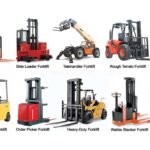
| Forklift Type | Lowered/Overhead Guard Height | Max Extended Height (mast raised) |
|---|---|---|
| Compact electric forklift | 6–7 ft | 12–15 ft |
| Standard counterbalance (3–5 ton) | 6.5–8 ft | 15–20 ft |
| Heavy-duty diesel (7+ ton) | 7.5–9 ft | 18–22+ ft |
| Reach truck | 7–8 ft | 20–30+ ft |
| Rough terrain forklift | 8–10 ft | 15–18 ft |
These are general ranges — always check the manufacturer's spec sheet for your exact model, since height can vary meaningfully even within the same weight class depending on mast type and cab configuration.
How to Measure What You Actually Need
Before buying or renting a forklift, measure these three things at your facility:
- Lowest doorway or dock door clearance the forklift must pass through daily — compare against overhead guard height, with a safety margin.
- Lowest ceiling height in any area requiring mast extension — compare against maximum extended height if the forklift will lift loads in that space.
- Container or trailer interior height, if the forklift will load or unload trucks — this affects both overhead guard clearance and how high the mast can extend inside the trailer.
A Simple Rule of Thumb
If you only remember one thing: always compare the forklift's tallest point in its 'as-passing-through' state (mast down) against your lowest doorway, and its tallest point in its 'as-working' state (mast up) against your lowest ceiling where lifting will occur. These are rarely the same clearance problem, and checking only one leaves the other unverified.
Conclusion
There's no single answer to 'how tall is a forklift' because the useful height depends on what you're trying to check — a doorway, a warehouse ceiling, or a truck interior all call for a different measurement. Checking the manufacturer's specific overhead guard height and maximum extended height against your facility's actual clearances, rather than relying on general class averages, is the only reliable way to avoid a forklift that doesn't fit where it needs to work.