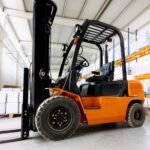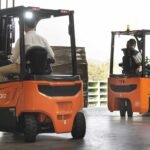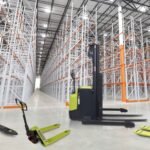
Minimum aisle width for a forklift depends on the forklift type and turning method, typically ranging from 12–13 feet for standard counterbalance forklifts, 8–10 feet for reach trucks, and as narrow as 6 feet for narrow-aisle (VNA) forklifts. But the generic number on a spec sheet is rarely the number you actually need — that requires factoring in your specific load size, racking layout, and forklift model. Here's how to calculate it correctly instead of guessing from an average.
Minimum Aisle Width for Forklift
Why the 'Standard' Number Often Misleads Buyers
Search this topic and you'll find charts listing single numbers per forklift class — useful as a starting point, but dangerously oversimplified if taken at face value. Two forklifts in the same weight class can require meaningfully different aisle widths depending on wheelbase, overall length, and mast configuration. And the load itself — its length, width, and how it's carried — changes the real-world number just as much as the forklift does.
Treating a published average as gospel is how warehouses end up with aisles that look fine on paper and don't work in practice.
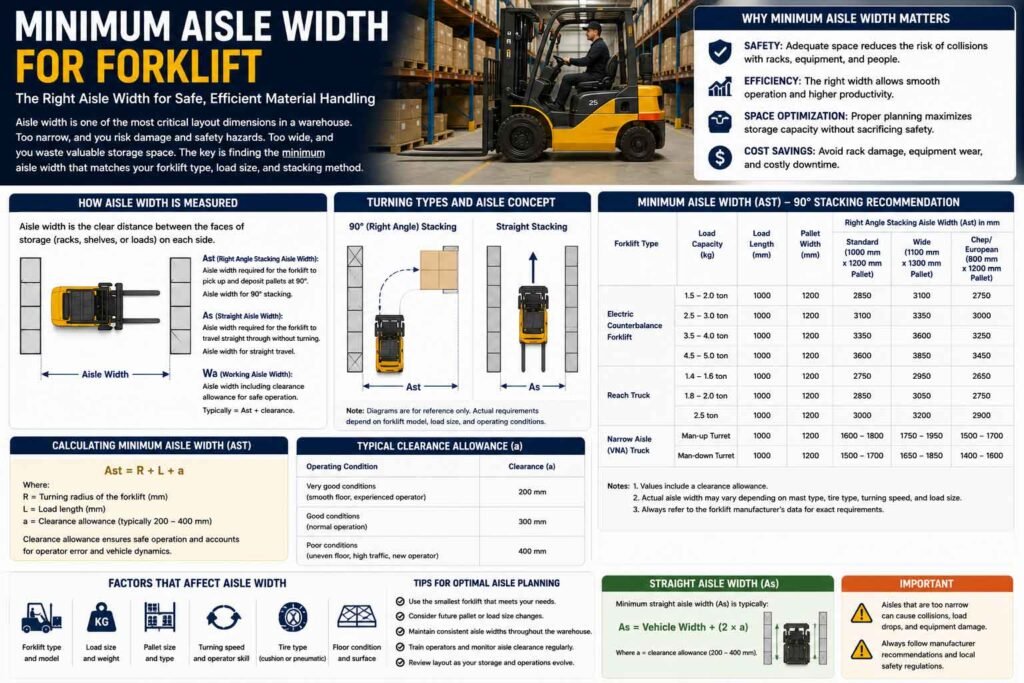
The Three Aisle Width Measurements That Actually Matter
Manufacturers and warehouse designers generally reference three distinct figures, and confusing them is a common costly mistake:
1. Right-Angle Stacking Aisle Width
The minimum aisle width needed for a forklift to enter an aisle, turn 90 degrees, and place a load into racking. This is the most commonly used figure for warehouse racking design and the one you should ask suppliers for directly.
2. Working Aisle Width
The space needed for the forklift to operate freely while picking and placing loads repeatedly — usually close to the right-angle stacking width but sometimes slightly wider to account for operator visibility and safety margins.
3. Turning Aisle / Cross Aisle Width
The width needed at the end of racking rows where forklifts turn around to enter a different aisle — often wider than the working aisles themselves since a full turn (not just a 90-degree placement) needs to happen here.
Typical Aisle Width by Forklift Type
| Forklift Type | Typical Minimum Aisle Width |
|---|---|
| Standard counterbalance forklift (3–5 ton) | 12–13 ft |
| Compact/electric counterbalance forklift | 10–12 ft |
| Reach truck | 8.5–10.5 ft |
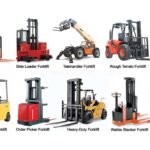
| Narrow-aisle (VNA) forklift | 5.5–7 ft |
| Order picker (rack-guided) | 5–6 ft |
These figures assume a standard pallet size (48' x 40'). Wider or longer loads will increase the required aisle width beyond these baseline numbers — sometimes significantly.
How to Calculate Your Actual Required Aisle Width
The formula manufacturers use to calculate right-angle stacking width generally combines three factors:
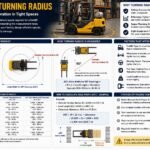
Minimum Aisle Width ≈ Forklift Turning Radius + Load Length + Clearance Margin
Example:
- Forklift turning radius: 85 inches
- Pallet load length: 48 inches
- Safety clearance margin: 12 inches
- Minimum aisle width: 85 + 48 + 12 = 145 inches (~12.1 feet)
This is a simplified estimate — always cross-check against the manufacturer's published right-angle stacking spec for your exact forklift model, since actual figures account for additional variables like mast width and load center that a simplified formula can't fully capture.
What Actually Drives Aisle Width Requirements Up or Down
1. Forklift Turning Radius
Directly covered in the formula above — a tighter turning radius reduces the aisle width needed, which is exactly why narrow-aisle forklifts are purpose-built with short wheelbases.
2. Load Size and Orientation
Longer or wider pallets increase the required aisle width proportionally. A facility handling irregular or oversized loads should calculate aisle width based on their largest common load, not just a standard pallet.
3. Mast and Attachment Width
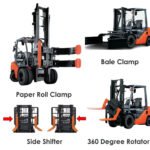
Attachments like clamps, extended forks, or side-shifters add width to the forklift itself, which can increase clearance requirements even if the base turning radius hasn't changed.
4. Racking Type
Selective pallet racking generally requires wider aisles than drive-in or push-back racking, since forklifts need full turning clearance to access each bay directly.
5. Operator Visibility and Safety Standards
Facilities often build in additional clearance beyond the mathematical minimum for operator safety and to reduce rack damage from near-miss turns — a small buffer here is usually a worthwhile trade against long-term racking repair costs.
Common Mistakes When Planning Aisle Width
- Designing racking before choosing the forklift: This is backwards — forklift turning radius should inform aisle width, which should inform racking layout, not the other way around.
- Using the forklift's raw turning radius instead of right-angle stacking width: These are different numbers, and using turning radius alone typically underestimates the aisle width actually needed.
- Not accounting for future equipment changes: An aisle sized perfectly for a current fleet may not accommodate a larger replacement forklift down the line — worth planning some margin if equipment upgrades are likely.
- Ignoring load variability: Calculating aisle width around a 'typical' load while occasionally handling oversized loads sets up a bottleneck the moment an atypical load comes through.
Questions to Ask Before Finalizing Aisle Width
- What is the right-angle stacking width for the exact forklift model being used — not just its class average?
- What is the largest pallet or load size the aisle needs to accommodate regularly?
- Does the racking type (selective, drive-in, push-back) require different clearance than standard right-angle stacking?
- Is there room for a safety margin beyond the mathematical minimum?
- Could switching to a reach truck or narrow-aisle forklift free up meaningful warehouse floor space?
Conclusion
Minimum aisle width isn't a single number to look up and apply — it's a calculation that depends on your specific forklift's turning radius, your typical load size, and your racking configuration. Using the right-angle stacking width from your actual forklift model, rather than a generic class average, is the difference between a warehouse layout that maximizes storage density and one that quietly wastes floor space or creates daily maneuvering problems.