If you are researching material handling equipment, you’ve likely encountered the term 'Straddle Stacker.' But what exactly is it, and how does it differ from a standard pallet stacker?
Choosing the wrong equipment can lead to a common warehouse nightmare: buying a stacker that physically cannot pick up your pallets. This guide explains everything you need to know about straddle stackers and why they are the 'universal' solution for many warehouses.
1. The Direct Definition: What is a Straddle Stacker?
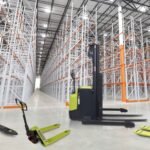
A Straddle Stacker is a piece of industrial lifting equipment characterized by its wide base legs (outriggers) that 'straddle' the pallet.
In a standard stacker, the forks sit directly above the load-bearing legs. However, in a straddle design, the legs are positioned outside the width of the forks. This allows the forks to lower all the way to the floor between the outriggers, enabling the machine to lift almost any type of pallet.
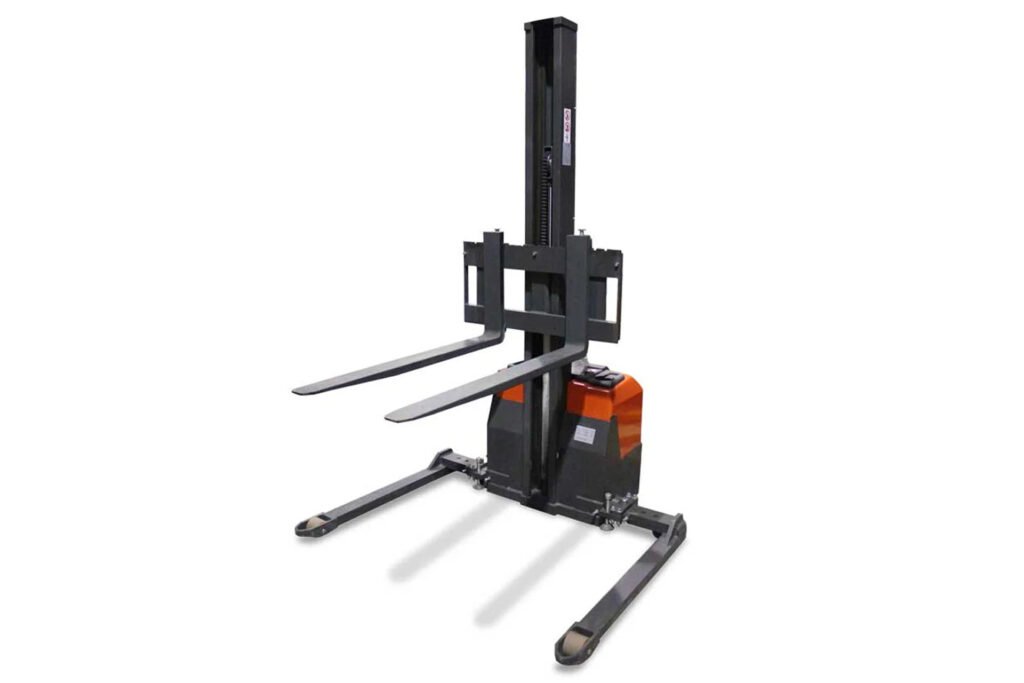
What is a Straddle Stacker
2. Straddle Stacker vs. Standard Stacker: The 'Pallet Problem'
The biggest reason to choose a straddle stacker is pallet compatibility.
Standard Stackers: These can only handle 'Open-Bottom' pallets (also known as Skids). Because the legs are under the forks, if you try to lift a pallet with bottom boards, the legs will crush the wood before the forks can lift the load.
Straddle Stackers: Because the legs go around the outside of the pallet, they can lift both Open-Bottom and Closed-Bottom (GMA/Euro) pallets.
Pro Tip: If your warehouse uses a mix of different pallet styles, a straddle stacker is the safest investment to ensure you can handle every load that comes through your dock.
3. Key Components of a Straddle Stacker
■ Adjustable Outriggers
Most professional models, such as our [Semi-Electric Straddle Stacker], feature adjustable legs. You can widen or narrow the base to match the specific dimensions of your pallets or the width of your warehouse aisles.
■ Adjustable Forks
The forks themselves can usually be slid along a carriage, allowing you to handle everything from narrow crates to wide industrial oversized pallets.
■ Stability Mast
Because the base is wider, straddle stackers offer superior lateral stability. This makes them ideal for lifting heavy loads (up to 1.5 Tons) to higher shelf levels without the 'sway' often felt in narrower machines.
4. Types of Straddle Stackers
Depending on your budget and usage frequency, you can choose from three main types:
Manual Straddle Stacker: Manual push and manual hydraulic foot/hand pump. Best for low-frequency use (1-5 lifts per day).
[Semi-Electric Straddle Stacker]: Manual push with electric powered lifting. This is the most popular ROI choice for small to medium businesses.
Full Electric Straddle Stacker: Motorized drive and motorized lift. Perfect for high-intensity, multi-shift operations.
5. How to Choose the Right Model?
Before purchasing, you must check these three factors:
Internal Leg Width: Ensure the distance between the straddle legs is at least 100mm wider than your widest pallet.
Aisle Width: Because the legs are wider, you will need a slightly larger turning radius (typically 2.2 to 2.5 meters).
Lifting Height: Determine your highest rack level. We offer masts ranging from 1.6m to 3.5m.
6. Conclusion: Is a Straddle Stacker Right for You?
If your facility handles standard Euro pallets, closed-bottom pallets, or if you need a versatile machine that can handle various load sizes, a Straddle Stacker is the best solution. It offers the functionality of a small forklift at a fraction of the price and footprint.
Ready to Optimize Your Lifting?
As a dedicated manufacturer based in Hebei, we specialize in high-performance [Straddle Stacker Systems]. We provide customizable leg widths and lifting heights to fit your specific industrial needs.