Quick Answer
The first forklift-like machines were developed between 1906 and 1920, with the modern forklift emerging in the 1920s after the introduction of forks and hydraulic lifting systems.
- Early lift trucks: around 1906
- First forklifts with forks: 1917–1920
- Modern forklift design: 1920s
When Was the First Forklift Invented
The Origin of the Forklift: Not a Single Invention
The forklift was not invented by one person at a single moment in time. Instead, it evolved gradually as industries searched for more efficient ways to move and store materials.
In the early 20th century, factories and warehouses relied heavily on manual labor. As production increased, especially during industrial expansion, the need for mechanical assistance became clear.
Early Development (1900–1915): The First Lift Trucks
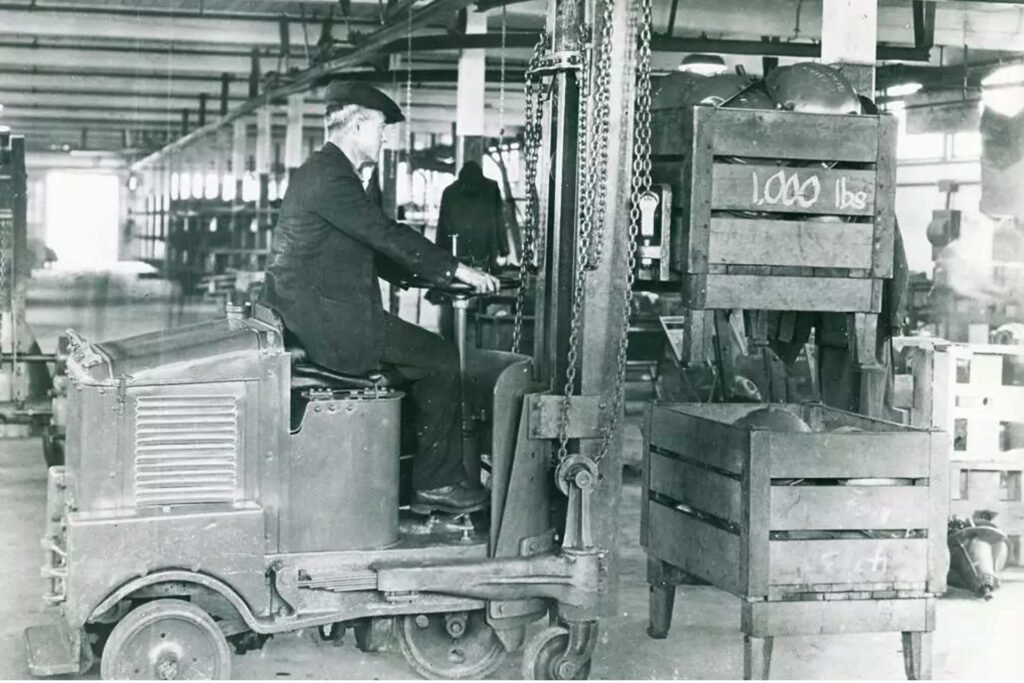
The earliest versions of forklifts were simple machines designed to reduce physical labor. These early lift trucks included:
- Basic lifting platforms
- Battery-powered industrial trucks
- Equipment used for short-distance material movement
At this stage, these machines did not yet have forks. Their primary purpose was to assist workers in lifting and transporting goods more efficiently rather than stacking them.
The Breakthrough: Forks and Hydraulics (1917–1920)
A major turning point came when engineers introduced fork arms and hydraulic lifting systems. This innovation allowed operators to lift, carry, and stack loads more effectively.
Companies such as Clark Equipment Company and Yale & Towne Manufacturing played an important role in developing these early machines.
With the addition of forks, the forklift became recognizable as the machine we know today.
Industrial Demand and Rapid Adoption
The widespread use of forklifts accelerated during World War I and World War II.
During these periods, industries faced:
- Labor shortages
- Increased production demands
- The need for faster and more efficient logistics
Forklifts helped solve these problems by allowing fewer workers to move larger quantities of materials in less time.
One of the most important changes during this period was the shift from horizontal storage to vertical stacking, which significantly improved warehouse efficiency.
The Role of Pallets (1930s–1940s)
Forklifts became far more effective with the introduction and standardization of pallets.
Pallets allowed goods to be:
- Organized into uniform loads
- Moved quickly and safely
- Stacked efficiently in warehouses
Forklifts and pallets developed together, forming the foundation of modern material handling systems.
The Evolution of Modern Forklifts (1950s–Present)
From the mid-20th century onward, forklift technology continued to evolve rapidly.
Key developments included:
- Internal combustion engine forklifts for heavy outdoor use
- Electric forklifts for indoor warehouse operations
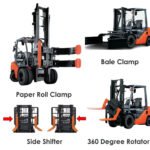
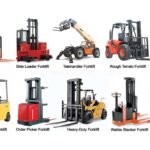
- Specialized equipment such as reach trucks and order pickers
- Narrow aisle designs for high-density storage
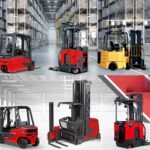
Today, forklifts are available in a wide range of configurations designed for specific applications, from construction sites to advanced logistics centers.
Manufacturers like Maoxiang now produce electric counterbalance forklifts (0.6–5 ton, lithium-powered, CE-certified), which are widely used in modern warehouses and distribution systems.
Why Forklift History Still Matters Today
Understanding the history of forklifts helps explain how modern warehouses and logistics systems are designed.
Warehouse design depends on forklifts
Aisle width, rack height, and storage density are all influenced by forklift capabilities.
Efficiency has always been the goal
From manual labor to automated systems, each stage of forklift evolution has focused on improving speed, safety, and productivity.
Forklifts remain essential
Even with automation and robotics, forklifts continue to play a central role in material handling operations around the world.
Frequently Asked Questions
When was the first forklift invented?
The first forklift-like machines appeared between 1906 and 1920, with modern forklifts emerging in the 1920s.
Who invented the forklift?
There is no single inventor. Early development was led by companies such as Clark Equipment Company.
Why were forklifts invented?
Forklifts were created to reduce manual labor and improve efficiency in moving and stacking materials.
When did forklifts become widely used?
Forklifts became widely adopted during and after World War II due to increased industrial and logistical demands.
Final Takeaway
The forklift was not created in a single moment—it evolved over decades in response to real industrial needs.
From simple lift trucks in the early 1900s to advanced electric models today, the purpose has remained the same:
To move materials faster, safer, and more efficiently.