Lifting a pallet looks like the simplest task a forklift does. It's also where a surprising number of load drops, tip-overs, and damaged goods start — usually from a handful of habits that seem harmless until the load shifts at the wrong moment. This guide covers the technique in more depth than a general operating overview: fork positioning, the test-lift habit professional operators rely on, and the specific judgment calls that separate a clean pick from a near-miss.
This guide focuses specifically on the pallet pick-up technique. For the complete operating sequence — startup, driving, unloading, and parking — see our full guide to operating a forklift.
Quick Answer
- Position the forks level and as wide as the pallet openings allow
- Insert the forks fully under the pallet — not partway
- Raise the pallet 2–4 inches and pause to test stability before moving
- Tilt the mast back slightly to secure the load against the carriage
- Travel with the load low, typically 4–6 inches off the ground
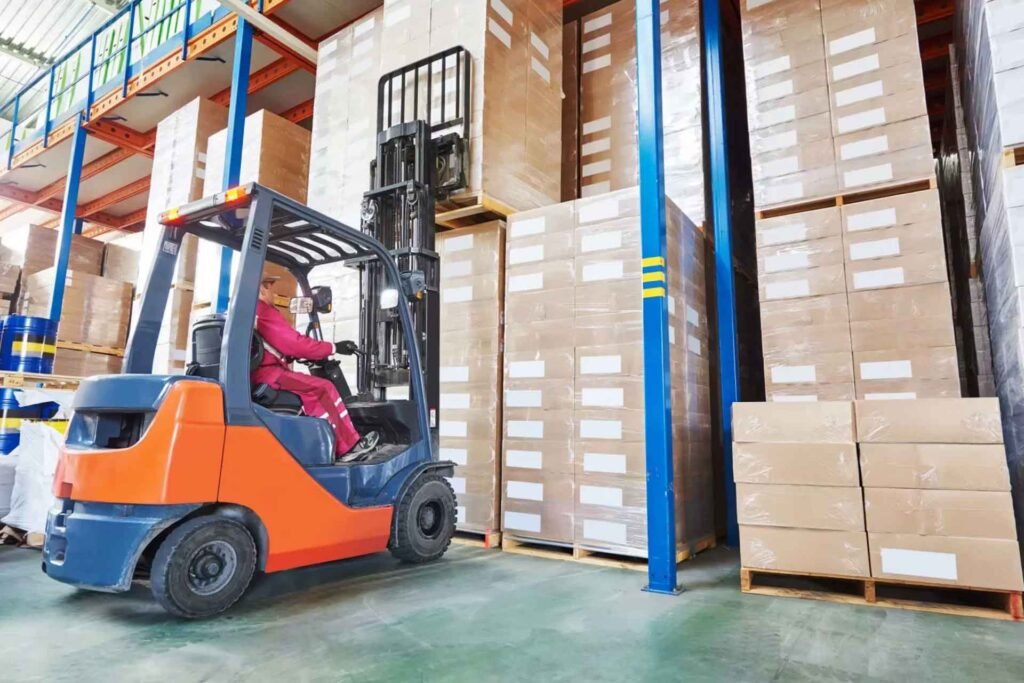
How to Lift a Pallet with a Forklift
Step 1: Position the Forks Correctly
Align the forklift squarely in front of the pallet, forks level — not tilted up or down. Fork width matters more than most new operators realize: set the forks as wide as the pallet's openings allow. A narrow fork spread on a wide pallet concentrates the load's weight over a smaller area, which makes the pallet more prone to tipping sideways off the forks and puts more strain on the pallet's own structure. Wider fork spacing distributes weight more evenly and is simply more stable, provided the forks still line up cleanly with the pallet's openings.
Step 2: Insert the Forks Fully — Not Partway
Drive forward slowly and insert the forks all the way under the pallet, until the pallet rests against the fork carriage or heel. Partial insertion is one of the most common causes of pallet failure in the field: the unsupported overhang concentrates stress on a smaller section of the pallet's deck boards, which can crack or break under weight that a fully-inserted pick would have handled without issue. It also shifts the load's effective center of gravity further from the truck than the nameplate capacity assumes — see our guide to load center for why that distance is the number that actually determines how much you can safely lift, not just the pallet's weight.
Step 3: Perform a Test Lift Before You Commit
This is the step new operators skip most often, and it's the one professional training emphasizes hardest: raise the pallet 2–4 inches off the ground and pause. Check that the load sits level, that nothing is shifting, and that the pallet itself looks sound (no visible cracking under the new weight). This takes three seconds and catches problems — an off-center load, a weak pallet, a miscalculated weight — before they turn into a dropped load in the middle of an aisle instead of six inches above the floor where a failure is far less consequential.
Step 4: Tilt the Mast Back
Once the test lift confirms a stable pick, tilt the mast back slightly. This shifts the load's center of gravity toward the truck and seats the pallet firmly against the carriage backrest, which is what actually keeps the load from sliding forward during travel and braking — not the forks alone.
Step 5: Travel at the Correct Height
Raise the load only as high as needed for ground clearance during travel — typically 4–6 inches, not higher. Every inch of additional height raises the combined center of gravity of the truck and load, which is exactly what makes cornering, sudden stops, and uneven floor sections more likely to end in a tip-over. Save full lift height for the moment you're actually placing the load, not for the travel in between.
Common Mistakes That Cause Load Drops and Tip-Overs
Forks not fully inserted. Covered above — this is the single most common cause of pallet breakage and load slippage, and it's entirely avoidable with one extra second of forward travel before lifting.
Skipping the test lift. Operators under time pressure often go straight from insertion to full lift and travel. The three seconds a test lift costs are cheaper than any of the outcomes it prevents.
Traveling with the load raised too high. Whether from habit or trying to see over a tall load, elevated travel is one of the most preventable contributors to tip-overs — see our forklift safety rules for the full list of habits that matter most.
Uneven load distribution. A pallet loaded off-center will lean or drop to one side the moment it's lifted, and no amount of careful driving afterward compensates for a bad pick. If a test lift reveals this, lower the pallet and reposition rather than trying to travel with it as-is.
Skipping the tilt-back. Without it, the load's weight sits further forward than it needs to, reducing the stability margin the mast tilt is specifically designed to provide.
Why This Matters More Than It Looks
Pallet handling is the single most repeated task on a forklift shift — which is exactly why small technique errors compound into a meaningful share of forklift incidents over time. None of the steps above are complicated. The habit that actually prevents problems is doing all five, every time, rather than skipping the ones that feel unnecessary when nothing has gone wrong yet.
Where This Fits Into a Complete Warehouse Setup
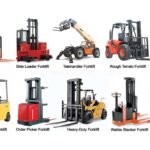
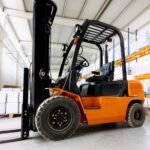
Pallet handling like this is typically done with a counterbalance forklift, while reach trucks handle high-level storage and order pickers handle item-level picking — each equipment type suited to a different part of the workflow. At Hebei Maoxiang, our electric counterbalance forklifts (0.6–5 ton, lithium-powered, CE-certified) are built for exactly this kind of daily pallet handling — tell us your typical pallet weight and dimensions and we can confirm the right capacity and fork configuration for your operation.