In the rapidly evolving industrial landscape of Africa, material handling equipment like forklifts plays a crucial role in boosting productivity across sectors such as logistics, manufacturing, agriculture, and construction. However, buying forklifts for Africa involves unique considerations that differ significantly from other global markets. Factors such as voltage compatibility, fuel type, and robust after-sales support are pivotal to ensuring operational efficiency and cost-effectiveness. This article delves into these critical aspects, helping businesses make informed decisions when purchasing forklifts tailored for African environments.
Buying Forklifts for Africa
Understanding the Importance of Voltage Compatibility in Africa
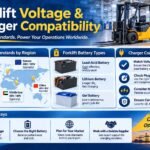
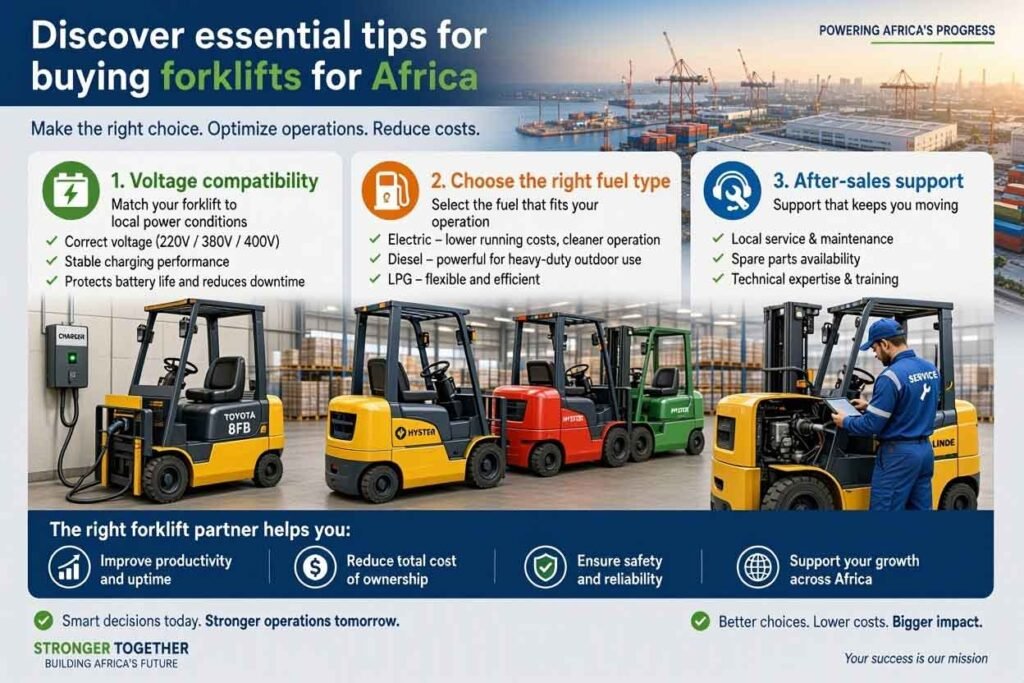
One of the first technical considerations when buying forklifts for Africa is ensuring the equipment’s electrical system matches local voltage standards. Africa’s electrical infrastructure varies widely, with common supply voltages ranging from 220V single-phase in residential and small industrial settings to 380V or 415V three-phase in larger industrial zones.
Key Voltage Considerations:
- Voltage Supply: Most industrial sites in Africa, especially in urban and industrial hubs like Abidjan, Johannesburg, and Lagos, operate on 380V or 415V three-phase power. Forklifts equipped with chargers compatible with these voltages ensure efficient and safe battery charging.
- Single-Phase vs. Three-Phase Chargers: Smaller electric forklifts may support 220V single-phase charging, which is common in less industrialized or remote areas. However, larger or heavy-duty forklifts generally require three-phase power for faster and more reliable charging.
- Infrastructure Stability: Power supply in many African regions can be unstable due to frequent outages or voltage fluctuations. Investing in forklifts with robust electrical components and integrating backup solutions like generators or solar power systems can mitigate downtime.
Insight from Abidjan’s Market: According to recent data from BYD Forklift’s experience in Abidjan, most industrial clients use 380V three-phase chargers, but smaller capacity forklifts can operate on 220V single-phase. They recommend planning for dedicated power circuits with appropriate breakers and backup to handle tropical weather and power instability.
Choosing the Right Fuel Type: Electric vs. Diesel Forklifts for African Conditions
Fuel choice is a fundamental decision that impacts operational costs, environmental compliance, and suitability for specific applications.
Diesel Forklifts
- Advantages: Diesel forklifts are traditionally favored for outdoor, rough-terrain, and heavy-duty applications due to their high torque, endurance, and ability to operate in remote areas without electrical infrastructure.
- Challenges: Diesel fuel costs in Africa can be volatile and expensive. Additionally, diesel engines emit pollutants such as CO₂, NOx, and particulates, which can be problematic in enclosed or sensitive environments like cold storage or food processing plants.
- Maintenance: Diesel forklifts require regular engine maintenance, including oil changes, filter replacements, and injector servicing, adding to operational costs.
Electric Forklifts
- Advantages: Electric forklifts, especially those powered by lithium-ion batteries, offer zero local emissions, lower noise levels, and reduced maintenance needs. They are ideal for indoor environments and increasingly for outdoor use where terrain is manageable.
- Battery Technology: Lithium-ion batteries have revolutionized forklift operations in Africa by offering faster charging (1.5 to 2 hours), longer lifespans (8 to 10 years), and no need for water refilling, unlike traditional lead-acid batteries.
- Operational Cost Savings: Electric forklifts can reduce energy costs by up to 70% compared to diesel, with fewer mechanical parts resulting in lower maintenance expenses.
Market Trends in Africa
- In port cities like Abidjan and Durban, electric all-terrain forklifts are gaining traction due to environmental regulations and cost-saving incentives.
- Diesel remains dominant in mining, construction, and agriculture sectors where rugged terrain and lack of charging infrastructure persist.
After-Sales Support: The Backbone of Forklift Longevity in Africa
Purchasing a forklift is a significant capital investment, and reliable after-sales support is essential for minimizing downtime and maximizing return on investment.
Critical Components of After-Sales Support:
- Local Dealer Network: Proximity to authorized dealers ensures quick access to spare parts, technical expertise, and maintenance services. For example, Jungheinrich and Toyota have extensive dealer networks across South Africa, providing comprehensive service coverage.
- Warranty and Service Contracts: Buyers should prioritize forklifts with clear warranty terms covering both chassis and batteries. Long-term service contracts with preventive maintenance visits can extend equipment life and maintain performance.
- Operator Training: Proper training reduces accident rates and equipment misuse. In South Africa, operators must hold TETA-accredited certifications specific to forklift categories, ensuring safety and compliance.
- Spare Parts Availability: Forklifts using widely available components or supported by large OEMs minimize lead times for critical repairs.
- Technical Support and Upgrades: Access to technical support for software updates, battery management system (BMS) checks, and retrofit options enhances fleet efficiency.
Real-World Example:
BYD Forklift’s experience in West Africa highlights that clients benefit from suppliers who provide on-site commissioning, operator training, and quarterly maintenance visits. This comprehensive support model is crucial in tropical climates where dust, humidity, and rough terrain accelerate wear and tear.
Practical Tips for Buying Forklifts for Africa
When sourcing forklifts suitable for African conditions, consider the following checklist:
- Assess Operational Environment: Determine if forklifts will be used indoors, outdoors, or both. Rough terrain requires forklifts with pneumatic tires and higher ground clearance.
- Confirm Voltage and Charging Infrastructure: Verify site voltage compatibility and plan for stable power supply or backup systems.
- Choose Battery Technology Wisely: Opt for lithium-ion batteries for long-term cost savings and operational flexibility, especially in tropical climates.
- Evaluate Fuel Availability and Costs: Factor in local fuel prices and availability. Electric forklifts reduce dependence on diesel but require stable electricity.
- Check After-Sales Service: Select suppliers with proven local support, spare parts availability, and training programs.
- Consider Total Cost of Ownership (TCO): Look beyond purchase price to include energy, maintenance, operator training, and downtime costs.
- Inspect Used Forklifts Carefully: If buying second-hand, ensure full service history, battery health reports, and compliance with safety standards.
Conclusion
Buying forklifts for Africa demands a tailored approach that balances voltage compatibility, fuel type suitability, and robust after-sales support. With the rise of lithium-ion electric forklifts, African industries can now benefit from cleaner, quieter, and more cost-effective material handling solutions, especially in urban and industrial hubs. However, diesel forklifts remain indispensable in rugged, off-grid applications.
By understanding these critical factors and partnering with reputable suppliers who offer comprehensive service and training, businesses can enhance their operational efficiency and future-proof their forklift fleets.