The One-Sentence Difference
| Forklift | Telehandler | |
|---|---|---|
| What it does | Lifts vertically, carries load in front | Extends forward and up like a crane on wheels |
| Best surface | Smooth concrete | Dirt, gravel, mud, rough terrain |
| Max lift height (typical) | 3–6 m (counterbalance) | 7–18 m (telescopic boom) |
| Forward reach | 0 (load stays at mast face) | Up to 12 m forward |
| Attachments | Forks only (side-shifter, clamps) | Forks, bucket, hook, platform, crane jib |
| Typical weight | 3–8 ton | 6–15 ton |
| Price range (new) | $4,000–$50,000 | $30,000–$120,000 |
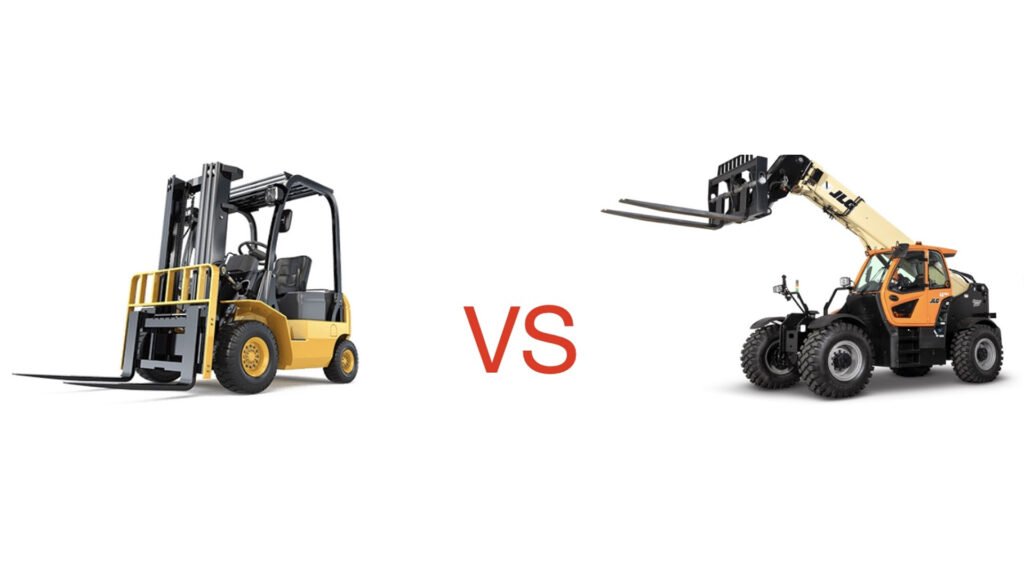
Forklift vs Telehandler
What Each Is Designed For
Forklift
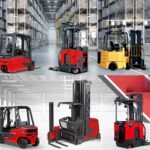
The forklift is a lever. The counterweight in the back balances the load in the front. It lifts vertically, carries the load close to the mast, and puts it down exactly where the mast can reach.
Best for:
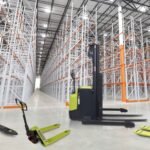
- Pallet handling in warehouses
- Loading and unloading trucks at dock height
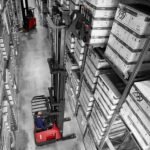
- Rack storage at 3–6 m height
- Smooth concrete or paved surfaces
- Operations where the load goes straight in and straight out
Cannot do:
- Reach over a truck bed or wall
- Place a load on a rooftop or second floor
- Drive across a muddy construction site
- Extend forward past the mast face
Telehandler
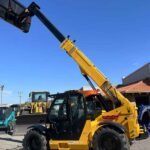
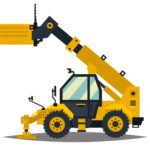
The telehandler is a telescopic boom on a wheeled chassis. It extends forward and lifts upward at the same time. The load is carried on the end of the boom, not on a mast directly in front of the chassis.
Best for:
- Construction sites (delivering materials to upper floors)
- Agriculture (hay bales, feed, grain)
- Loading and unloading flatbed trucks
- Placing loads over obstacles
- Sites without dock levelers or loading ramps
- Ground that is not smooth or paved
Cannot do:
- Work in aisles under 3 m wide (too long, too wide)
- Handle pallets in standard racking efficiently (boom is too long)
- Operate indoors with low ceiling clearance (boom needs space)
- Compete with a forklift on cost per pallet moved
Side-by-Side: Same Job, Different Machines
Loading a Flatbed Truck
| Forklift | Telehandler | |
|---|---|---|
| Approach | Drives straight to truck, lifts pallet to bed height | Extends boom from side or rear, reaches onto bed |
| Need for dock | Yes (or ramp) | No |
| Aisle space needed | 8–12 m for approach | 6–8 m for boom extension |
| Time per pallet | 30–45 seconds | 45–90 seconds |
| Risk | Truck tilts if dock plate shifts | Load swings if boom extends too far |
Winner for truck loading: Forklift, if you have a dock. Telehandler, if you don't.
Placing Materials on a Second-Story Roof
| Forklift | Telehandler | |
|---|---|---|
| Can it do it? | No (max lift too low, no forward reach) | Yes (10–18 m reach, forward extension) |
| Reach over edge | No | Boom extends past wall edge |
| Lift height needed | N/A | 8–15 m |
Winner: Telehandler only. A forklift cannot do this job.
Moving Pallets in a Warehouse
| Forklift | Telehandler | |
|---|---|---|
| Aisle width needed | 2.8–4 m | 4–6 m |
| Lift height | 3–6 m | 7–18 m (overkill) |
| Cost per pallet moved | $0.10–$0.30 | $0.30–$0.80 |
| Maneuverability | High | Low (long wheelbase) |
Winner: Forklift. A telehandler in a warehouse is like driving a semi truck in a parking garage. It fits, but why would you?
What the Operators Say
Forklift operator: 'I can put a pallet in the top rack blindfolded. The truck turns on a dime. I'm in and out of the aisle in 20 seconds.'
Telehandler operator: 'I can put a pallet on a roof 12 meters up while standing on dirt and gravel. The boom wobbles a bit at full extension, but it beats trying to get a crane on site.'
Warehouse manager running both: 'We use the forklift for everything inside. The telehandler lives outside for loading flatbeds without dock space and moving heavy stuff across the yard. They don't compete. They complement.'
The Cost Comparison
| Cost Item | 2-Ton Forklift | 5-Ton Telehandler |
|---|---|---|
| Purchase price (new) | $6,000–$8,000 | $45,000–$65,000 |
| Annual maintenance | $1,200–$2,000 | $3,000–$6,000 |
| Tires (annual equivalent) | $300–$500 | $1,500–$3,000 |
| Fuel (diesel, per year) | $2,500–$4,000 | $5,000–$8,000 |
| Operator training | Low (basic) | Moderate (boom operation) |
| 3-year total cost of ownership | $18,000–$28,000 | $75,000–$125,000 |
A telehandler costs 3–4× more to buy and run than a forklift of comparable load capacity. If your job can be done by a forklift, do not buy a telehandler. If your job cannot be done by a forklift, the telehandler pays for itself in one project that would otherwise require a crane.
Which One for Your Job?
| If you... | Buy this |
|---|---|
| Work indoors on smooth concrete | Forklift |
| Stack pallets in racks up to 6 m | Forklift |
| Load and unload trucks at a dock | Forklift |
| Move materials on a construction site | Telehandler |
| Need to place loads on a roof or upper floor | Telehandler |
| Work on dirt, gravel, or mud | Telehandler |
| Handle hay bales, feed, or farm materials | Telehandler |
| Load flatbeds without a loading dock | Telehandler |
| Do mostly warehouse work + occasional outdoor | Forklift (buy a rough terrain model if needed) |
| Do mostly construction + occasional warehouse | Telehandler (buy a compact model) |
Can One Machine Do Both?
Some operations try to run a single machine for everything. It usually doesn't work well:
Forklift on a construction site: Gets stuck in mud. Can't reach the second floor. Tires are wrong for gravel. Operator spends half the shift managing traction issues, not moving materials.
Telehandler in a warehouse: Too wide for aisles. Boom is unnecessary for pallet racking. Operator has limited visibility when the boom is down. Slower cycle time than a forklift.
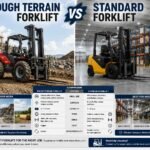
The only scenario where one machine works for both is a small warehouse with seasonal outdoor work — like a lumber yard that stores material under a roof but loads delivery trucks in an unpaved lot. In that case, buy a rough terrain forklift (3–5 ton, pneumatic tires, 4×2 or 4×4) instead of either a standard forklift or a telehandler.
The Bottom Line
A forklift is a warehouse tool. A telehandler is a construction tool. They do not compete for the same job. The question is not 'which is better.' The question is 'what does your site look like.'
- Smooth concrete + pallets at dock height → Forklift. $6,000–$8,000.
- Dirt + gravel + roof-level delivery → Telehandler. $45,000–$120,000.
- Mixed indoor/outdoor, unpaved → Rough terrain forklift. $12,000–$25,000.
- Both, with enough volume → Buy one of each.
We sell all three. Factory-direct pricing. If you send us your site conditions and typical loads, we'll tell you which one fits — and if the answer is 'telehandler,' we'll spec the boom length you actually need, not the one that looks most impressive on paper.
Hebei Maoxiang Technology Co., Ltd.
- Web: forkliftlift.com
- Electric & diesel forklifts | Rough terrain forklifts | Telehandlers | Reach trucks | Pallet jacks
- FOB Tianjin | CE certified | 20–35 day lead