In today’s fast-paced logistics and shipping industries, efficient container handling is crucial for maintaining smooth operations. Container forklifts play a pivotal role in this process, providing the power and precision needed to move heavy ISO containers safely and quickly. Whether you operate a busy port, a container yard, or a warehouse, understanding the capabilities and types of container forklifts is essential for optimizing productivity and safety.
This comprehensive guide dives deep into container forklifts, highlighting their features, applications, and how to select the perfect model for your specific requirements. Leveraging insights from top industry sources, we’ll explore everything from diesel-powered 5 to 10-ton models to advanced reach stackers and specialized equipment for rough terrain.
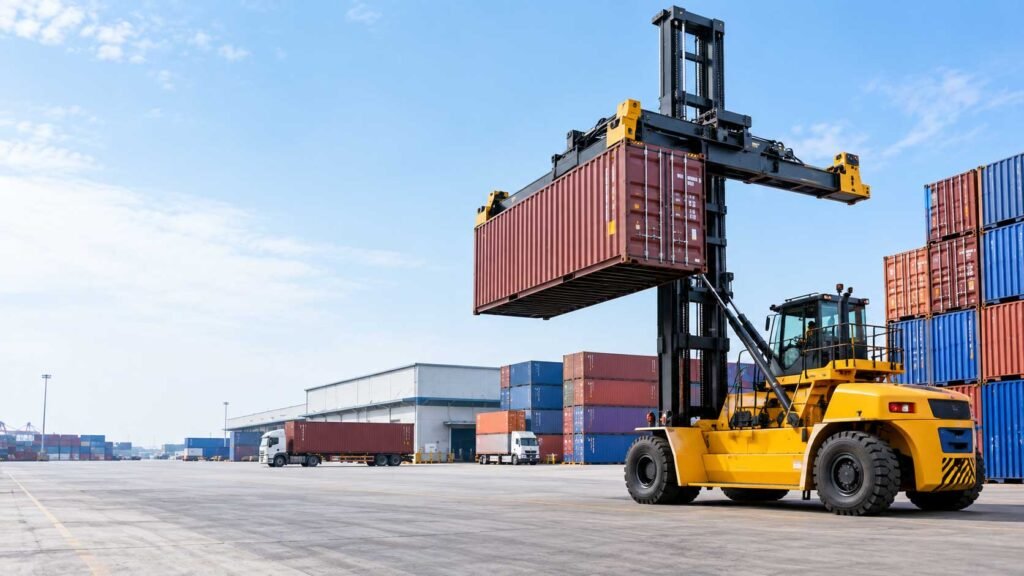
container forklift
What is a Container Forklift?
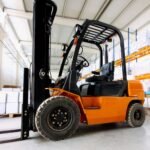
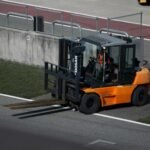
A container forklift is a heavy-duty material handling vehicle designed explicitly for transporting and stacking shipping containers. Unlike standard forklifts, container forklifts are engineered to manage the unique demands of container handling, including lifting massive loads, navigating rugged terrain, and fitting precisely with ISO container corner castings.
Commonly powered by diesel engines, container forklifts offer robust torque and endurance, making them ideal for continuous multi-shift operations in ports, container yards, and industrial warehouses.
Key Types of Container Forklifts
Understanding the different types of container forklifts helps operators select the right machine for their operational environment:
1. Diesel Container Forklifts (5 to 10 Ton Models)
- Popular for their balance of power and maneuverability.
- Ideal for medium-duty operations such as port yards and manufacturing plants.
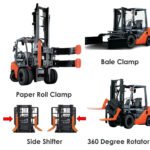
- Equipped with bale clamps for handling cylindrical loads like paper rolls and scrap metal.
- Offer high torque for continuous operation with pneumatic or cushion tires for varied surfaces.
2. Reach Stackers
- Feature telescoping booms capable of lifting containers up to six tiers high.
- Perfect for congested yards due to their compact footprint and 360° maneuverability.
- Equipped with rotating spreaders for handling both 20ft and 40ft containers.
- Provide rapid cycle times (~45 seconds) to maintain operational flow.
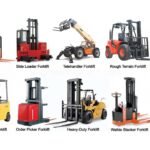
3. Side Loader Forklifts
- Designed for lateral container loading and unloading in narrow aisles.
- Offer precise pocket alignment (<5 mm accuracy) critical for container corner castings.
- Suitable for rail terminal operations and tight spaces inaccessible to conventional forklifts.
4. Class VI and VII Forklifts
- Class VI forklifts operate on paved surfaces with electric or combustion engines.
- Class VII forklifts are rough-terrain models with large pneumatic tires, reinforced frames, and 4WD systems.
- Essential for intermodal terminals with uneven ground, gravel, or mud.
Essential Features of Container Forklifts
When choosing a container forklift, consider these critical features that impact performance and safety:
- Load Capacity: Ranges from 5 tons for small operations to over 45 tons for heavy-duty reach stackers.
- Engine Power: Diesel engines typically range from 80 hp to over 300 hp, providing the torque needed for lifting heavy containers.
- Lift Height: Some models lift containers up to 18 meters (6 tiers), essential for high stacking in ports.
- Cabin Design: Ergonomic cabins with excellent visibility, climate control, and advanced controls boost operator comfort and productivity.
- Hydraulic Systems: Load-sensing hydraulics adjust lifting power based on the load, reducing fuel consumption and wear.
- Safety Systems: Features like near-guard RFID warning systems, tire pressure monitors, and fire suppression systems enhance operational safety.
- Fork Specifications: Fork width tolerance (approx. 110 mm) and spacing (1.2 m center-to-center) must align precisely with ISO container pockets to prevent damage.
Applications of Container Forklifts
Container forklifts are indispensable across various industries:
- Ports and Container Yards: Moving empty and loaded containers efficiently between ships, trucks, and storage.
- Warehousing and Distribution Centers: Loading/unloading trucks, stacking containers, and managing inventory.
- Manufacturing Facilities: Handling raw materials and finished goods, including bulky or irregular loads with bale clamps.
- Recycling and Paper Industries: Transporting bales, scrap metal, and paper rolls securely without pallets.
Choosing the Right Container Forklift: Factors to Consider
Selecting the ideal container forklift involves evaluating operational needs and environment:
| Factor | Considerations |
|---|---|
| Load Capacity | Match forklift rating with container weight plus 25% safety buffer (e.g., 45 tons for a 35-ton container). |
| Terrain Type | Use Class VII forklifts for rough terrain; Class VI for paved areas. |
| Lift Height | Determine stacking requirements (up to 8 tiers or more). |
| Power Source | Diesel for outdoor and heavy-duty use; electric for indoor or low-emission zones. |
| Attachments | Bale clamps for cylindrical loads; side loaders for narrow aisles. |
| Operator Comfort | Ergonomic cab design, climate control, and visibility. |
| Maintenance and Service | Opt for models with extended service intervals and accessible parts support. |
Maintenance Tips for Container Forklifts
Maximize uptime and safety with regular maintenance:
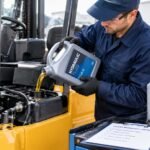
- Daily Checks: Inspect fluid levels (engine oil, hydraulic fluid, coolant), tire condition, and hydraulic systems.
- Safety Features: Test seat belts, alarms, lights, and brakes before each shift.
- Hydraulic System: Check for leaks and ensure bale clamp or spreader attachments operate smoothly.
- Engine and Transmission: Follow manufacturer-recommended service intervals; use genuine parts for replacements.
Industry Insights and Market Trends
- The latest container forklifts offer hybrid diesel-electric powertrains, reducing emissions while maintaining power.
- Advanced electronics like EMC Master systems provide real-time monitoring, eco-driving feedback, and remote diagnostics.
- Reach stackers dominate port operations due to their multi-tier stacking and compact maneuverability.
- Demand for high-capacity forklifts (up to 45 tons) is growing with expanding container traffic worldwide.
- OEMs like Konecranes and Hangcha lead with innovations in safety, fuel efficiency, and operator ergonomics.
Conclusion
Container forklifts are the backbone of modern container handling operations, combining strength, precision, and versatility to meet the demanding needs of ports, warehouses, and industrial sites. By understanding the various types—from diesel-powered 5 to 10-ton models to high-capacity reach stackers—and focusing on key features like load capacity, engine power, and safety systems, you can select the perfect forklift to enhance your operational efficiency.
Investing in the right container forklift not only boosts productivity but also ensures safety and long-term cost savings. Stay ahead in the logistics game by choosing a container forklift tailored to your unique needs and backed by reliable service and maintenance support.