Electric forklifts have become indispensable in warehouses, manufacturing plants, and logistics operations worldwide. Their efficiency, eco-friendliness, and ease of use make them a preferred choice for material handling. However, like any machinery, electric forklifts are susceptible to various problems that can disrupt workflow and increase maintenance costs. Understanding common electric forklift problems and troubleshooting techniques is crucial for operators and maintenance personnel to minimize downtime and keep operations running smoothly.
In this guide, we will explore the most frequent issues encountered with electric forklifts, practical troubleshooting tips, and when to seek professional help. Whether you’re a new operator or an experienced technician, this article will equip you with essential knowledge to address common faults effectively.
Common Electric Forklift Problems and Troubleshooting
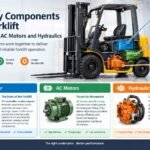
Introduction to Electric Forklift Components
Before diving into common problems and troubleshooting, it’s important to understand the basic anatomy of an electric forklift. The main components include:
- Battery System: Usually lead-acid or lithium-ion, it powers the forklift.
- Electric Motor: Drives the forklift’s movement and lifting functions.
- Controller: Manages power distribution and controls motor speed.
- Hydraulic System: Operates the lifting and tilting mechanisms.
- Steering and Braking Systems: Ensure safe maneuverability and stopping.
Knowing these parts helps pinpoint where issues may originate during troubleshooting.
Common Electric Forklift Problems
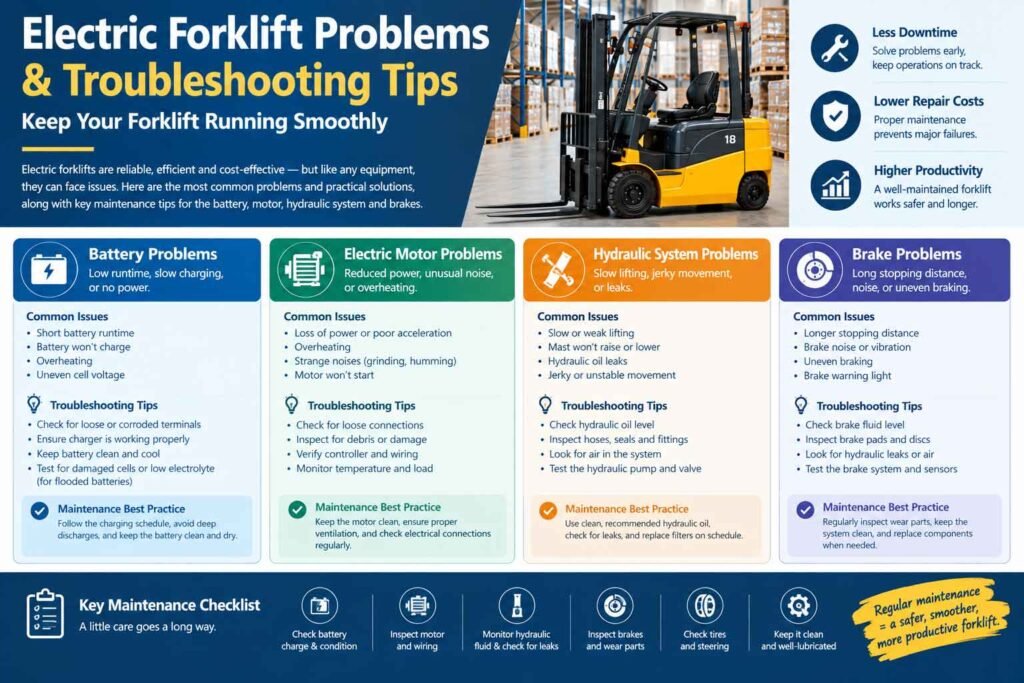
1. Battery Issues
The battery is the heart of an electric forklift, and battery problems are the most common cause of downtime.
- Low Battery Charge: Operators often neglect to check battery levels regularly, leading to unexpected shutdowns. Regular monitoring and timely charging are essential.
- Battery Unable to Charge: Faulty chargers, poor connections, or damaged charging ports can prevent the battery from charging properly.
- Battery Leakage: Signs of acid leaks or swelling indicate battery damage and necessitate immediate replacement.
- Lead-Acid Battery Depletion: Extended periods without charging can cause sulfation, reducing battery life.
- Lithium Battery Protection Activation: The Battery Management System (BMS) may enter a protection mode if cell voltages drop below safe thresholds, requiring careful reactivation.
2. Motor and Controller Failures
Electric motors and controllers are critical for forklift operation but can encounter faults such as:
- Motor Overheating: Continuous operation beyond rated capacity or insufficient cooling can trigger thermal shutdowns.
- Unusual Noises: Worn bearings or foreign objects inside the motor can cause abnormal sounds.
- Controller Error Codes: Codes like E05 (overcurrent) or E09 (communication fault) often indicate wiring issues or moisture ingress.
- Power Interruptions: Loose connections or damaged wiring harnesses can disrupt power flow.
3. Hydraulic System Problems
The hydraulic system controls lifting and tilting, and issues here can severely impact forklift functionality.
- Weak Lifting Power: Often caused by contaminated hydraulic oil or low fluid levels.
- Oil Leaks: Aging seals, cracked hoses, or damaged cylinders lead to leaks that reduce system efficiency.
- Air in Hydraulic Lines: Causes jerky or slow lift movements; bleeding the system is necessary.
- Mast Abnormal Noise: Lack of lubrication on chains or rollers can produce grinding sounds.
4. Steering and Braking Malfunctions
Safety-critical systems like steering and brakes must be regularly inspected.
- Heavy Steering: May result from low hydraulic fluid or motor phase loss.
- Brake Failure: Worn brake pads or insufficient brake fluid can compromise stopping power.
- Regenerative Brake Issues: Reduced energy recovery efficiency affects overall performance.
Troubleshooting Tips for Electric Forklifts
Battery Troubleshooting
- Check Charge Levels: Use a voltmeter or onboard display to monitor battery voltage.
- Inspect Charger and Connections: Ensure the charger is compatible and connections are secure.
- Maintain Electrolyte Levels: For lead-acid batteries, regularly check and refill distilled water.
- Clean Terminals: Corrosion can impede electrical flow; clean with baking soda solution while wearing protective gear.
- Reactivating Lithium Batteries: Use a low-voltage DC power supply to carefully recharge cells below BMS thresholds.
Motor and Controller Diagnostics
- Monitor Temperature: Avoid prolonged overload to prevent overheating.
- Listen for Noises: Identify bearing wear or foreign objects early.
- Check Error Codes: Consult the manufacturer’s manual for specific controller codes.
- Inspect Wiring: Look for damaged insulation, loose connectors, or moisture.
Hydraulic System Checks
- Fluid Level and Quality: Check hydraulic oil level and clarity; replace if contaminated.
- Leak Inspection: Visually inspect hoses, seals, and cylinders for damage.
- Bleed Air: Release trapped air from cylinders to restore smooth operation.
- Lubricate Moving Parts: Regular greasing of chains and rollers reduces wear.
Steering and Brake Troubleshooting
- Hydraulic Fluid: Maintain correct fluid levels for power steering.
- Brake Pads and Fluid: Replace worn pads and top up brake fluid as needed.
- Test Regenerative Braking: Monitor system alerts and performance drops.
Preventive Maintenance Best Practices
Preventive maintenance is the best way to avoid costly repairs and downtime.
- Daily Inspections: Operators should perform a 15-point checklist covering battery, hydraulics, brakes, and steering.
- Battery Care: Charge fully after each shift, check electrolyte weekly, and clean terminals monthly.
- Hydraulic System Service: Replace filters every 500 hours and change oil as recommended.
- Lubrication Schedule: Grease mast chains, rollers, and pivot points regularly.
- Tire and Suspension Checks: Inspect for wear and proper inflation.
- Documentation: Record all inspections and repairs to track forklift health.
When to Call a Professional Technician
While operators can handle many basic troubleshooting tasks, some issues require expert attention:
- Complex Electrical Faults: Controller or BMS replacements.
- Severe Hydraulic Leaks: Cylinder or hose replacements.
- Battery Pack Repairs: Especially with lithium-ion systems.
- Structural Damage: Mast or frame issues.
- Persistent Starting Problems: Motor or starter failures.
Attempting advanced repairs without proper training can cause further damage or safety risks. Always prioritize safety and consult professionals when in doubt.
Conclusion
Understanding common electric forklift problems and troubleshooting techniques empowers operators to maintain productivity and safety in their workplaces. From battery care to hydraulic system maintenance, regular inspections and timely interventions can prevent most issues. However, recognizing when to call a professional technician is equally important to avoid costly mistakes.
Equip yourself and your team with these insights to extend your forklift’s lifespan and reduce downtime. For more detailed guidance, always refer to your forklift manufacturer’s manuals and safety instructions.
Ready to keep your electric forklift running at peak performance? Share this guide with your team and start implementing these troubleshooting tips today!