Forklifts are indispensable in warehouses, construction sites, and manufacturing plants, relying heavily on their hydraulic systems to lift, tilt, and maneuver heavy loads efficiently. However, like any complex machinery, forklift hydraulic systems are prone to problems that can disrupt operations, compromise safety, and lead to costly repairs if not addressed promptly.
In this guide, we will explore forklift hydraulic system problems and fixes, drawing insights from industry experts and top resources. Whether you’re a forklift operator, maintenance technician, or fleet manager, understanding these issues will empower you to troubleshoot effectively, perform routine maintenance, and know when professional intervention is necessary.
Forklift Hydraulic System Problems and FixForklift Hydraulic System Problems and Fixeses
Understanding the Forklift Hydraulic System
Before diving into common problems, it’s crucial to grasp the basics of a forklift hydraulic system. This system converts engine or motor power into hydraulic energy, enabling the forklift to lift and tilt loads. Key components include:
- Hydraulic pump (gear or piston type)
- Fluid reservoir
- Control valves (directional, pressure relief, flow control)
- Hydraulic cylinders (lift and tilt cylinders)
- Hoses, tubes, and fittings
- Filters and contamination control devices
Operating at pressures between 2,000 and 3,500 psi, the hydraulic system is a closed loop that demands clean, sufficient fluid and well-maintained components for optimal performance.
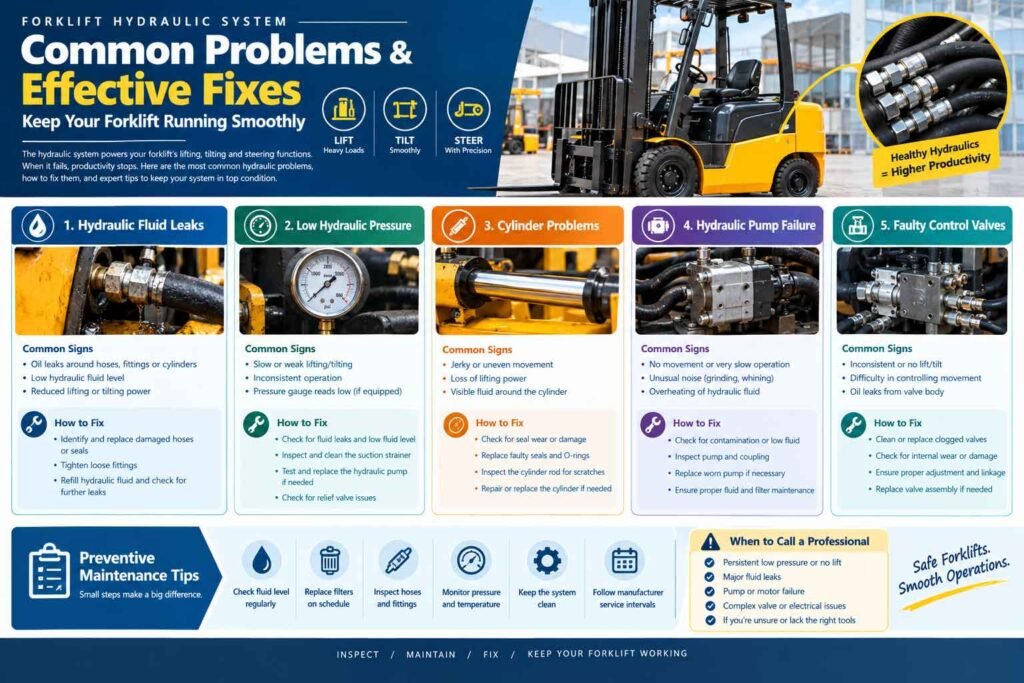
Common Forklift Hydraulic System Problems and How to Fix Them
1. Mast Drifting Down (Load Drifts Downwards)
Symptom: Forks slowly lower even when the control lever is in neutral.
Likely Causes:
- Low hydraulic fluid level
- Worn or damaged cylinder seals
- Internal leakage in control valves
- Contaminated hydraulic fluid damaging seals
Fixes:
- Check and top up hydraulic fluid levels with manufacturer-recommended fluid. Always check fluid with the mast fully lowered and tilted back to avoid overflow.
- Inspect for external leaks and replace worn seals or damaged cylinders. Internal seal replacements require professional tools and expertise.
- Flush and replace contaminated fluid to prevent seal damage.
- If the drift exceeds 1 inch per minute, consult a hydraulic specialist immediately to avoid safety hazards.
2. Jerky or Erratic Lifting Movement
Symptom: Mast moves unevenly or “jitters” during lifting or lowering.
Likely Causes:
- Low hydraulic fluid or air trapped in the system
- Contaminated or milky hydraulic fluid (water ingress)
- Worn hydraulic pump or clogged suction strainer
- Valve spool sticking due to contamination or varnish buildup
Fixes:
- Check hydraulic fluid level and condition. Cycle the mast several times to purge air if fluid is low.
- Replace hydraulic fluid and filters if contamination is detected.
- Inspect and clean control valves or replace if spools are stuck.
- Replace worn pumps as needed, as continuing operation with a failing pump can cause expensive damage.
3. Forklift Won’t Lift Rated Load
Symptom: Engine revs, but the forklift struggles to lift the load.
Likely Causes:
- Overloading or improper load distribution
- Low hydraulic fluid
- Worn hydraulic pump or relief valve stuck open
- Clogged hydraulic filters restricting flow
Fixes:
- Verify load weight and center of gravity. Avoid exceeding forklift capacity.
- Check and top off hydraulic fluid.
- Replace clogged filters promptly.
- Have a professional inspect and repair worn pumps or valves.
Note: Operating with a failing pump risks metal debris contaminating the system, leading to costly repairs.
4. External Hydraulic Fluid Leaks
Symptom: Oil puddles under the forklift or wet spots on components.
Likely Causes:
- Loose hose fittings or damaged hoses
- Worn cylinder rod or piston seals
- Cracked components or faulty gaskets
- Over-torqued or loose fittings
Fixes:
- Tighten loose fittings carefully without over-torquing.
- Replace damaged hoses and seals rather than patching.
- Inspect rods for scoring or corrosion; even minor damage can cause seal failure.
- Schedule professional repair for cylinder seal replacements or cracked components.
5. Overheating Hydraulic System
Symptom: Hydraulic fluid temperature exceeds normal range (above 180°F/82°C), causing sluggish operation or burning smells.
Likely Causes:
- Internal leakage causing frictional heat
- Relief valve stuck open, continuously bypassing fluid
- Restricted flow due to clogged filters or collapsed suction hoses
- Inadequate reservoir ventilation or cooling system failure
Fixes:
- Clean or replace clogged filters and ensure reservoir ventilation.
- Inspect and adjust relief valves to proper settings.
- Replace damaged hoses restricting flow.
- Consider installing temperature monitoring for high-duty forklifts.
- Use manufacturer-recommended hydraulic fluids with appropriate viscosity and oxidation stability.
6. Uncontrolled Load Descent (Load Drifting)
Symptom: Load descends unexpectedly, posing safety risks.
Likely Causes:
- Failed load-holding valves (counterbalance or pilot-operated check valves)
- Internal cylinder leakage (piston seal failure)
- Directional valve leakage in neutral position
Fixes:
- Perform drift test by raising a rated load and timing descent.
- Replace faulty seals or valves as needed.
- Avoid compensating by adjusting relief valves—this masks the problem and stresses the system.
- Engage professional service for seal replacement and valve inspection.
7. Jerky or Erratic Operation Due to Air or Contamination
Symptom: Spongy or inconsistent hydraulic response, especially after maintenance.
Likely Causes:
- Air entrainment during fluid changes or repairs
- Contaminated valves or fluid
- Mechanical binding from bent rods or misaligned components
Fixes:
- Bleed the hydraulic system thoroughly after maintenance.
- Cycle all actuators fully to purge trapped air.
- Clean or replace contaminated valves.
- Inspect rods and mountings for physical damage.
Preventive Maintenance Tips to Avoid Hydraulic System Problems
- Daily Checks: Inspect fluid levels, look for leaks, listen for unusual noises.
- Weekly Maintenance: Clean cooling fins, check hose condition, inspect mast components.
- Monthly Tasks: Clean battery terminals, inspect filters and seals.
- Scheduled Fluid Changes: Replace hydraulic oil every 1,000-2,000 operating hours depending on usage and environment.
- Filter Replacement: Change suction, pressure, and return filters regularly to prevent contamination.
- Seal and Hose Inspection: Regularly check for wear or damage; replace proactively to avoid failures.
- Operator Training: Teach operators to recognize early warning signs like mast drift or jerky movements.
When to Call a Professional
While many minor issues like topping off fluids or tightening fittings can be handled in-house, complex repairs involving seal replacements, pump overhauls, or valve servicing require professional expertise. Attempting these without proper tools and training can worsen damage and increase downtime.
If you experience any of the following, contact a qualified forklift technician promptly:
- Persistent mast drift or load descent
- Hydraulic fluid contamination or milky fluid appearance
- Pump noise indicating cavitation or mechanical wear
- Uncontrolled leaks or hose bursts
- Overheating hydraulic fluid or system components
Conclusion
Understanding forklift hydraulic system problems and fixes is essential for maintaining operational efficiency, safety, and longevity of your equipment. Early detection through regular inspections and preventive maintenance can save thousands in costly repairs and avoid dangerous situations.
Equip yourself with knowledge, perform routine checks, and never hesitate to seek professional help when needed. Keeping your forklift’s hydraulic system in peak condition ensures smooth lifting operations and a safer workplace.
Ready to optimize your forklift maintenance? Share this guide with your team, bookmark it for quick reference, and explore professional servicing options to keep your hydraulic system running flawlessly!