In the highly regulated environments of food and pharmaceutical warehouses, forklifts are far more than just material handling machines—they are vital components that directly impact product safety, regulatory compliance, and operational efficiency. Selecting the right forklifts for food and pharmaceutical warehouses is crucial to maintaining stringent hygiene standards, avoiding contamination, and meeting industry-specific regulations such as GMP, FDA, and EU GDP. This article explores the unique requirements of forklifts in these sectors, the advantages of electric and stainless steel models, and practical guidance on choosing the best equipment for your warehouse.
Forklifts for Food and Pharmaceutical Warehouses
Why Specialized Forklifts Are Critical for Food and Pharmaceutical Warehouses
Food and pharmaceutical warehouses operate under strict regulatory frameworks designed to prevent contamination and ensure product integrity. Unlike general industrial warehouses, forklifts in these environments must comply with:
- Hygiene and Contamination Control: Avoiding physical, chemical, and biological contamination is paramount. Forklifts must have materials and finishes that resist corrosion, shedding, and bacterial growth.
- Emission and Safety Standards: Diesel and LPG forklifts are typically banned indoors due to exhaust fumes that risk contaminating products and harming workers.
- Regulatory Compliance: Equipment must meet FDA 21 CFR, EU GDP, GMP, ATEX, and other region-specific guidelines, including documentation and qualification protocols.
Key Features of Forklifts for Food and Pharmaceutical Warehouses
1. Electric Drive Systems: The Industry Standard
Electric forklifts are the preferred choice for food and pharmaceutical warehouses due to their zero emissions and low noise levels. According to industry research:
- Zero Tailpipe Emissions: Electric forklifts eliminate carbon monoxide, nitrogen oxides, and particulate matter emissions, critical for maintaining clean air quality in enclosed or semi-enclosed spaces.
- Lower Operating Costs: Electric models reduce fuel and maintenance expenses by up to 60-70% compared to diesel counterparts, with fewer moving parts and no oil changes.
- Enhanced Safety and Comfort: Reduced vibration and noise create a better working environment for operators and warehouse staff.
Example: Hangcha Malaysia highlights how their electric forklifts provide clean, emission-free operation, benefiting food warehouses with improved productivity and compliance.
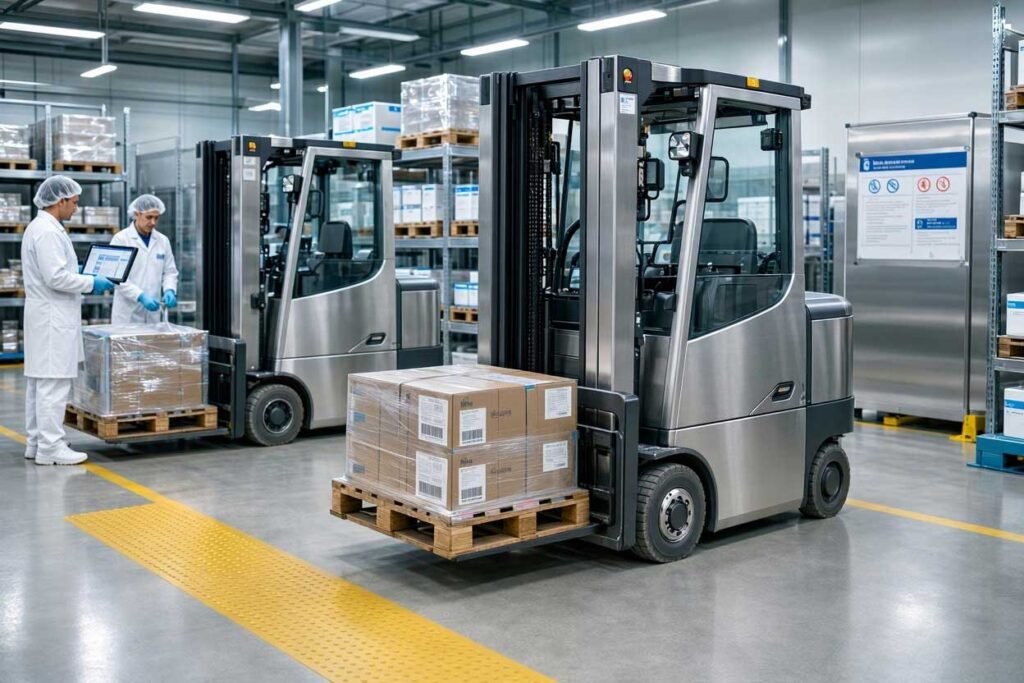
2. Stainless Steel Construction for Hygiene and Durability
Standard painted steel forklifts are prone to chipping, corrosion, and harboring bacteria—risks that are unacceptable in food and pharmaceutical environments. Stainless steel forklifts offer:
- Corrosion Resistance: Grades 304 and 316 stainless steel resist general, pitting, crevice, and galvanic corrosion, even under frequent washdowns and chemical exposure.
- Hygienic Design: Smooth, non-porous surfaces with continuous welded joints prevent microbial growth and contamination.
- Washdown Compatibility: IP65 or higher-rated enclosures protect electrical components during high-pressure cleaning cycles.
Insight: Bespoke Forklifts notes that stainless steel electric forklifts withstand rigorous sanitation protocols and harsh environments like cold storage and chemical handling, extending service life and compliance readiness.
3. Compliance with Hazardous Zone Certifications
Pharmaceutical warehouses often contain hazardous zones where explosive gases or dust may be present. Forklifts operating in these areas must be:
- ATEX/IECEx Certified: Explosion-proof electrical systems, sealed batteries, and temperature-controlled braking systems prevent ignition risks.
- Zone-Specific Models: Different forklift categories (Zone 1, Zone 2, etc.) correspond to the risk level, requiring dedicated fleets and strict routing to avoid cross-contamination or regulatory breaches.
The Hangcha Group emphasizes the importance of matching forklift specifications to hazardous zones, ensuring safety and regulatory adherence.
Selecting the Right Forklift: Practical Considerations
1. Load Capacity and Lift Height
- Document your heaviest loads and tallest racking heights.
- Add a 10-15% safety margin to capacity.
- Choose mast heights that suit your warehouse layout to optimize reach without overspending on unnecessary power.
2. Aisle Width and Maneuverability
- 3-Wheel Electric Forklifts: Ideal for narrow aisles (as tight as 3.2–3.5 meters) with tight turning radii (1.8–2.1 meters), perfect for indoor food and pharma warehouses.
- 4-Wheel Models: Provide better stability for outdoor docks, rough terrain, or heavier loads exceeding 3 tons.
3. Battery Technology
- Lead-Acid Batteries: Lower upfront cost but require long charging times and dedicated battery rooms with ventilation.
- Lithium-Ion Batteries: Higher initial investment but support fast and opportunity charging, longer lifespan (6-8 years), and safer operation without toxic residues—ideal for multi-shift operations and cold storage environments.
Data Point: Kinlift’s industry analysis shows electric forklifts with lithium-ion batteries can save $8,000–$12,000 annually in operating costs per forklift compared to diesel models.
4. Cold Storage Compatibility
- Forklifts must have cold-rated hydraulic fluids, battery thermal management, and seal materials to operate reliably in refrigerated (2–8°C) and freezer (-20°C) environments.
- Lithium-ion batteries outperform lead-acid in cold conditions, maintaining capacity and reducing downtime.
Maintenance and Documentation: Meeting GMP and FDA Requirements
Pharmaceutical warehouses require documented qualification of forklifts under IQ/OQ/PQ protocols:
- Installation Qualification (IQ): Verifying correct installation and certification.
- Operational Qualification (OQ): Testing equipment performance under defined conditions.
- Performance Qualification (PQ): Demonstrating consistent operation in real production environments.
Ongoing maintenance logs, cleaning records, and operator training documentation must be maintained meticulously to pass FDA and EMA audits. Operators need GMP-specific training covering contamination risks and zone restrictions beyond standard OSHA forklift certification.
Benefits of Investing in Specialized Forklifts
| Benefit | Description |
|---|---|
| Enhanced Product Safety | Reduced contamination risk through hygienic materials and zero emissions. |
| Regulatory Compliance | Meets FDA, EU GDP, GMP, and ATEX requirements with documentation support. |
| Operational Efficiency | Electric forklifts offer lower operating costs, less downtime, and flexible charging options. |
| Improved Worker Safety | Quieter, vibration-free operation with safety features like load sensors and cameras. |
| Long-Term Durability | Stainless steel construction resists corrosion and withstands harsh washdown environments. |
Conclusion
Choosing the right forklifts for food and pharmaceutical warehouses is a strategic decision that impacts product integrity, regulatory compliance, and operational efficiency. Electric forklifts, especially those with stainless steel construction and lithium-ion batteries, represent the gold standard for these industries—offering zero emissions, hygienic design, and lower total cost of ownership. By carefully evaluating load requirements, facility layout, and regulatory demands, warehouse managers can select forklifts that not only meet today's standards but also future-proof their operations.
Take Action: If you manage a food or pharmaceutical warehouse, consult with specialized forklift suppliers like Hangcha or industry experts to assess your facility's needs. Investing in compliant, efficient forklifts today safeguards your products and business tomorrow.