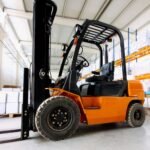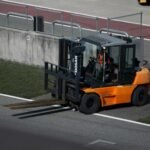
Ports and terminals are the lifeblood of global trade, handling millions of containers and diverse cargo daily. In these fast-paced, high-stakes environments, the right forklift configuration can be the difference between seamless operations and costly delays. This Port and Terminal Forklift Configuration Guide offers an in-depth roadmap for fleet managers and terminal operators to optimize their forklift fleets—balancing capacity, duty cycles, environmental challenges, and cargo diversity. Leveraging insights from leading industry research and real-world case studies, this guide will help you tailor your fleet for maximum productivity, safety, and cost-effectiveness.
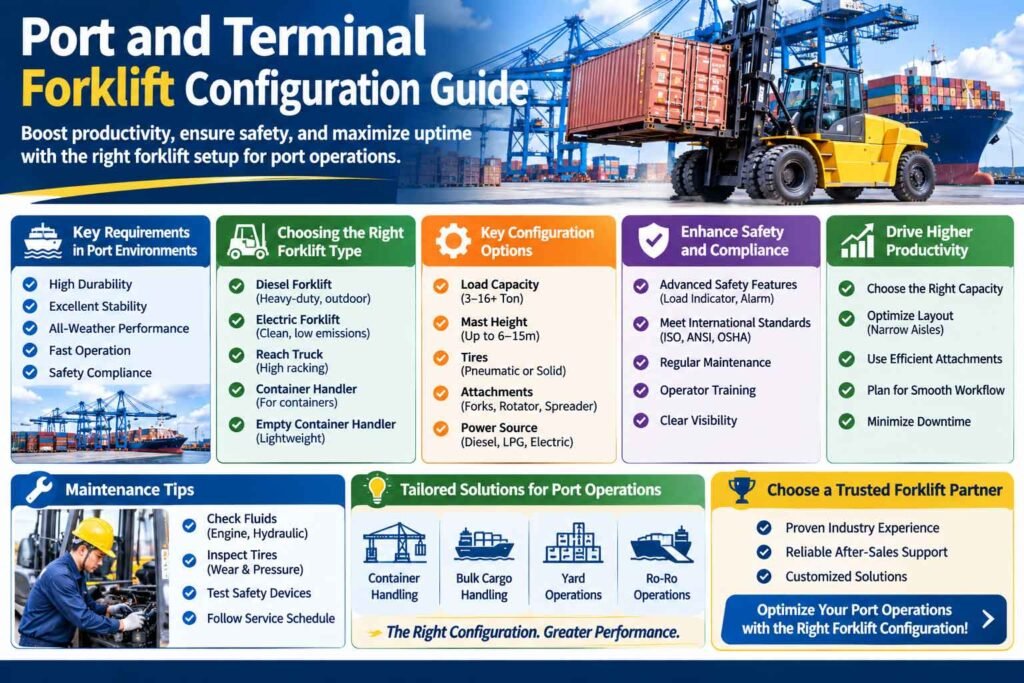
Port and Terminal Forklift Configuration Guide
Understanding the Unique Challenges of Port and Terminal Forklifts
Port and terminal forklifts face a unique set of operational challenges that differ significantly from warehouse or manufacturing forklifts. These include:
- Heavy Load Handling: ISO containers can weigh up to 35 tons when fully loaded, requiring forklifts with high lift capacity and stability.
- Varied Surface Conditions: From reinforced concrete to gravel yards and steel decks, forklifts must be rugged and adaptable to uneven, slippery, or abrasive surfaces.
- Spatial Constraints: Tight aisles and congested yards demand forklifts with compact designs and precise maneuverability.
- Environmental Exposure: Salt-laden air, humidity, UV radiation, and freeze-thaw cycles accelerate wear and corrosion.
- Cargo Diversity: Terminals often handle a mix of containerized, breakbulk, and project cargo, each requiring specialized attachments and handling techniques.
- Noise and Emission Regulations: Especially for urban-adjacent terminals, noise reduction and emissions compliance are critical.
Key Factors in Forklift Configuration for Ports and Terminals
1. Capacity and Duty Cycle
Selecting forklifts with the appropriate capacity is paramount. For container handling, forklifts typically start at a minimum lift capacity of 30,000 lbs (approximately 15 tonnes) and can go up to 85 tonnes for heavy-duty applications such as project cargo.
- Heavy-Duty Diesel Forklifts: Ideal for three-shift operations, offering continuous high-load performance with robust cooling systems to prevent thermal overload.
- Electric Forklifts: Emerging as a cleaner alternative, lithium-ion battery-powered forklifts up to 33 tonnes are gaining traction, especially in terminals with overnight charging windows.
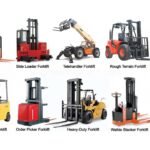
- Rough Terrain and Telehandlers: Designed for uneven surfaces, these forklifts offer high ground clearance and suspension to navigate gravel or sloped yards effectively.
2. Surface Compatibility
Matching forklift type to yard surface is essential to prevent tip-overs and reduce wear:
- Paved Aprons: Use pneumatic tire forklifts with reinforced frames.
- Gravel or Broken Concrete: Rough terrain forklifts or telehandlers with large tires and suspension systems.
- Steel Decking (Ro-Ro vessels): Require forklifts with anti-slip tires and corrosion-resistant components.
3. Mast Design and Visibility
- Triplex Masts with Free Lift: Allow handling containers under overhead obstructions.
- Wide-View Masts and Enclosed Cabs: Enhance operator visibility, reducing accidents.
- Camera Systems: 360-degree cameras and fork-mounted cameras are increasingly standard for safety and precision.
4. Specialized Attachments for Cargo Types
- Container Spreaders: Secure ISO containers via corner castings without fork penetration.
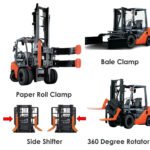
- Coil Rams, Clamps, and Magnets: Essential for breakbulk cargo such as steel coils or irregular loads.
- Quick-Hitch Systems: Facilitate rapid attachment changes, increasing fleet versatility.
5. Noise and Emission Control
- White-Noise Backup Alarms: Reduce community noise impact while maintaining safety.
- Soft Landing Spreaders: Use sensors to slow container descent, minimizing metal-on-metal noise.
- Alternative Fuels: LNG, hybrid, and electric forklifts help meet stringent emission standards.
Fleet Composition Strategies: Tailoring Your Fleet to Operational Needs
Mixed Fleets for Versatility
Terminals handling a mix of containerized and breakbulk cargo benefit from a combination of:
- Heavy-Duty Counterbalance Forklifts (10-25 tonnes): For general cargo and lighter containers.
- Reach Stackers (35-45 tonnes): For high stacking and container transfers.
- Empty Container Handlers: Specialized for stacking empty containers efficiently.
- Sideloaders: For narrow aisles and long loads like steel pipes or timber.
Customization Based on Cargo Mix
- Breakbulk Operations: Require reinforced masts and specialized clamps to prevent cargo damage.
- Project Cargo: Heavy forklifts with high torque engines and dynamic ballast systems ensure stability.
- Stacking Height Considerations: Ground conditions must support higher stacking (5-6 containers), requiring ground grading or concrete pads.
Safety and Technology Integration
Safety Features to Consider
- Conditional Speed Limiters: Automatically reduce speed in congested or hazardous zones.
- Impact Lockout Systems: Shut down equipment after critical impacts for inspection.
- Operator Authentication: Keycard or biometric access to ensure only trained personnel operate forklifts.
- Load Moment Indicators (LMI): Real-time feedback on load stability to prevent tip-overs.
Technology for Operational Efficiency
- Telemetry and IoT Integration: Real-time data on forklift location, load status, and operator behavior feed into Terminal Operating Systems (TOS) for workflow optimization.
- Battery Management Systems: Optimize charging cycles for electric forklifts to maximize uptime.
- Predictive Maintenance: Sensor data helps schedule maintenance before failures occur, reducing downtime.
When to Customize Your Forklift Fleet
Customization is a strategic choice, not just a luxury. Signs that your terminal may benefit from tailored forklift configurations include:
- Persistent throughput bottlenecks linked to material handling equipment.
- Frequent cargo or equipment damage indicating improper attachments or handling methods.
- Noise or space constraints due to proximity to urban areas or tight yard layouts.
- High cargo mix variability, requiring multipurpose forklifts.
- Increasing demand for electrification to meet environmental goals.
A thorough operational assessment—mapping workflows, bottlenecks, and cargo profiles—is the first step toward an optimized configuration strategy.
Case Study: Engineering Optimized Fleets for Port Challenges
A steel-handling terminal required forklifts capable of operating inside vessel holds with heavy-duty magnets powered by onboard generators. This customization eliminated the need for wooden dunnage, increased storage density, and enhanced pedestrian safety by reducing human exposure in hazardous areas.
Similarly, a terminal replaced a fleet of top-pick container handlers with a mix of top loaders and reach stackers. This diversified fleet maintained performance while adding cargo recovery capabilities and extending operational reach.
Future Trends in Port Forklift Configuration
- Decarbonization: Hydrogen fuel cell forklifts offer rapid refueling and zero emissions, promising for terminals with established hydrogen infrastructure.
- Digital Integration: Compliance with Terminal Industry Committee (TIC) 4.0 standards will drive forklifts’ compatibility with advanced TOS and automation.
- Fleet Electrification: Lithium-ion technology will continue to replace diesel, especially for applications with predictable duty cycles and charging windows.
Conclusion
Optimizing your forklift fleet through strategic configuration is essential for port and terminal success. By carefully considering capacity, surface compatibility, cargo diversity, safety, and technology integration, fleet managers can unlock significant gains in productivity, safety, and sustainability.
Take Action: Evaluate your current fleet against the operational challenges outlined in this guide. Collaborate with equipment manufacturers and engineers to develop a tailored configuration plan that aligns with your terminal’s unique needs. For expert advice and customized solutions, connect with your local forklift dealer today.