The Short Answer (Quick Reference Table)
| Forklift Type | Capacity | Typical Weight Range |
|---|---|---|
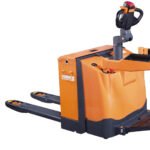
| Electric pallet jack (walkie) | 2,000 kg | 150–300 kg |
| Electric stand-up forklift | 1,000 kg | 2,000–2,500 kg |
| Electric stand-up forklift | 1,500 kg | 2,500–3,200 kg |
| Electric stand-up forklift | 2,000 kg | 3,200–4,000 kg |
| Electric 4-wheel counterbalance | 2,000 kg | 4,000–5,000 kg |
| Electric 4-wheel counterbalance | 3,000 kg | 5,000–6,500 kg |
| Diesel / LPG counterbalance | 2,000 kg | 3,500–4,500 kg |
| Diesel / LPG counterbalance | 3,000 kg | 4,500–5,500 kg |
| Diesel / LPG counterbalance | 5,000 kg | 7,000–8,500 kg |
| Diesel / LPG counterbalance | 8,000 kg | 10,000–13,000 kg |
| Diesel / LPG counterbalance | 10,000 kg | 14,000–18,000 kg |
| Reach truck | 1,500 kg | 3,000–3,800 kg |
| Reach truck | 2,500 kg | 4,500–5,500 kg |
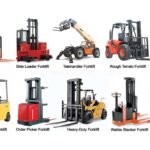
| Rough terrain forklift (4×4) | 3,000 kg | 6,000–8,000 kg |
| Rough terrain forklift (4×4) | 5,000 kg | 8,000–10,000 kg |
| Rough terrain forklift (4×4) | 10,000 kg | 16,000–22,000 kg |
| Sideloader (long load) | 5,000 kg | 10,000–15,000 kg |
| Turret truck (VNA) | 1,600 kg | 8,000–9,000 kg |
How Much Does a Forklift Weigh
Why Forklift Weight Matters (Three Reasons)
1. Shipping and transport
If you're buying a forklift and having it delivered, the weight determines shipping cost, truck type, and whether you need a flatbed with a ramp or a crane offload.
- Under 3,500 kg → Can ship on a standard flatbed tow truck with a ramp
- 3,500–5,000 kg → Flatbed with a winch. Some tow trucks can handle it
- 5,000–8,000 kg → Flatbed only, liftgate won't handle it. May need a heavy wrecker
- Over 8,000 kg → Step deck or low-boy trailer, likely requires crane or forklift-on-forklift offload
2. Floor loading
Warehouse concrete floors have a load rating. If you drive a 5,000 kg electric forklift over a floor rated for 3,000 kg point load, you get cracks at best and slab failure at worst.
Quick floor check:
- Standard warehouse floor (4' slab, compacted base): Good for 3,000–4,000 kg forklifts
- Heavy-duty floor (6' slab, reinforced): Good for 5,000–8,000 kg forklifts
- Multi-story / mezzanine: Must verify with structural engineer — most mezzanines top out at 1,500–2,000 kg per axle
3. Multi-story and elevator operations
If you need to take a forklift to a second-floor operation or up an elevator, the weight determines whether the elevator can carry it — and whether the floor slab upstairs can support it.
Electric vs Internal Combustion — Weight Difference
Electric forklifts are heavier than their diesel counterparts at the same capacity. The reason: the battery acts as counterweight.
| Capacity | Electric Counterbalance | Diesel/LPG Counterbalance | Difference |
|---|---|---|---|
| 1.5 ton | 3,000–3,500 kg | 2,500–3,000 kg | Electric ~500 kg heavier |
| 2.0 ton | 4,000–5,000 kg | 3,500–4,200 kg | Electric ~800 kg heavier |
| 2.5 ton | 4,800–5,500 kg | 4,200–5,000 kg | Electric ~600 kg heavier |
| 3.0 ton | 5,500–6,500 kg | 4,800–5,500 kg | Electric ~1,000 kg heavier |
| 5.0 ton | 8,000–9,500 kg | 7,000–8,500 kg | Electric ~1,000 kg heavier |
Why this matters:
- Electric forklifts put more weight on the floor per square cm of tire contact
- They cannot be removed from the battery for transport — the battery is part of the structure
- The weight is more evenly distributed (battery low in chassis), which improves stability
Weight Distribution (Axle Loads)
The total weight matters for transport. Axle weights matter for floor loading.
Typical distribution on a counterbalance forklift:
| Axle | Loaded | Unloaded |
|---|---|---|
| Front axle (drive wheels + mast) | 70–85% of total weight | 50–60% |
| Rear axle (steer wheels + counterweight) | 15–30% | 40–50% |
When loaded, the front axle carries most of the weight — especially on a diesel/LPG truck. Electric trucks distribute more weight to the rear due to the battery placement.
Example — 2-ton diesel forklift (approx 3,800 kg total):
| Condition | Front Axle | Rear Axle |
|---|---|---|
| Unloaded | 2,100 kg | 1,700 kg |
| Loaded (2,000 kg pallet) | 4,700 kg | 1,100 kg |
When fully loaded, 80% of the forklift + load weight sits on the front axle. If you're driving across a mezzanine or light floor, check the front axle load — not just the total weight.
Forklift Weight by Brand (Approximate)
Different manufacturers use different counterweight designs, frame thicknesses, and battery configurations. Two forklifts with the same spec sheet can weigh 300–500 kg apart.
| Capacity | Lightest Models | Heaviest Models |
|---|---|---|
| 1.5 ton electric | ~2,800 kg | ~3,500 kg |
| 2.0 ton electric | ~3,800 kg | ~5,000 kg |
| 2.0 ton diesel | ~3,300 kg | ~4,500 kg |
| 3.0 ton diesel | ~4,500 kg | ~5,800 kg |
Heavier is not always better. More weight means more stability and stronger frame, but also more floor stress, more transport cost, and more battery drain (on electric trucks).
How to Find the Exact Weight of Your Forklift
1. Check the data plate
Most data plates list the service weight (with standard battery for electric, with full fuel tank and coolant for IC). Look for a line labeled 'Service weight,' 'Weight,' or 'Kerb weight.'
2. Check the battery label (electric forklifts)
The battery is a significant portion of the total weight. If the battery is not original or has been replaced with a different size, the data plate weight may not be accurate. Weigh the battery separately and add it to the chassis weight.
3. Weigh it
Forklift scales (portable axle weigh pads) cost $500–$2,000. A truck stop with a drive-on scale will weigh it for $10–$20. This is the most accurate method.
Weight for Shipping — What You Actually Need
When arranging transport, the seller needs:
| Info | Why |
|---|---|
| Actual weight (not spec sheet) | Some forklifts ship with added counterweight or larger batteries |
| Overall dimensions (L × W × H) | Determines transport configuration |
| Battery type (lead-acid or lithium) | Lead-acid batteries must be shipped as hazardous material if wet |
| Fuel type (diesel, LPG, electric) | Fuel tanks must be drained for transport |
| Tilted mast height | Mast lowered + tilted back = minimum transport height |
If you're buying from us: Every forklift ships with the actual weight measured at the factory, not a catalog number. We also provide the shipping dimensions and the battery type classification so your freight forwarder doesn't hit surprises at the port.
Quick Weight Reference (Single-Number Rule of Thumb)
It will be in repair shop. It should be in your garage. It will be under 8 feet.
The Bottom Line
A '2-ton forklift' doesn't weigh 2 tons. It weighs roughly double its rated capacity — 3.5–5 tons depending on power type and configuration. Electric forklifts are heavier than diesel at the same rating. The weight matters for shipping cost, floor loading, elevator access, and transport planning.
If you're buying a forklift and need to get it somewhere, ask for the actual service weight — not the capacity rating. The number on the data plate (or the factory weigh ticket) is what counts.
Every forklift on forkliftlift.com lists both capacity and service weight on the data plate, with actual measured weight — not a theoretical catalog number. Shipping dimensions and weight classification included with every quote.
Hebei Maoxiang Technology Co., Ltd.
- Web: forkliftlift.com
- Electric | Diesel | LPG | Reach trucks | Rough terrain | Sideloaders
- FOB Tianjin | CE certified | 20–35 day lead