Mast height is one of the most critical—and most misunderstood—specifications when selecting a forklift. Get it wrong, and you risk anything from inefficient operations to serious safety hazards like tipping over or getting stuck under a doorway. This article breaks down what mast height actually means, the different measurements involved, and how to choose the right specification for your facility.
Forklift Mast Height
What Is Forklift Mast Height?
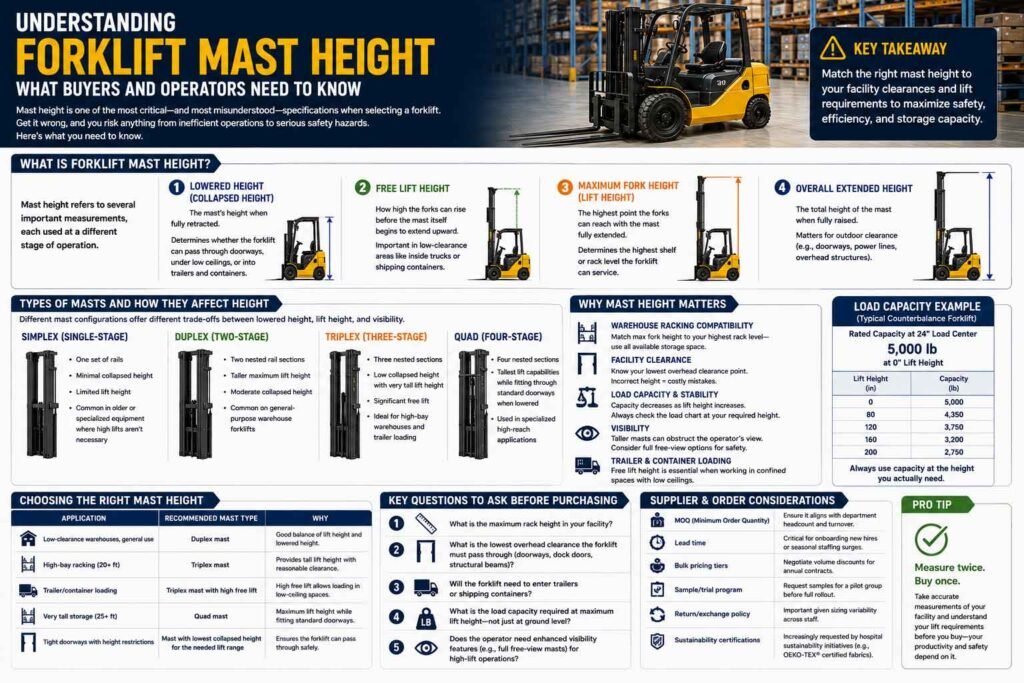
The mast is the vertical assembly at the front of the forklift that guides the forks up and down. 'Mast height' isn't a single number — it actually refers to several distinct measurements, each relevant to a different stage of operation:
- Lowered height (collapsed height): The mast's height when fully retracted. This determines whether the forklift can pass through doorways, under low ceilings, or into trailers and containers.
- Free lift height: How high the forks can rise before the mast itself begins to extend upward. This matters in low-clearance areas like inside trucks or shipping containers, where the outer mast can't rise without hitting the ceiling.
- Maximum fork height (lift height): The highest point the forks can reach with the mast fully extended. This determines the highest shelf or rack level the forklift can service.
- Overall extended height: The total height of the mast when fully raised, which matters for outdoor clearance (e.g., doorways, power lines, overhead structures).
Types of Masts and How They Affect Height
Different mast configurations offer different trade-offs between lowered height, lift height, and visibility:
Simplex (Single-Stage) Mast
One set of rails, offering minimal collapsed height but also limited lift height. Common in older or specialized equipment where high lifts aren't necessary.
Duplex (Two-Stage) Mast
Two nested rail sections. Offers a taller maximum lift height with a moderate collapsed height. Common on general-purpose warehouse forklifts.
Triplex (Three-Stage) Mast
Three nested sections, allowing for a low collapsed height combined with a very tall maximum lift height — ideal for high-bay warehouse racking. Also typically offers significant free lift, useful for loading trailers.
Quad Mast (Four-Stage)
Used in specialized high-reach applications, offering the tallest lift capabilities while still fitting through standard doorways when lowered.
Why Mast Height Matters
1. Warehouse Racking Compatibility
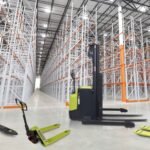
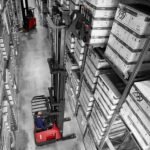
If your racking goes up to 20 feet, but your forklift maxes out at 15 feet, you've created dead storage space you can't use. Conversely, buying a mast taller than necessary adds cost and reduces stability.
2. Facility Clearance
Doorways, loading dock openings, and overhead beams all impose a maximum collapsed mast height. Measuring your facility's lowest clearance point before purchasing is essential — this is one of the most common and costly procurement mistakes.
3. Load Capacity and Stability
As mast height increases, load capacity typically decreases — this is due to the physics of the load center and the height of the center of gravity. Manufacturers publish load charts showing capacity at various lift heights; always check capacity at your actual required height, not just the forklift's rated capacity at ground level.
4. Visibility
Taller masts, especially triplex and quad configurations, can obstruct the operator's upward and forward visibility depending on design. This is a safety consideration in high-traffic warehouse aisles.
5. Trailer and Container Loading
Free lift height is essential when loading or unloading trucks and containers with low ceilings, since the mast can't extend outward in these confined spaces.
Choosing the Right Mast Height
| Application | Recommended Mast Type |
|---|---|
| Low-clearance warehouses, general use | Duplex mast |
| High-bay racking (20+ ft) | Triplex mast |
| Trailer/container loading | Triplex with high free lift |
| Very tall storage (25+ ft) | Quad mast |
| Tight doorways with height restrictions | Mast with lowest collapsed height for the needed lift range |
Key Questions to Ask Before Purchasing
- What is the maximum rack height in your facility?
- What is the lowest overhead clearance the forklift must pass through (doorways, dock doors, structural beams)?
- Will the forklift need to enter trailers or shipping containers?
- What is the load capacity required at maximum lift height — not just at ground level?
- Does the operator need enhanced visibility features (e.g., full free-view masts) for high-lift operations?
Conclusion
Mast height is not a single spec to glance at — it's a combination of lowered height, free lift, and maximum lift height that must align precisely with your facility's racking, doorways, and load requirements. Taking accurate measurements of your space and understanding load capacity at your required lift height will help you avoid costly mismatches and keep operations both efficient and safe.