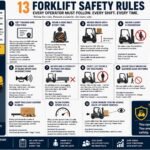
If a forklift starts to tip over, the correct response goes against most people's instinct: stay in the seat, hold on firmly, brace yourself, and lean away from the direction of the fall. Do not jump out. This single piece of training — 'stay with the truck' — is credited with preventing the majority of fatalities in forklift tip-over incidents, because the overhead guard is specifically designed to protect a seated operator, while jumping puts the operator directly in the path of the falling vehicle. Here's why this counterintuitive response works, and what to know about prevention.
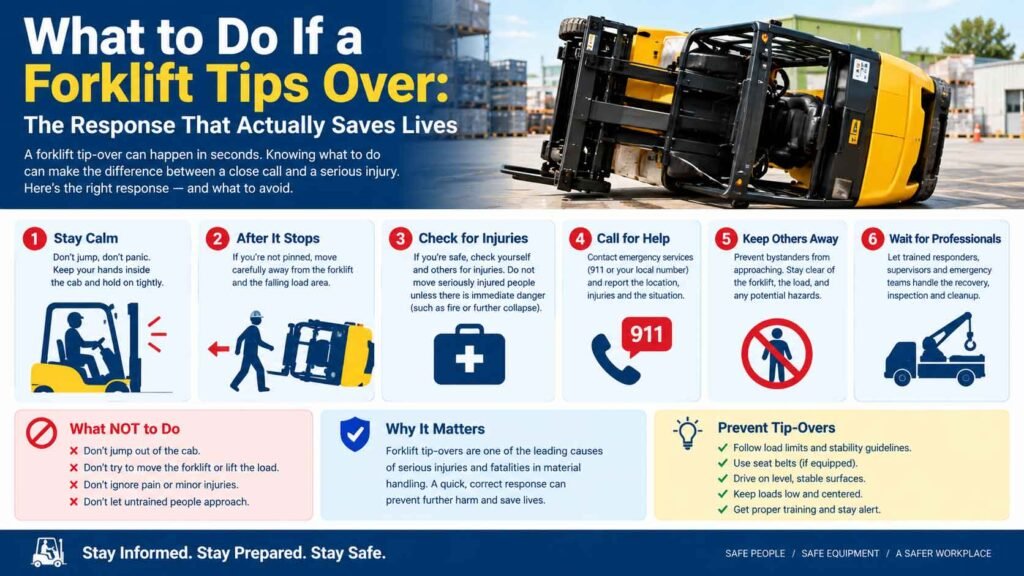
What to Do If a Forklift Tips Over
Why 'Stay With the Truck' Feels Wrong But Is Right
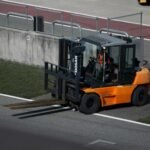
Every survival instinct says to jump clear of a falling vehicle. But a sit-down counterbalance forklift is engineered around this exact scenario: the overhead guard is built to protect the operator's survival space if the truck tips, and the seatbelt (when worn) keeps the operator positioned inside that protected zone. An operator who jumps clear of the seat is far more likely to be crushed by the overhead guard, mast, or the forklift itself landing on them — this is the single most common cause of tip-over fatalities, and it's almost always preventable by staying in the seat.
This is why OSHA and forklift safety training universally teach the same sequence, regardless of manufacturer or forklift type.
The Correct Response, Step by Step
1. Stay in the seat. Do not attempt to jump clear, no matter how strong the instinct.
2. Hold on firmly. Grip the steering wheel with both hands.
3. Brace your feet. Push firmly against the floor or footrest to keep your body stable during impact.
4. Lean away from the point of impact. If the forklift is tipping to the right, lean your upper body to the left, and vice versa — this keeps your body positioned away from the ground contact point.
5. Keep your seatbelt on at all times while operating. This entire response only works as intended if the operator is wearing a seatbelt — without one, the operator can be thrown from the protected zone the overhead guard is designed to maintain.
Why This Applies Specifically to Sit-Down Counterbalance Forklifts
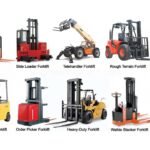
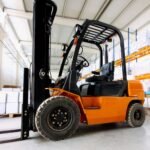
This guidance is built around the standard sit-down counterbalance forklift, which is engineered with an overhead guard and operator restraint system specifically for this failure mode. Stand-up forklifts, order pickers, and other lift truck types have different safety designs and different manufacturer-specific guidance — always follow the specific training and operator manual for the equipment being used, since 'stay with the truck' is a rule built around one particular design, not a universal instruction for every powered industrial truck.
What Causes Forklifts to Tip Over in the First Place
Understanding the common causes is what actually prevents these incidents from happening:
- Turning too sharply, especially at speed — this is the single most common cause of lateral (side) tip-overs
- Traveling with the load raised — raising the load increases the center of gravity, making the forklift far less stable during turns or on uneven ground
- Uneven or sloped surfaces — driving across a slope rather than straight up or down it significantly increases tip-over risk
- Overloading beyond rated capacity — exceeding the load chart's rated capacity fundamentally compromises the counterbalance stability the forklift is designed around
- Sudden braking or acceleration with an elevated load — abrupt changes in momentum while the load is raised can trigger a forward or lateral tip
- Uneven load distribution — a load positioned off-center changes the effective stability triangle the forklift relies on
Prevention Is Always the Better Strategy
Since the correct in-the-moment response depends entirely on split-second reaction under extreme stress, prevention through proper operating practice matters far more than any recovery technique:
- Always lower the load before traveling, and travel at a speed appropriate to the load and surface
- Never turn sharply, especially with a raised or heavy load
- Cross slopes straight on rather than diagonally, and never turn on a slope with a raised load
- Never exceed the rated load capacity shown on the forklift's data plate
- Always wear the seatbelt, every time, regardless of how short the trip
What to Do Immediately After a Tip-Over (Bystanders and Site Response)
If you witness a forklift tip-over:
- Do not attempt to right the forklift or move it before emergency services or a supervisor assesses the situation
- Check on the operator, but do not move them if there's any possibility of injury, unless immediate danger (like fire or a hazardous leak) requires it
- Call for emergency medical assistance immediately if the operator is injured or unresponsive
- Secure the area to prevent other equipment or personnel from entering the immediate zone
- Report the incident according to your workplace's safety and OSHA recordkeeping requirements
Conclusion
The instinct to jump from a tipping forklift is exactly the wrong response, and training operators to override that instinct — stay in the seat, hold on, brace, and lean away from the fall — is what the overhead guard and seatbelt system are specifically designed to protect. But the far more effective strategy is preventing the tip-over in the first place: driving at appropriate speeds, keeping loads low while traveling, respecting rated capacity, and never turning sharply with an elevated or heavy load.