Forklifts are the backbone of many industrial and warehouse operations, responsible for lifting, moving, and placing heavy loads efficiently. A crucial but often overlooked component that keeps forklifts running smoothly is the hydraulic fluid. If you’ve ever wondered what type of hydraulic fluid for forklift you should use, you’re in the right place.
Selecting the correct hydraulic fluid isn’t just about pouring any oil into the reservoir—it directly impacts your forklift’s performance, safety, and lifespan. This article dives deep into the types of hydraulic fluids, how to choose the right one based on your forklift’s needs, and maintenance tips to keep your equipment in top shape.
What Type of Hydraulic Fluid for Forklift
Why Is Choosing the Right Hydraulic Fluid Important?
Hydraulic fluid is the lifeblood of a forklift’s hydraulic system. It transmits power, lubricates components, reduces wear, and helps dissipate heat. Using the wrong fluid can cause:
- Reduced lifting efficiency
- Increased wear and tear
- Seal degradation and leaks
- Overheating and system failure
According to industry experts and manufacturer guidelines, maintaining the right hydraulic fluid level and quality is critical for safe and efficient forklift operation.
Understanding Forklift Hydraulic Fluid
What Is Hydraulic Fluid?
Hydraulic fluid is a specially formulated liquid designed to transmit power within hydraulic machinery. It combines base oils with additives that enhance lubrication, prevent corrosion, reduce foaming, and protect system components.
Key Properties of Hydraulic Fluid
- Viscosity: Measures the fluid’s resistance to flow. The right viscosity ensures smooth operation across temperature ranges.
- Lubrication: Prevents metal-to-metal contact, reducing wear.
- Thermal Stability: Maintains performance under varying temperatures.
- Compatibility: Works well with seals, hoses, and metals in the forklift.
Types of Hydraulic Fluid for Forklifts
There are several types of hydraulic fluids commonly used in forklifts, each suited for different operating conditions and system requirements:
1. Mineral Oil-Based Hydraulic Fluids
- Description: Derived from refined crude oil.
- Benefits: Good lubrication, cost-effective.
- Best For: General-purpose forklifts operating under standard conditions.
2. Synthetic Hydraulic Fluids
- Description: Engineered fluids with enhanced performance.
- Benefits: Superior viscosity stability, excellent thermal resistance, longer service life.
- Best For: Extreme temperature environments and heavy-duty applications.
3. Biodegradable Hydraulic Fluids
- Description: Environmentally friendly fluids that break down naturally.
- Benefits: Reduced environmental impact.
- Best For: Operations with environmental regulations or spill risks.
4. Fire-Resistant Hydraulic Fluids
- Description: Specialized fluids with higher ignition points.
- Benefits: Increased safety in high-temperature or fire-prone environments.
- Best For: Forklifts operating near heat sources or in hazardous locations.
Choosing the Right Hydraulic Fluid: Factors to Consider
Selecting the correct hydraulic fluid depends on several critical factors:
Viscosity Grade
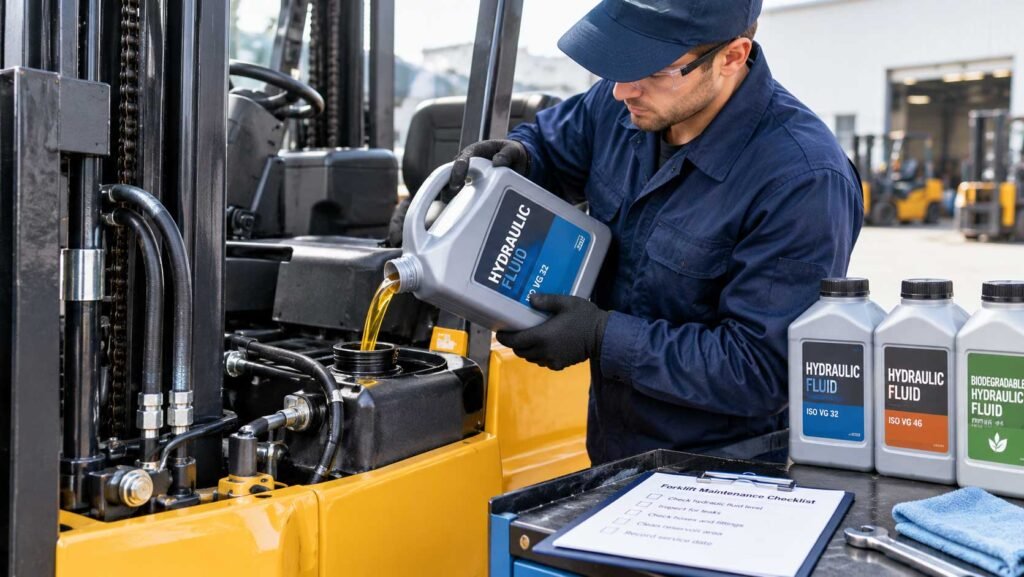
Viscosity is often indicated by ISO grades such as ISO 32, ISO 46, and ISO 68. The right viscosity ensures fluid flows properly and lubricates components effectively.
- ISO 32: Ideal for cold climates and light-duty forklifts.
- ISO 46: Balanced choice for moderate climates and medium-duty forklifts.
- ISO 68: Best for hot climates and heavy-duty outdoor forklifts.
Operating Temperature
Consider the temperature range where your forklift operates. Synthetic fluids perform better in extreme temperatures, while mineral oils suffice for moderate conditions.
Additives
Look for hydraulic fluids with additives like anti-wear agents, rust inhibitors, and foam suppressants to enhance system protection and longevity.
Compatibility
Always verify fluid compatibility with your forklift’s seals and materials. Using incompatible fluid can cause leaks and damage.
Manufacturer Recommendations
Your forklift’s user manual is the ultimate guide. Manufacturers often specify the ideal fluid type and viscosity grade for their models.
Recommended Hydraulic Fluids for Forklifts
Based on expert reviews and manufacturer specs, here are some top hydraulic fluids trusted by forklift operators:
| Product Name | Type | Viscosity | Key Features | Best For |
|---|---|---|---|---|
| Triax Forklift HTF | Full Synthetic | ISO 32-68 | Wide compatibility, excellent seal protection | Small to medium fleets, all-season use |
| Ultra 1 Plus AW ISO 68 | Mineral-based AW | ISO 68 | Superior wear protection, rust prevention | Heavy-duty, high-pressure use |
| Starfire AW 46 | Mineral-based AW | ISO 46 | Anti-wear, foam control, rust protection | Medium-duty forklifts |
| Mobil DTE 10 Excel | Mineral-based | 32, 46, 68 | High thermal stability, lubricity | General industrial use |
| Castrol Hyspin Synthetic | Synthetic | 32, 46, 68 | High-temperature performance | High-performance forklifts |
Note: Always confirm fluid compatibility with your forklift model before purchase.
How to Check and Change Forklift Hydraulic Fluid
When to Check Hydraulic Fluid
- Daily: Quick visual level check.
- Every 250-1000 hours: Full fluid inspection and possible change (manufacturer dependent).
- Signs to watch for:
- Sluggish lifting or steering.
- Unusual noises from hydraulic components.
- Fluid temperature exceeding 180°F.
- Visible contamination or discoloration.
Steps to Change Hydraulic Fluid
- Park the forklift on level ground, lower forks, and engage parking brake.
- Locate the hydraulic fluid reservoir (usually marked with a vented fill cap and gauge).
- Drain the old fluid by removing the drain plug.
- Clean the reservoir if necessary.
- Refill with the recommended hydraulic fluid, monitoring levels carefully.
- Replace the vented cap securely.
- Start the forklift and test all hydraulic functions for proper operation.
Common Mistakes to Avoid
- Using the Wrong Viscosity: Leads to poor performance and increased wear.
- Mixing Different Fluids: Can cause seal damage and reduce fluid effectiveness.
- Neglecting Fluid Changes: Results in contamination buildup and system failures.
- Ignoring Manufacturer Guidelines: Voids warranties and risks damage.
FAQs About Forklift Hydraulic Fluid
Q: How often should hydraulic fluid be changed in a forklift?
A: Typically every 1,000 hours or annually, but always follow manufacturer recommendations.
Q: Can I use automotive oil for forklift hydraulics?
A: No, automotive oils are not designed for hydraulic systems and can cause damage.
Q: What are signs that hydraulic fluid needs replacement?
A: Sluggish operation, unusual noises, overheating, or visible contamination.
Q: Is synthetic hydraulic fluid better?
A: Synthetic fluids offer better temperature stability, longer life, and improved protection but may cost more.
Conclusion
Choosing what type of hydraulic fluid for forklift to use is a vital decision that affects your equipment’s efficiency, safety, and longevity. Whether you operate in cold warehouses or hot outdoor environments, selecting the right viscosity and fluid type—mineral, synthetic, biodegradable, or fire-resistant—is essential.
Always consult your forklift’s manual, consider your operating conditions, and maintain a regular fluid check and replacement schedule. Doing so will minimize downtime, reduce repair costs, and keep your forklift lifting strong for years to come.
Take Action: Don’t wait for hydraulic issues to slow down your operations. Check your forklift’s hydraulic fluid today and ensure you’re using the right type for optimal performance. For more maintenance tips and product recommendations, explore our other forklift guides or contact us.