In facilities handling timber, steel pipes, plastic extrusions, or aerospace components, a standard counterbalance forklift is often a liability. Carrying a 20-foot load perpendicular to the direction of travel requires massive aisles and creates high-risk 'swing zones.'
Side Loader Forklifts solve this by carrying the load parallel to the direction of travel. This guide explores the engineering benefits, specialized uses, and ROI of transitioning to side-loading technology in 2026.
1. What is a Side Loader? (The Engineering Difference)
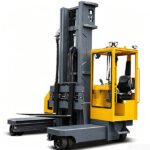
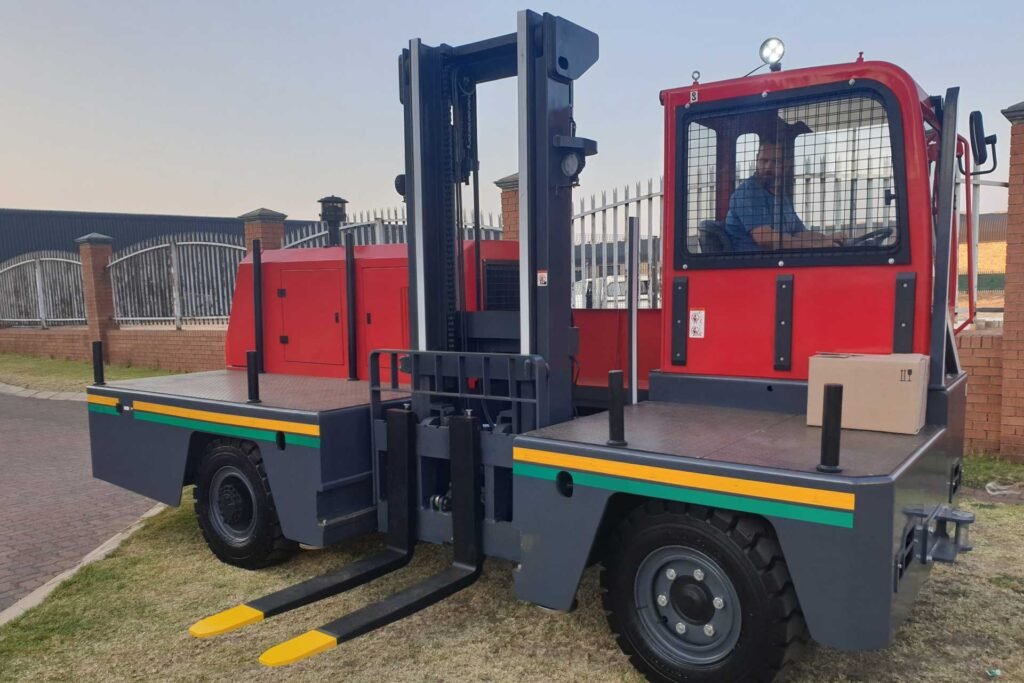
Unlike standard trucks, a side loader’s forks are mounted on the side of the chassis. The machine picks up a load and retracts it onto a built-in Bed (Platform).
The Platform Advantage: Once the load is on the bed, it is stabilized for transport. This eliminates the 'bouncing' effect that causes long materials to snap or bend on traditional forks.
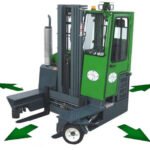
Bi-Directional vs. Multi-Directional: While standard side loaders move forward and backward, many modern units are 4-way (Multi-directional), allowing the wheels to turn 90° for ultimate maneuverability in tight storage yards.
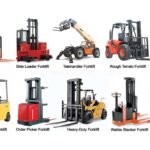
Side Loader Forklifts
2. The 3 Primary Benefits for Industrial Facilities
A. Drastic Aisle Reduction
In a warehouse storing 6-meter steel bars, a standard forklift needs an aisle nearly 7 meters wide to turn. A Side Loader can travel down an aisle only 2.5 to 3 meters wide.
Impact: You can double your storage density by reclaiming 50% of your current aisle space for extra racking.
B. Reduced Material Damage
Long, flexible loads like timber or plastic pipes are prone to 'whipping' when carried on standard forks. Side loaders support the load across the length of the platform, significantly reducing stress fractures and surface scratches during transit.
C. Enhanced Operator Safety
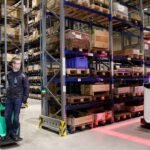
Carrying a long load in front of a standard forklift completely blocks the operator's forward vision. A side loader provides a clear, unobstructed view of the path ahead, as the load is safely tucked to the side.
3. Key Applications: Who Needs a Side Loader?
Timber & Lumber Mills: Handling long planks and plywood sheets.
Steel & Aluminum Distribution: Moving pipes, I-beams, and extrusions through narrow warehouse gates.
Concrete Pre-cast Plants: Transporting long structural beams or lintels.
PVC & Piping Industry: Managing flexible, high-density polyethylene (HDPE) pipes that require stable support.
4. Technical Checklist: What to Look for in 2026
Deck Width: Ensure the platform width matches your most common load. A deck that is too narrow will leave the load unbalanced.
Mast Reach: Side loaders don't just lift; the mast 'reaches' out to pick and retracts to transport. High-precision proportional hydraulics are essential for smooth retraction.
Leveling Systems: Job sites aren't always flat. Look for units with Chassis Leveling to ensure the load stays horizontal even on sloped surfaces.
❓ FAQ: Solving Real-World Problems
Q: Can a side loader be used on rough terrain? A: Most are designed for smooth factory floors or paved yards. However, specialized Diesel Side Loaders with large pneumatic tires are available for outdoor timber yards and heavy steel sites.
Q: Is it harder to train operators for side loaders? A: Yes, the perspective is different. Because the operator sits sideways, it requires a higher level of spatial awareness. We recommend 4-way units for easier steering transitions.
Q: How does a Side Loader compare to a Combilift (Multi-directional)? A: A side loader is a specialist for long-distance travel with long loads. A multi-directional forklift is a hybrid that combines side-loading with standard forklift capabilities, ideal for sites that need more versatility but slightly less travel speed.
🏆 Maoxiang: The Long-Load Specialists
At Maoxiang, we recognize that 'Standard' doesn't work for every industry. Our 2026 Side Loader series is engineered for the rigors of heavy industrial export:
Maoxiang SL-Series: Available in 3-ton to 10-ton capacities, featuring reinforced steel platforms and high-torque AC drive motors for consistent performance.
Dual-Fuel & Lithium Options: Whether you need the 24/7 power of Diesel for a steel yard or the zero-emissions of Lithium for a timber warehouse, we have the powertrain to match your TCO.
Precision Seal Kits: As a hydraulic specialist, our side loaders feature proprietary high-pressure seal technology, ensuring that your mast reach remains fluid and leak-free even under maximum load.
Don't let long loads slow down your operation.