How Many Forklifts Fit in a 40HQ Container
What Is a 40HQ Container?
- Internal Length: 12.03 meters
- Internal Width: 2.35 meters
- Internal Height: 2.69 meters
- Payload Capacity: ~26 to 28 tons
How Many Forklifts Fit in a 40HQ Container?
| Forklift Type | Fully Assembled Units | Semi-Knocked Down (SKD) Units |
|---|---|---|
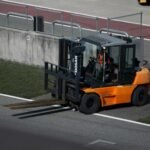
| 2.0 – 2.5 ton electric counterbalance forklifts | 3 to 4 units | 6 to 7 units |
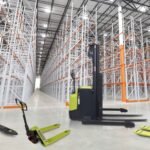
| Compact electric pallet trucks | 15 to 25 units | 25+ units |
| Electric stackers | 8 to 12 units | 12 to 16 units |
| 3-ton reach / multi-directional trucks | 2 units | 3 to 4 units |
Factors Affecting Forklift Container Capacity
Forklift Dimensions and Mast Height
The 40HQ container door opening height is about 2.58 meters. Forklifts with collapsed mast heights above this cannot be loaded fully assembled and require mast removal or partial disassembly.
Width Constraints
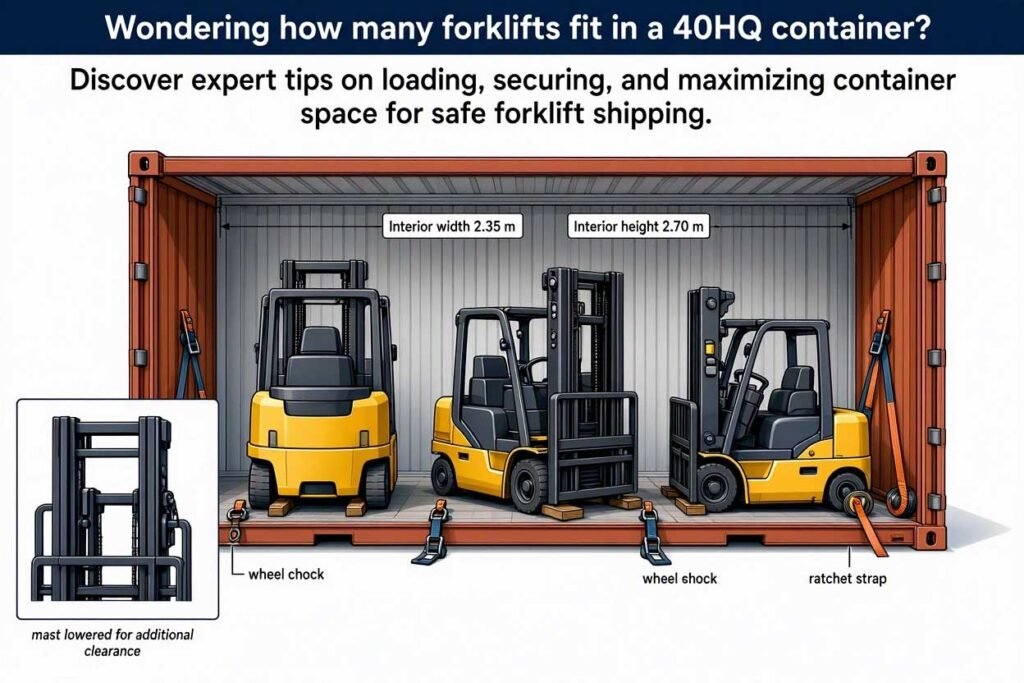
The internal width of a 40HQ container is approximately 2.35 meters. Since a typical 2-ton forklift chassis is about 1.1 to 1.2 meters wide, two forklifts cannot be loaded side by side. Forklifts are arranged in a single file along the container length.
Weight Limits
While the 40HQ container payload is around 28.6 tons, most forklift shipments do not reach this limit due to spatial constraints.
Loading Method: Assembled vs. SKD
SKD packing, which involves removing masts, overhead guards, or wheels, can nearly double the number of forklifts per container by reducing height and footprint.
Floor Load Capacity and Point Loads
Container floors have a maximum point load capacity (usually around 5,460 kg per axle as per ISO 1496). Forklift wheels concentrate weight on small contact areas, so proper load distribution and floor protection are critical.
Best Practices for Loading Forklifts in a 40HQ Container
- Positioning: Drive forklifts slowly to the longitudinal center of the container to maintain balance and vessel stability.
- Lower Masts and Forks: Lower masts fully and remove or flatten forks to reduce height and prevent damage.
- Interlocking Placement: Alternate forklift directions to nest counterweights beside masts, recovering up to 15% floor space and potentially fitting an extra unit.
- Floor Protection: Use plywood sheets or steel plates to protect container floors from heavy concentrated loads.
- Blocking and Bracing: Nail hardwood timber blocking around wheels and secure forklifts to prevent movement.
- Wheel Chocks: Place chocks to stop rolling before applying straps.
- Load Distribution: Center the load to balance weight across the container length and width.
How to Secure Forklifts Inside a 40HQ Container
- Heavy-duty ratchet straps (minimum 5,000 lb capacity) or Grade 70 transport chains
- Hardwood timber (2' x 6') for blocking and bracing
- Wheel chocks rated for forklift tire size
- Plywood or steel plates for floor protection
- Dunnage bags to fill voids and prevent lateral movement
- Edge protectors to avoid strap damage to forklift surfaces
- VCI (Vapor Corrosion Inhibitor) emitters to protect electronics from salt-air corrosion
- Lower the mast and forks fully, resting on dunnage or pallets.
- Set wheel chocks immediately after positioning.
- Build timber blocking cradles around wheels, nailing securely into the container floor.
- Attach at least four ratchet straps or chains at 45-degree angles to container lashing points, ensuring no slack or twists.
- Cross-lash the rear counterweight to counteract pendulum forces during vessel rolling.
- Remove or separately crate loose attachments, chargers, and spare parts.
- Use VCI emitters near electronics and battery terminals to prevent corrosion.
Shipping Batteries and Accessories Together
- Lithium-ion batteries require UN38.3 test documentation and a Class 9 dangerous goods declaration for ocean freight.
- Lead-acid batteries and chargers have simpler requirements but must be properly crated and secured.
- Batteries and chargers can be shipped in the same 40HQ container as forklifts if documentation and securing protocols are followed.
- Separate battery crates can simplify hazardous materials compliance and optimize container space.
Why Choose a 40HQ Container Over a Standard 40ft Container?
- The 40HQ container offers an internal height of approximately 2.69 meters versus 2.39 meters in a standard 40ft container.
- The door opening height is also larger (2.58m vs. 2.28m), allowing taller collapsed masts to enter without disassembly.
- The cost difference is often minimal but can save labor and reduce reassembly risks at the destination.
- For low-profile equipment like pallet trucks, a standard 40ft container may suffice.
Additional Tips for Safe Forklift Shipping
- Check container floor condition: Look for cracks, rot, or corrosion that can reduce load capacity.
- Verify forklift specs: Confirm mast height, chassis width, and weight with the supplier before booking.
- Request container loading plans: Verified loading diagrams and photos help ensure correct packing.
- Document everything: Photograph securing points and load distribution before sealing the container for insurance and claims purposes.
- Consider IoT sensors: For high-value shipments, impact and tilt sensors can monitor forces during transit.